


A local’s guide to the historical Villa Sciarra in Rome; one of the most secret gardens in the city, filled with mythological sculptures and free views of Rome!
Villa Sciarra, which borders the wonderful Trastevere neighborhood, is one of the most secret gardens in Rome.
It’s also one that many tourists will never get to see; quite sad, considering how serene you feel when visiting this large garden, placed on the Janiculum Hill.
I have been sharing my time between Rome and London for a few years now, and cannot believe I had never visited this incredible villa.
Oscillating between history, mythology and art, Villa Sciarra, also known as Villa Avena, boasts notes of Renaissance and Baroque architecture in an overall magical atmosphere.
Villa Sciarra, Rome: How to Visit the Hidden Gem in Trastevere


While Italy is one of the most visited countries in the world, you can still find lots of free things to do in Rome aside from the odd visit to the Trevi Fountain, the Colosseo and the Pantheon.
Actually, while I still very much enjoy visiting Rome’s most famous landmarks, hidden gems and secret places like the Quartiere Coppedè are what really tugs at my heart.
Villa Sciarra, with a history dating back to the 17th century, is one of these magical places you really don’t expect to see in the heart of the city.
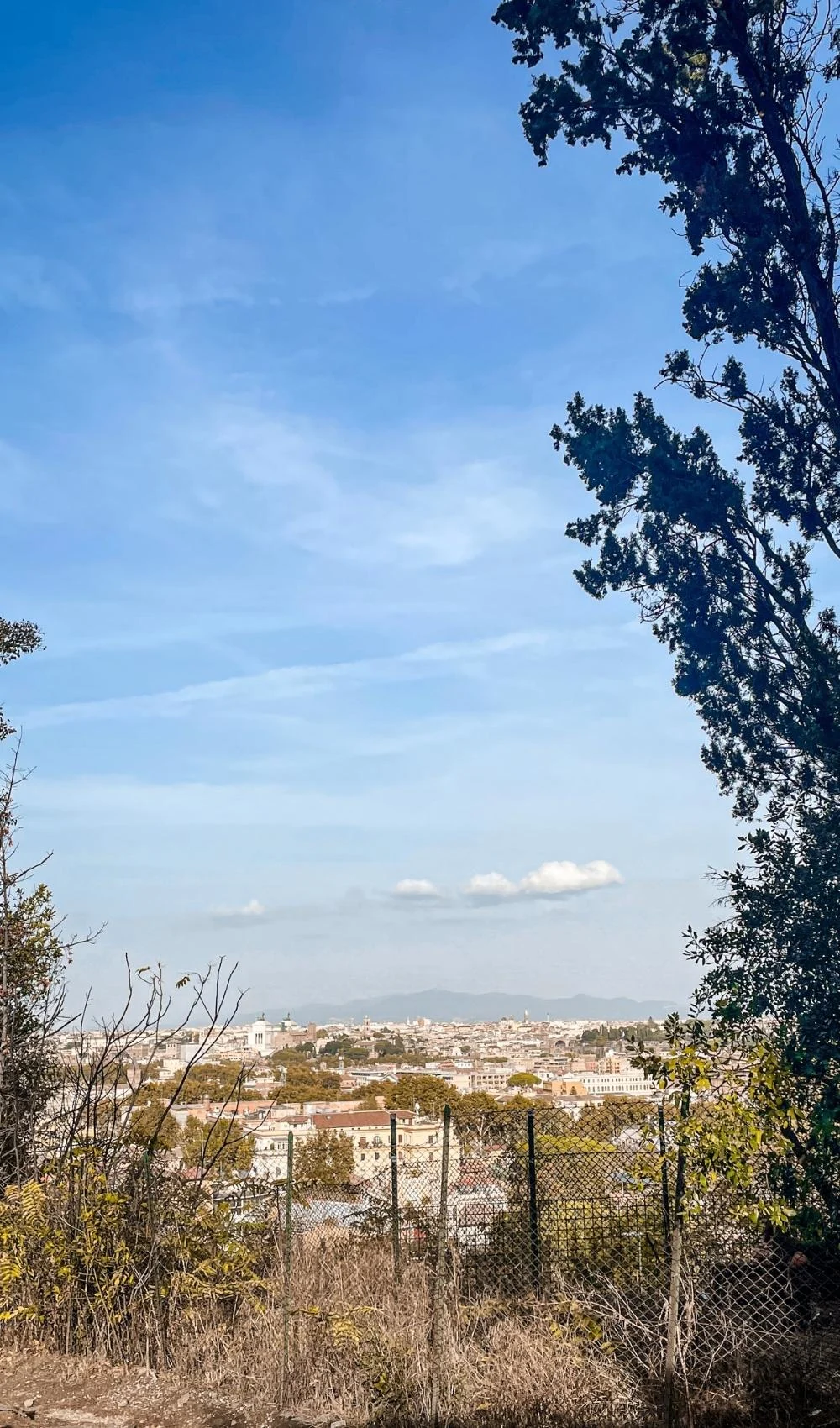
Towering over Rome, the garden offers carefully curated landscapes and winding paths, hidden corners with mythological statues, and is one of the best places to see the view in Rome for free.
I’ll tell you here about Villa Sciarra’s history and let you get on with the discovery of the countless statues, pergolas and magical ponds scattered all around the beautiful villa – enjoy!
Villa Sciarra: A Hidden Gem in the Heart of Rome

Like any and all of the pretty Roman villas, Villa Sciarra boasts incredible history that dates back centuries.
This one in particular saw its construction begin in 1605 under the supervision of Flaminio Ponzio, a prominent figure in the Roman Baroque architectural scene.
Villa in Italian can mean the villa itself, or the villa and the surrounding park and the house itself was named after Duke of Atri Ottavio Acquaviva’s wife, Ippolita Sciarra Colonna.
The Colonna family was one of the most influential noble families in Rome at the time, and the villa became a luxurious residence with everything you would expect from such a house: elegant facades, ornate rooms, frescoes, and extensive gardens.
Other families owned Villa Sciarra in the 18th century, and the villa was acquired once again by the Colonna family in the 19th century before becoming a public villa in 1902 after being purchased by the Italian state.
The gardens were redesigned in an English garden style, the villa was restored, and Villa Sciarra became a public park open to all.
Read: The Best Bakeries in Rome
Villa Sciarra Rome: The Park

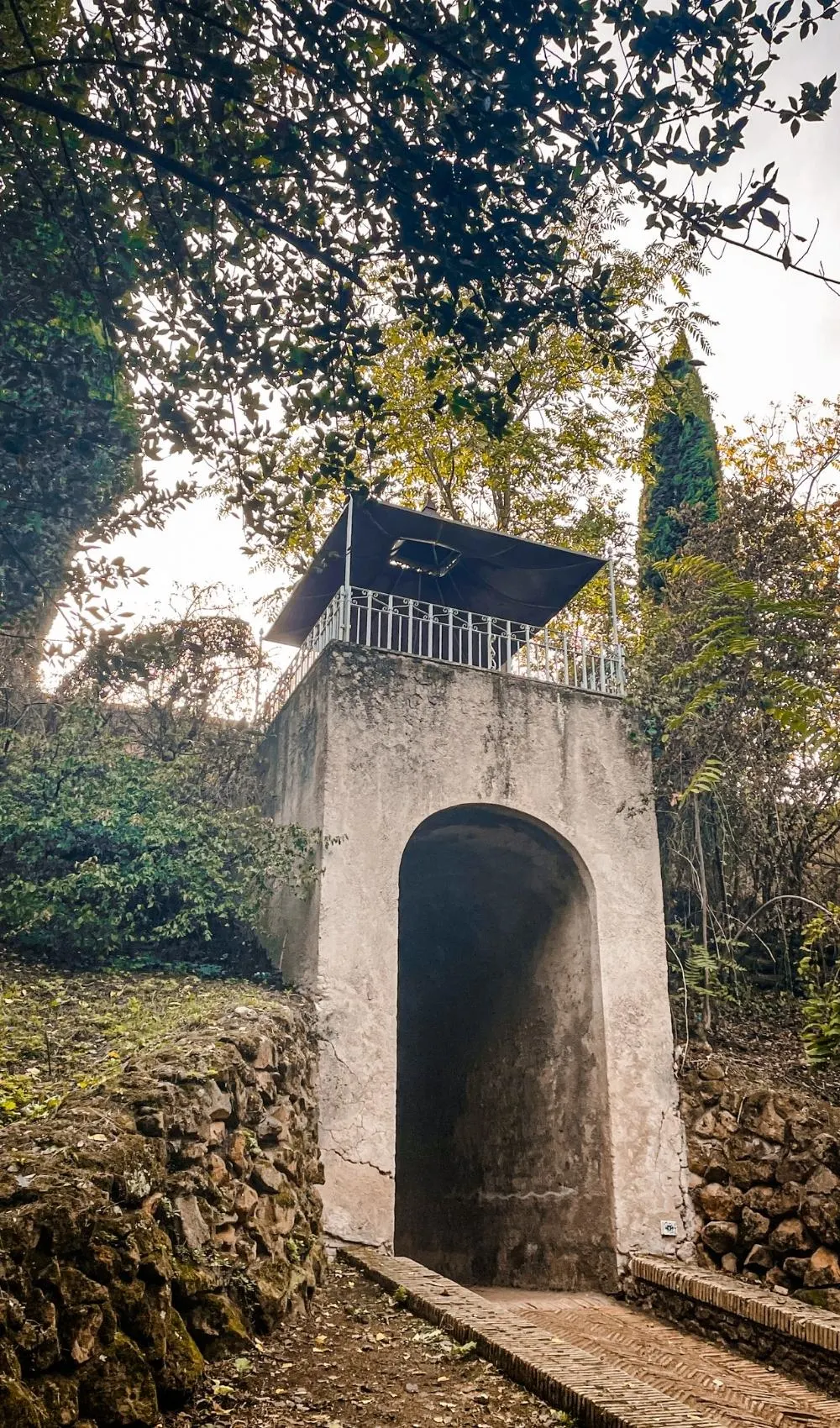
When I entered Villa Sciarra for the first time a few weeks ago, I was blown away by every single sculpture, fountain and winding path I found myself treading.
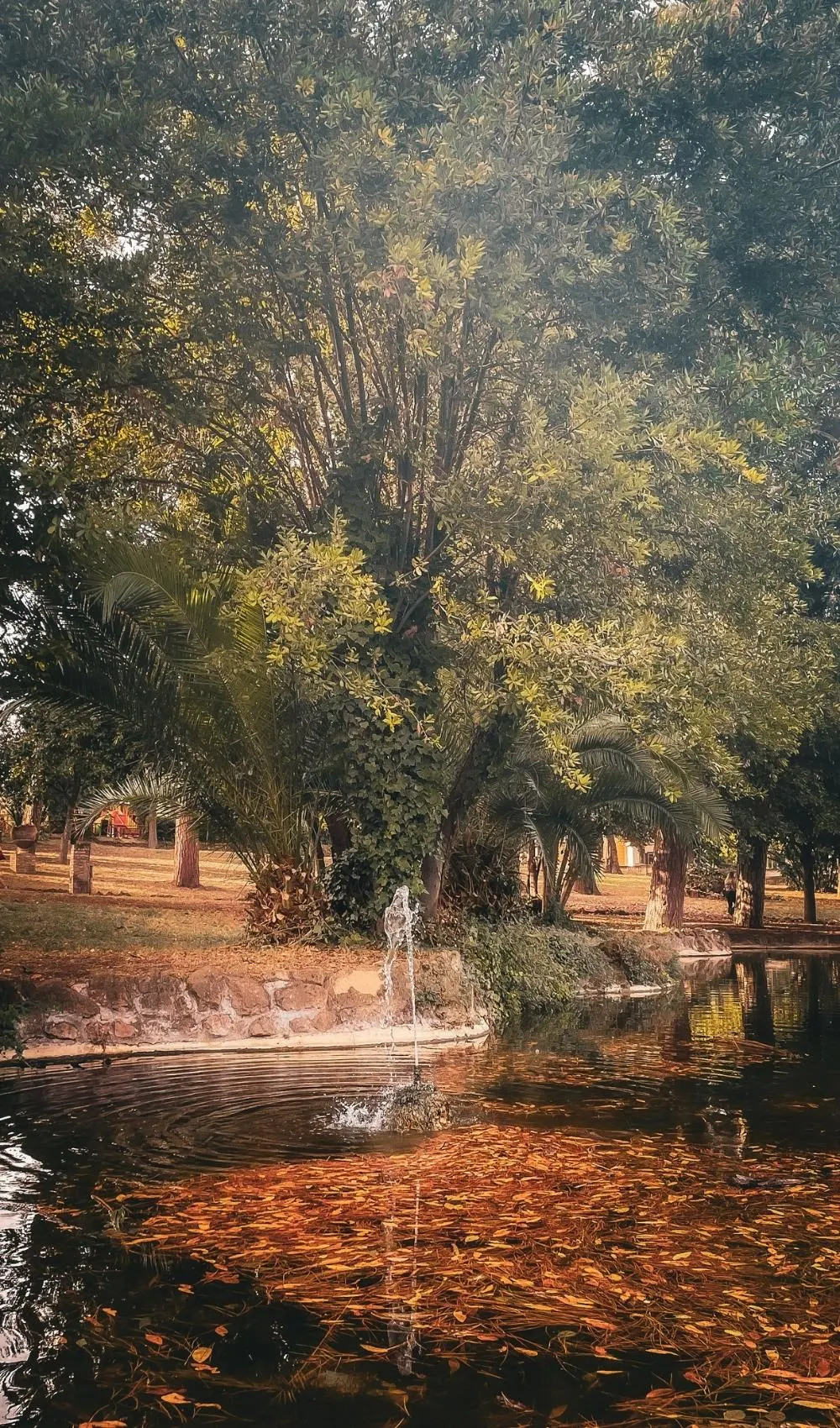
The English landscaped gardens are lined with ancient trees, ornate fountains and ponds here and there.
Some of the corners of Villa Sciarra are hidden away from the eye, and you need to walk around to discover all the hidden gems within the beautiful villa.
Since I visited at the beginning of autumn, the play on lights from the sun and the natural colors were starting to change from bright green to hues of orange, yellow and red, making Villa Sciarra an incredible place to photograph.

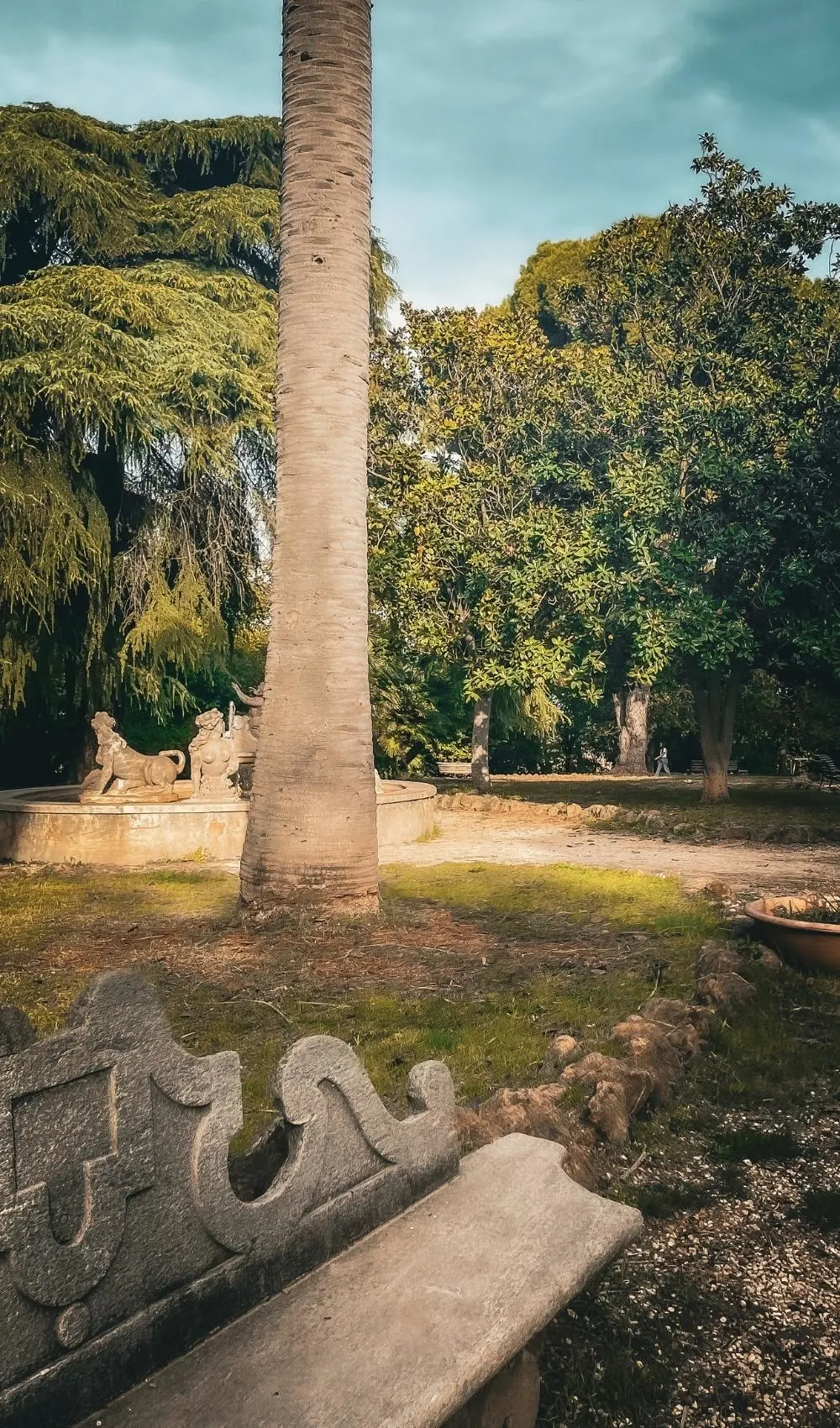
The gardens, or park, however you want to call it, are a backdrop for various musical and theatrical performances today, and the villa hosts countless cultural events throughout the year.


The broken arch at Villa Sciarra is one of the most unexpected sights. It is protected by a fence as, with many ruins in Rome, it could collapse at any time.
That kind of hidden gem is precisely what makes Roman villas interesting to visit, beyond the beauty of the house itself and the lush gardens.
Read: The Best Breakfast in Rome
Villa Sciarra Statues: A Hidden Gem in the Heart of Rome


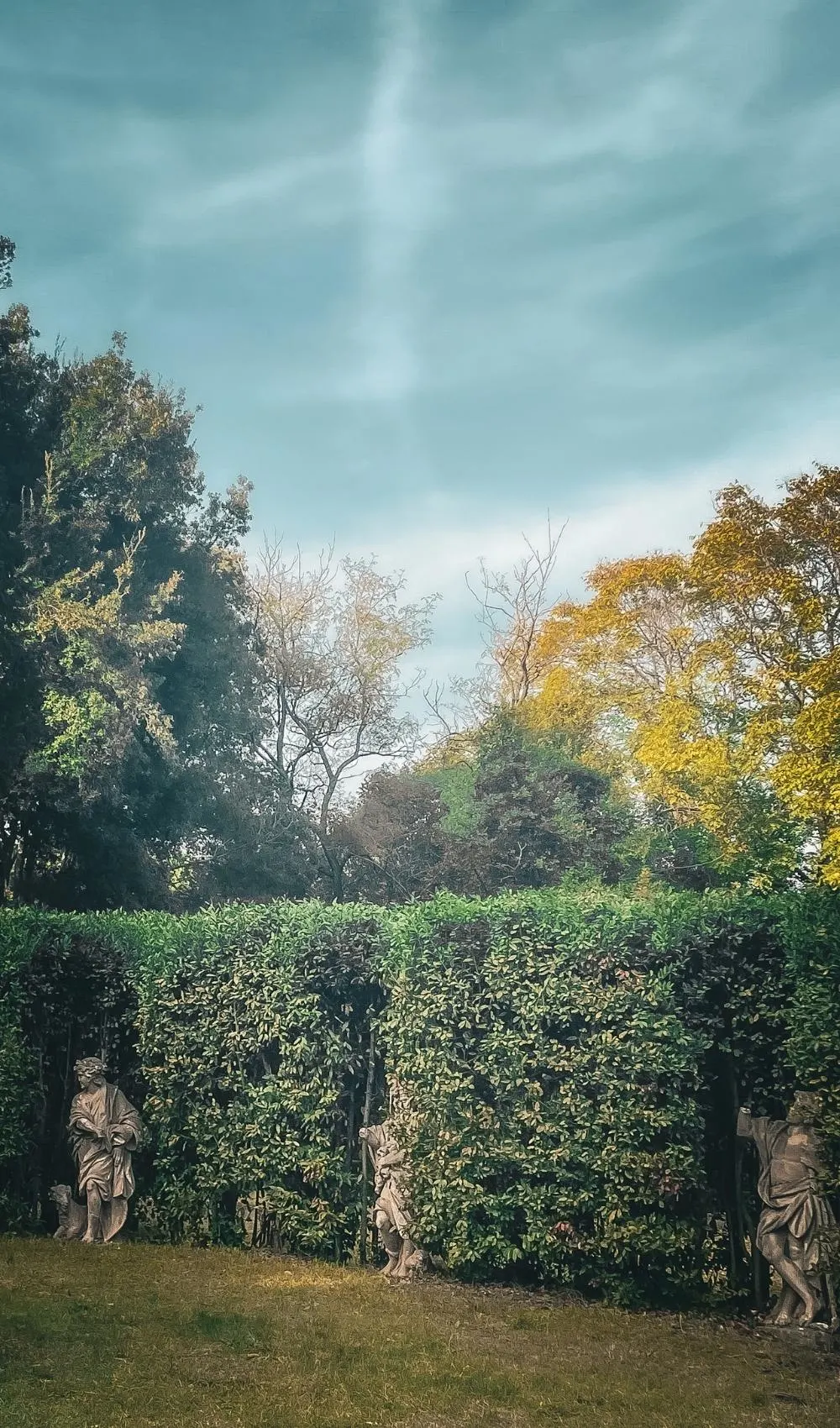
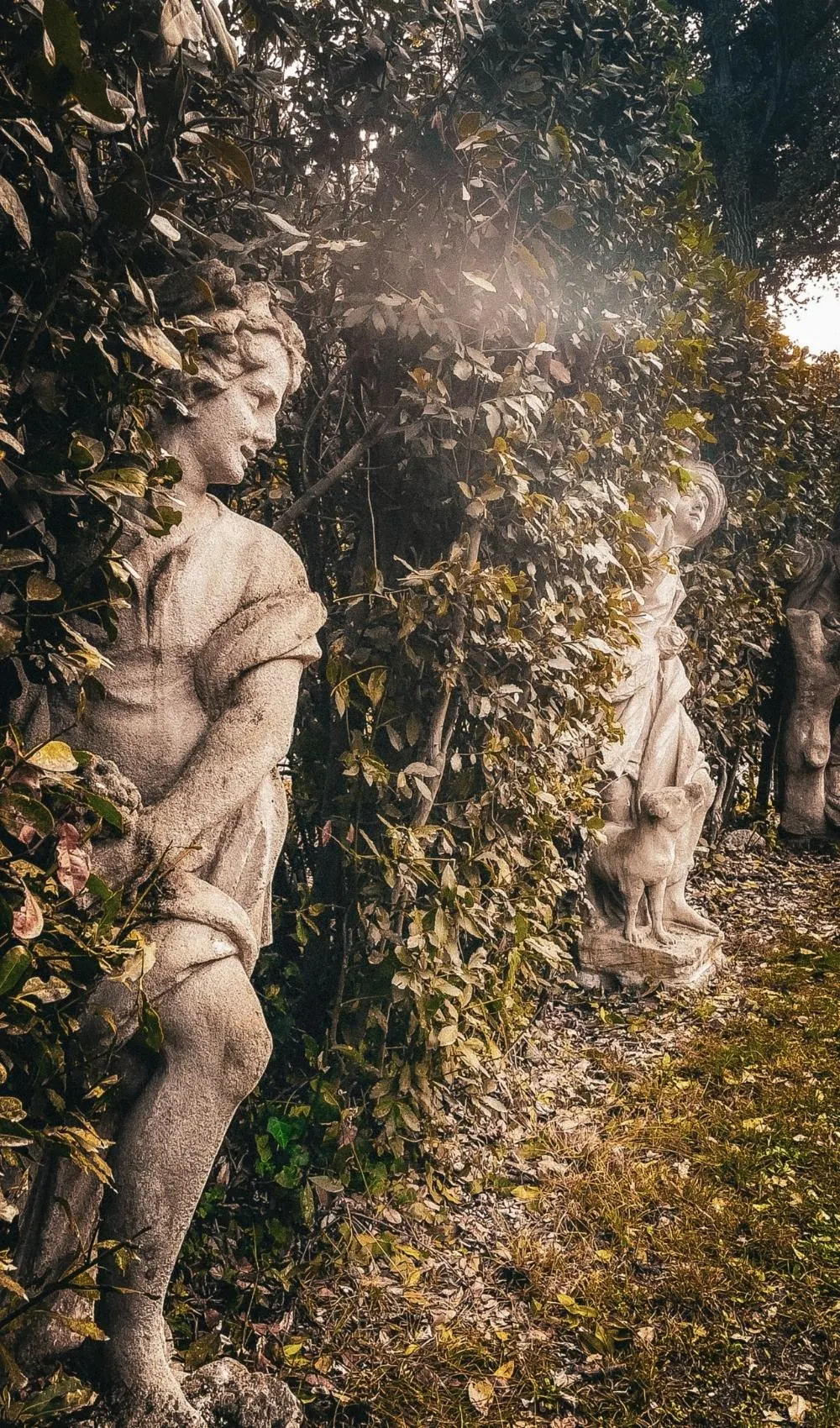
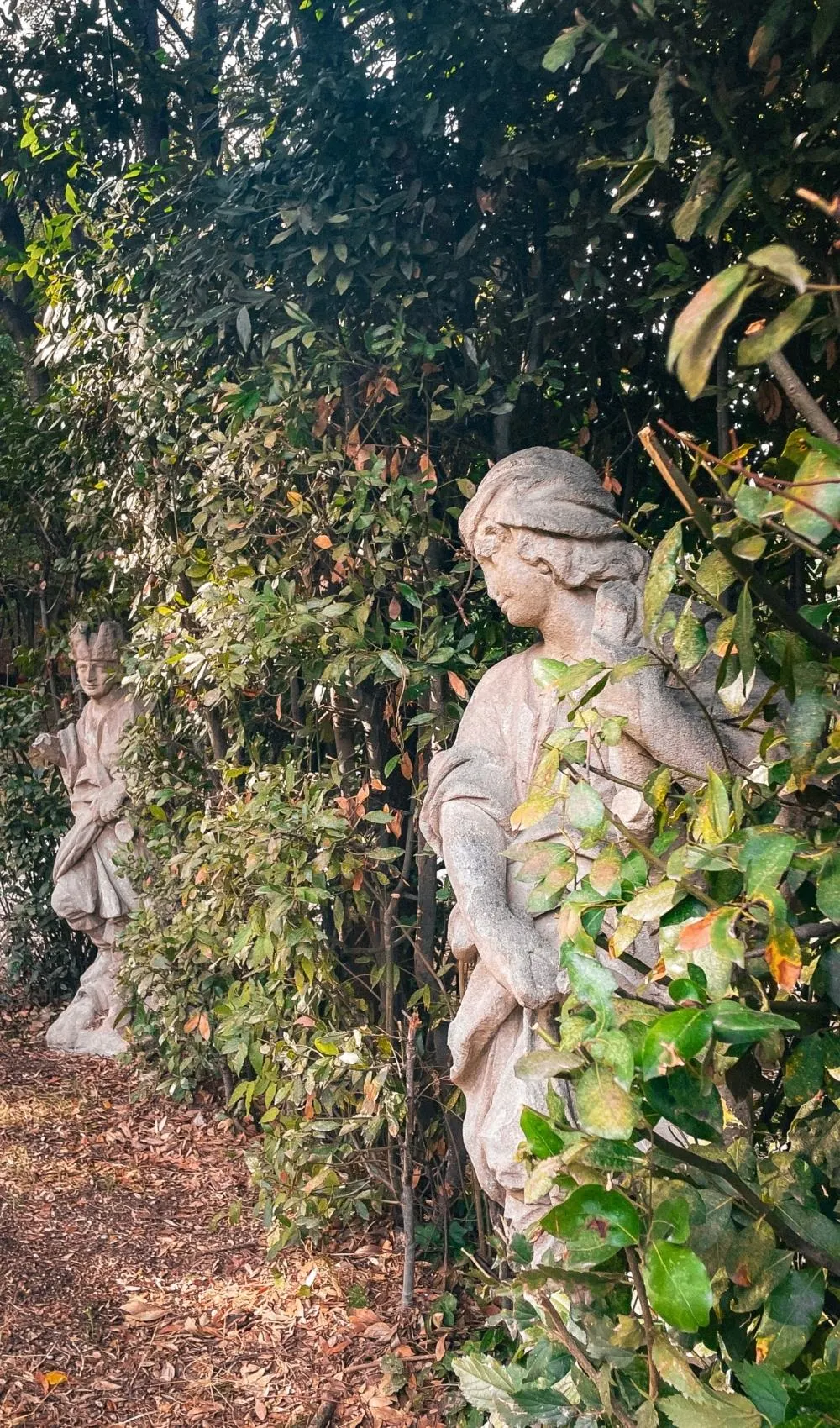
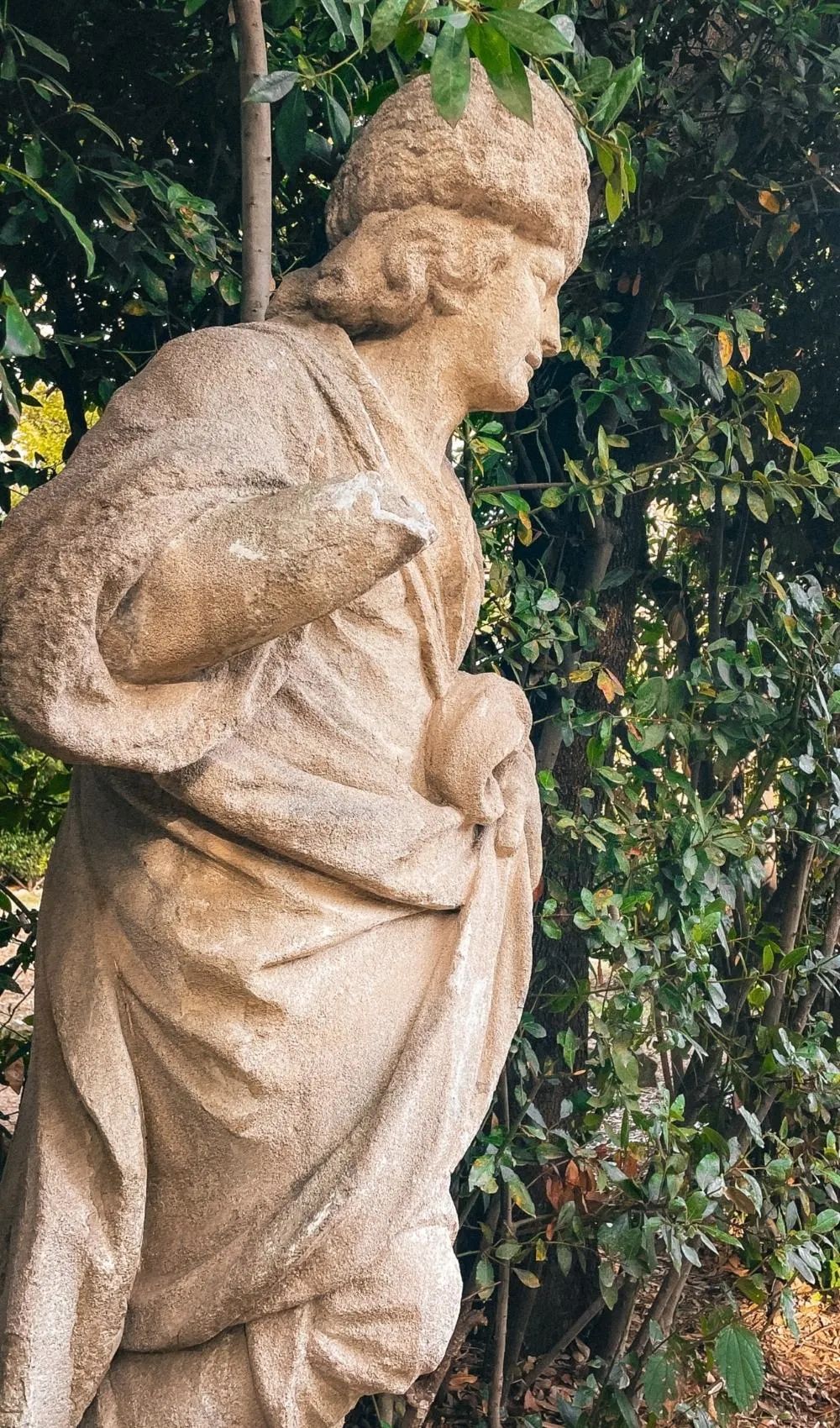
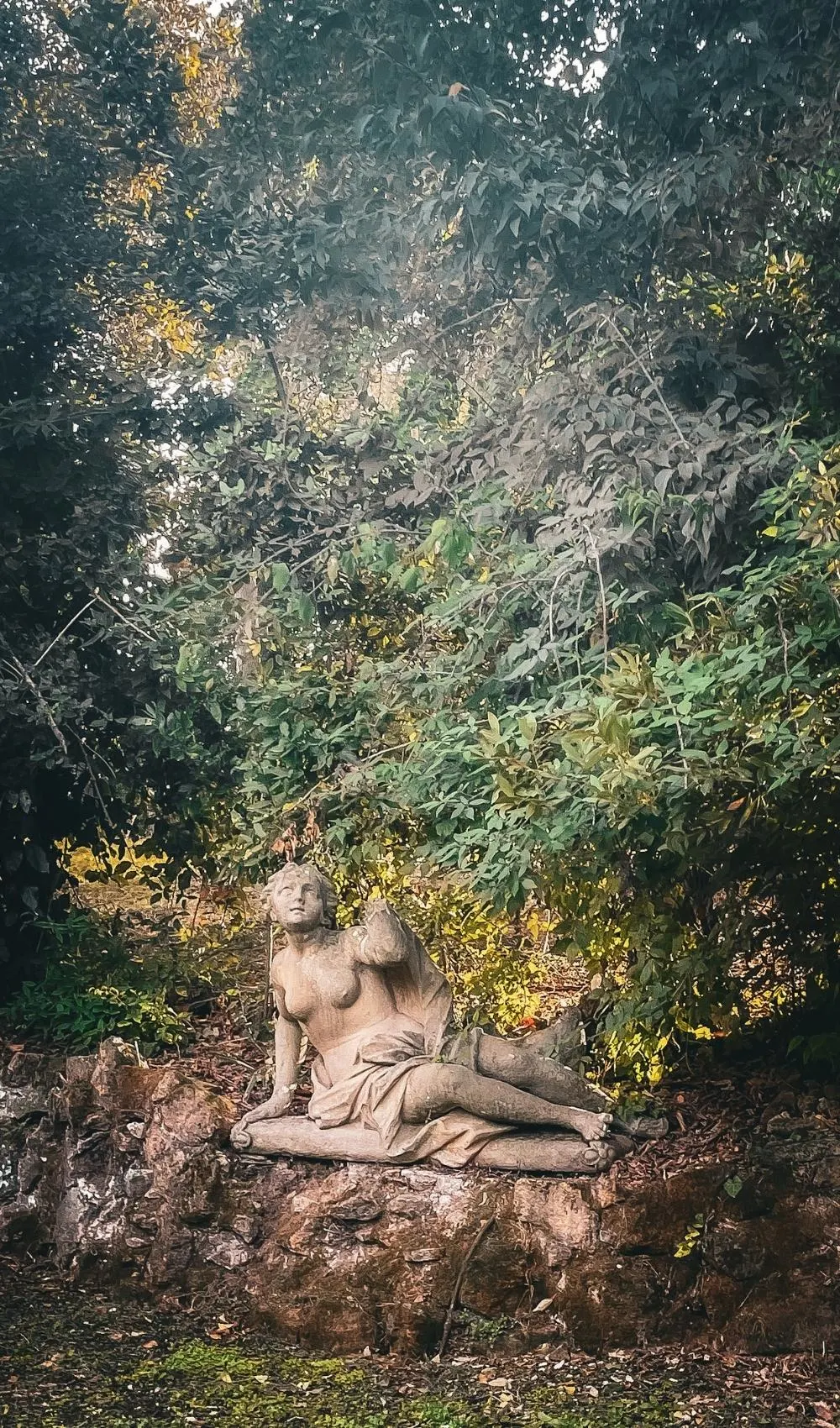
If there’s one thing to see at Villa Sciarra, it is the wonderful collection of historical, allegorical and mythological statues.
Finding new statues and sculptures in Rome is something that makes me happy beyond reason, and from Villa Torlonia to Villa Sciarra, I always have my phone at the ready to snap a few shots.
At Villa Sciarra, you can find very different statues from one corner of the park to the other:
- Fountains adorned with mythological creatures, animals and cherubs/kids
- Classical gods and goddesses such as Apollo, Diana, or Bacchus
- And mythological creatures such as satyrs, nymphs and centaurs
Read: The Most Instagrammable Cafes in Rome
Villa Sciarra Statues: Fontana dei Vizi (Fountain of Vices)

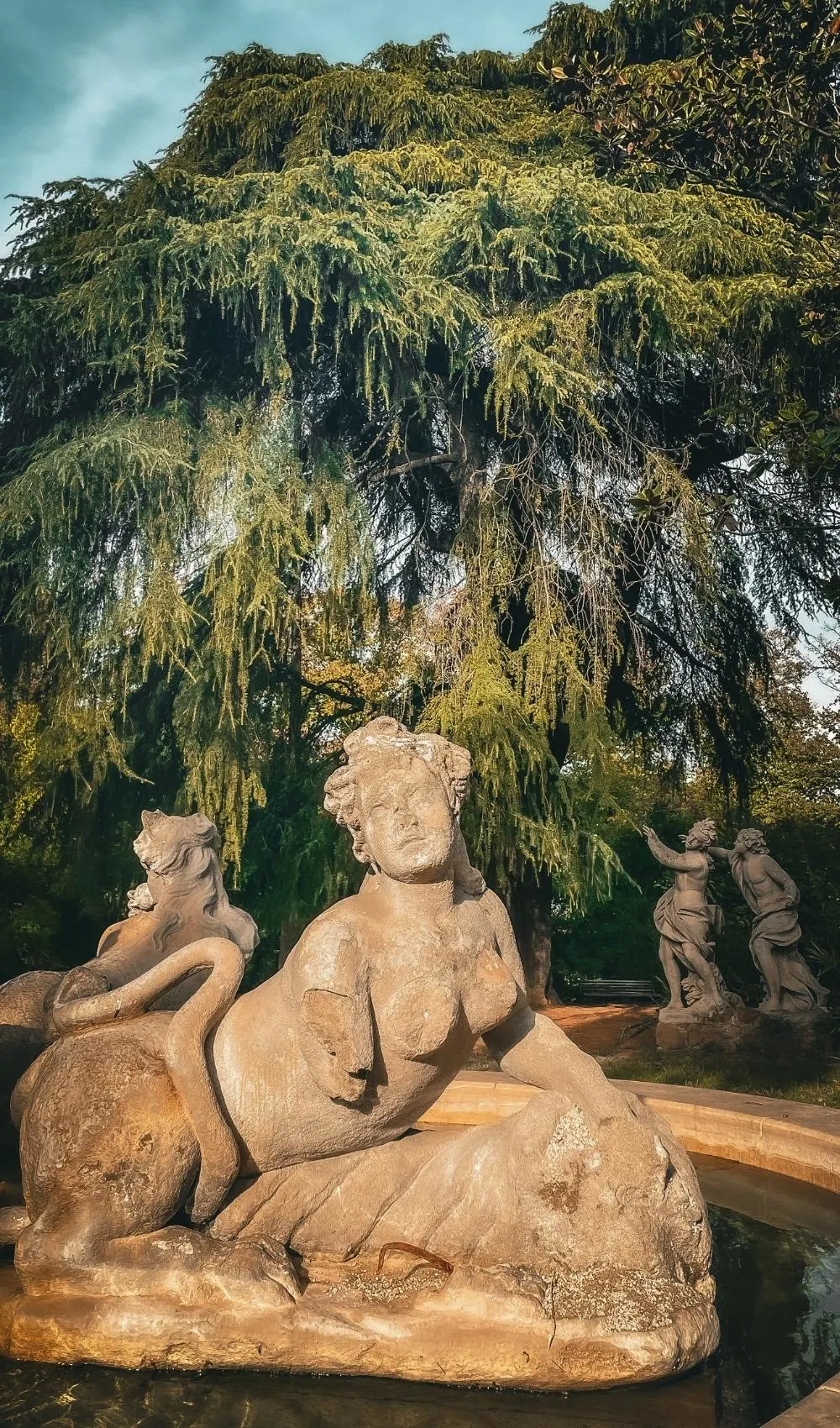
The Fontana dei Vizi at Villa Sciarra (Fountain of Vices) catches your attention straight away, but it is more than just beautiful to look at.
Also called Fontana delle Passioni Umani, the fountain represents four sphinxes, all symbols of human vices:
- Greed
- Wrath
- Avarice
- Lust


While all four sphinxes look pretty similar with long hair and feminine faces, the one symbolizing greed is slightly different in that it is set on a cornucopia filled with fruits, one of its hind legs up, carrying a fruit to its mouth.


Villa Sciarra Statues: Esedra dei 12 Mesi (Allegory of the 12 Months)


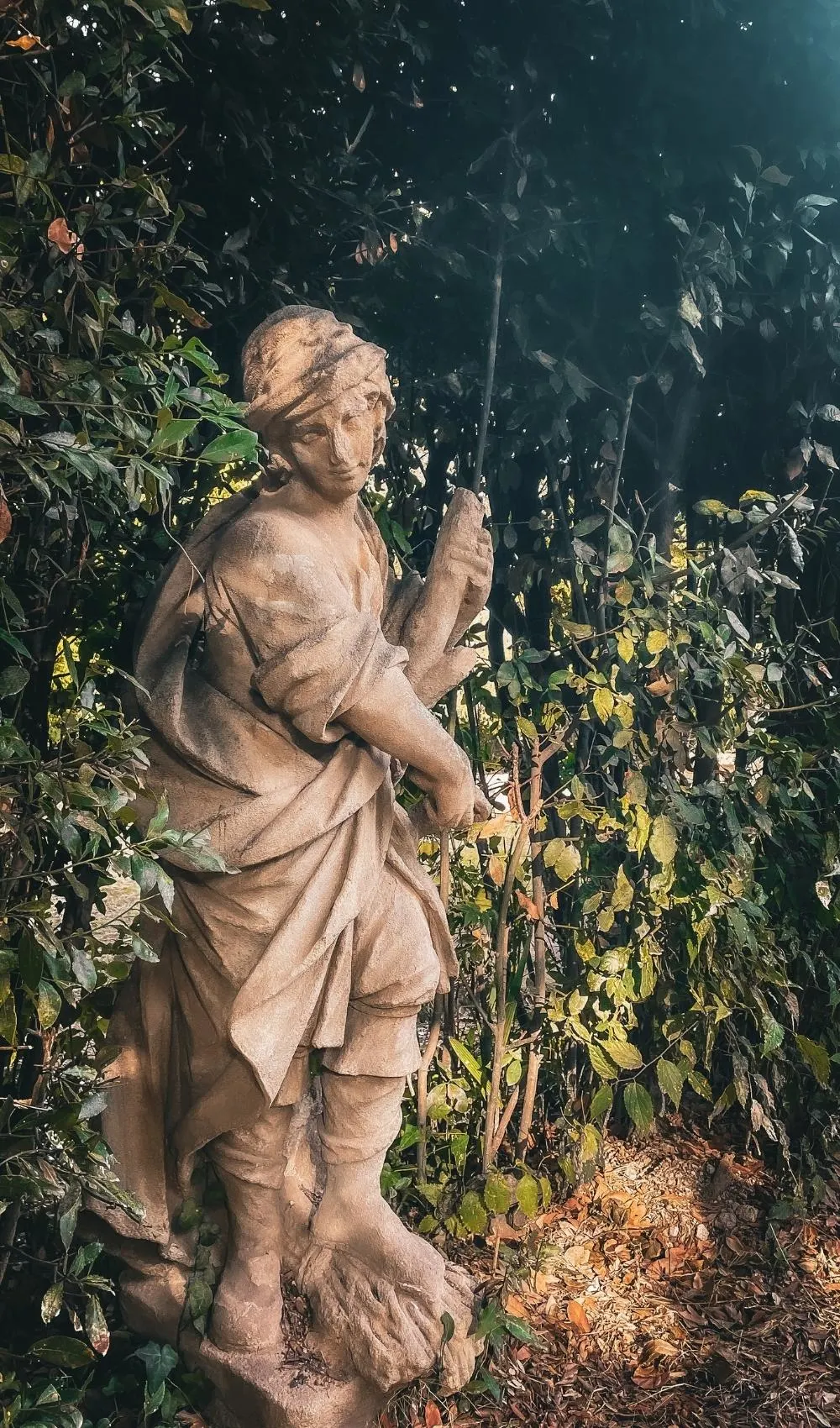
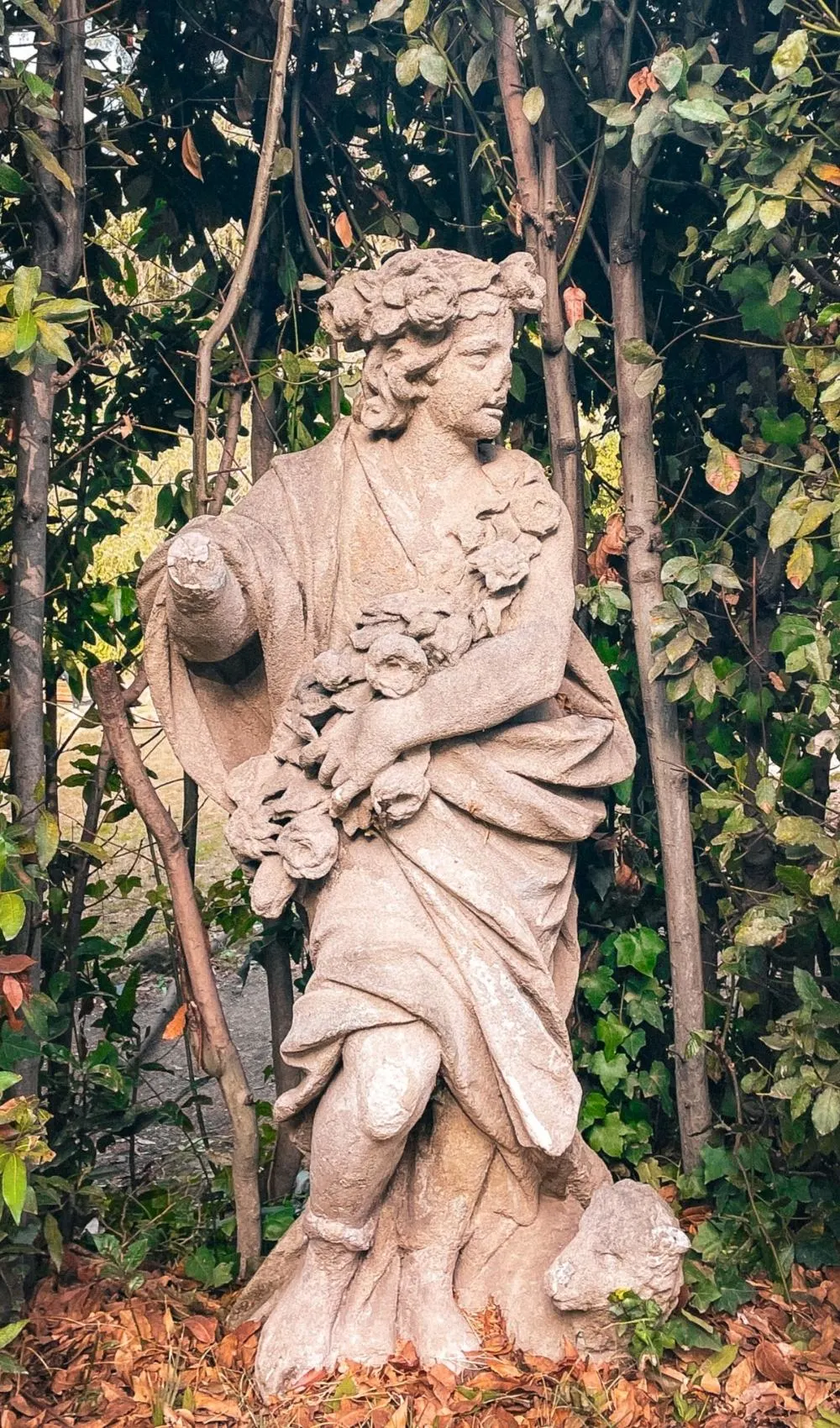
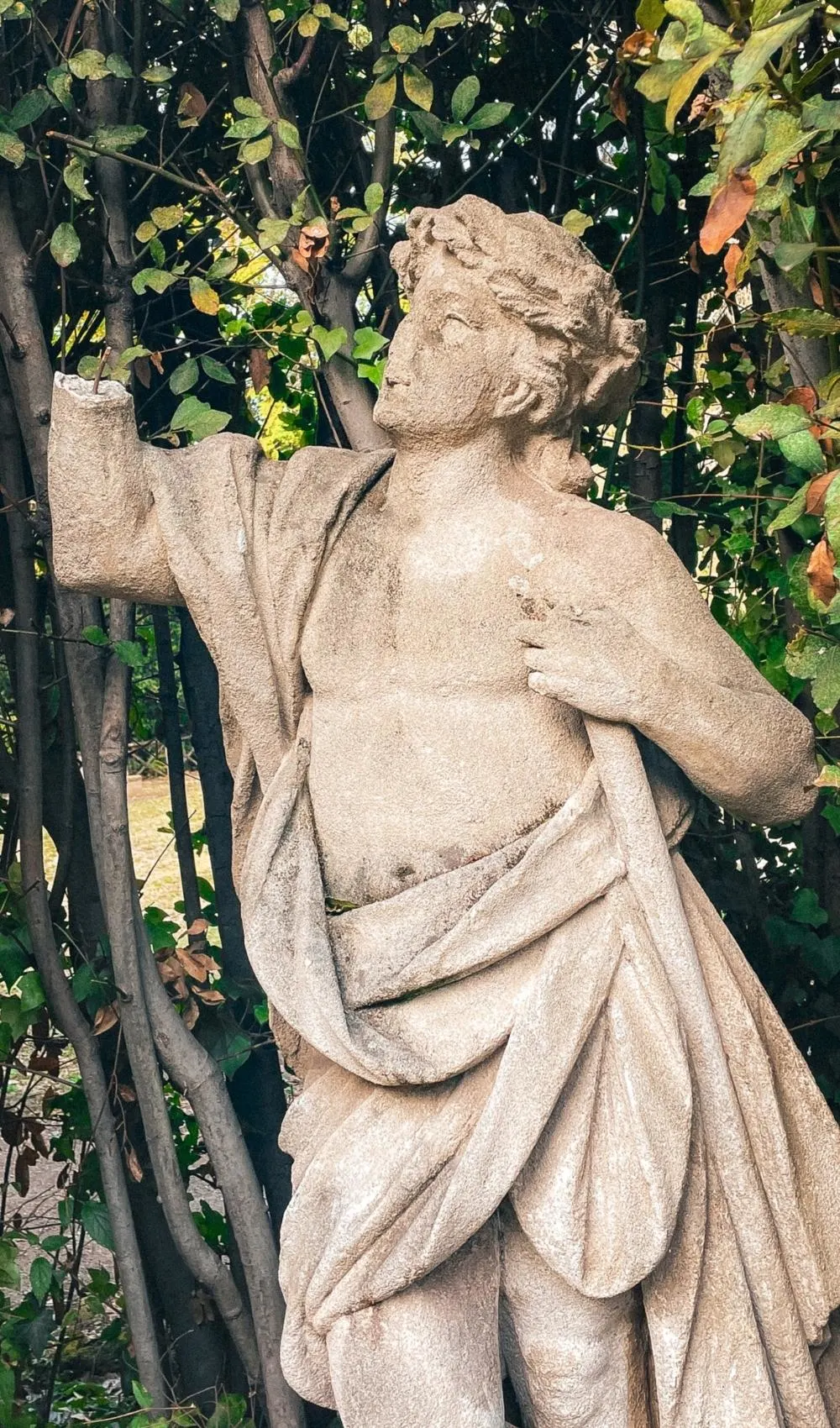
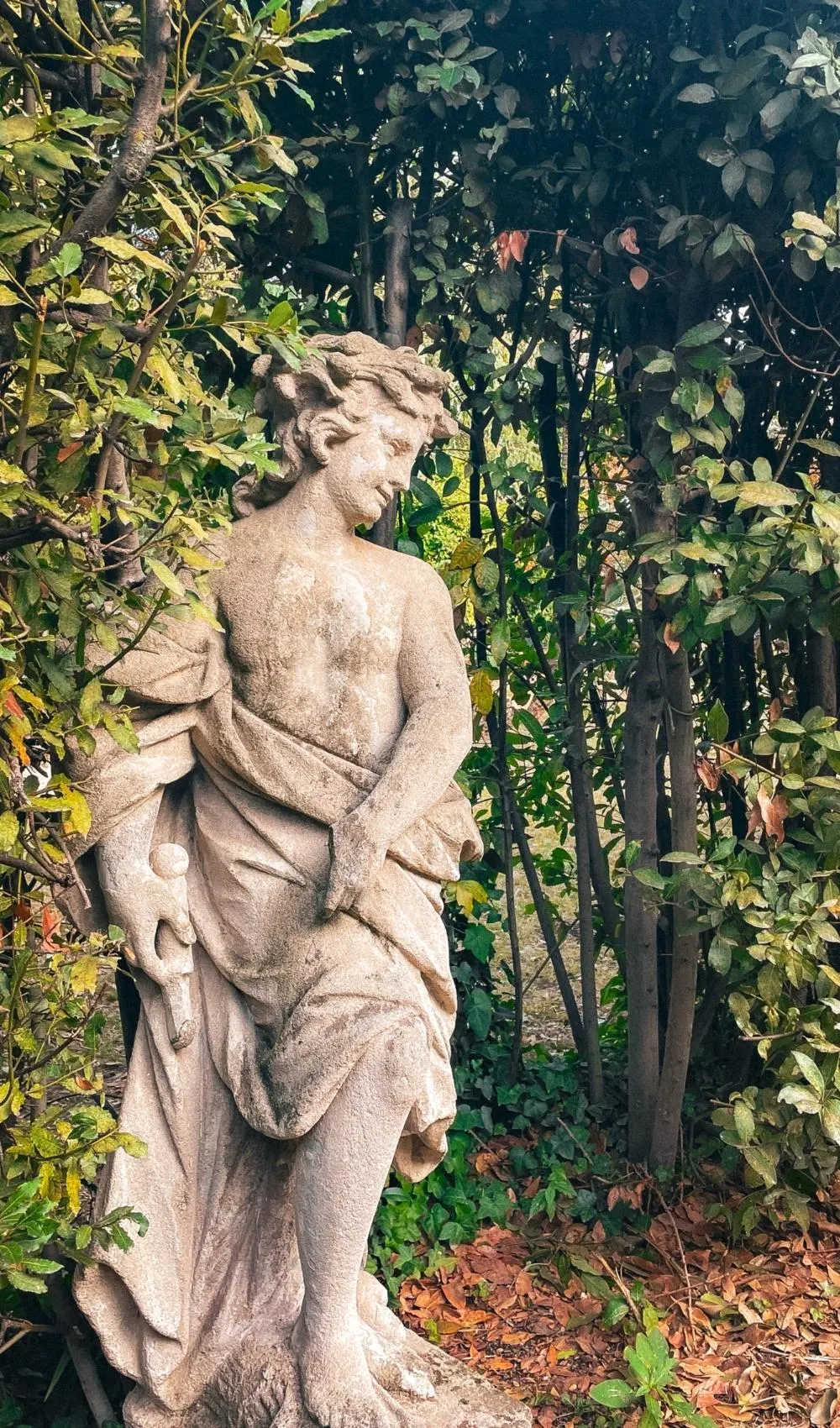
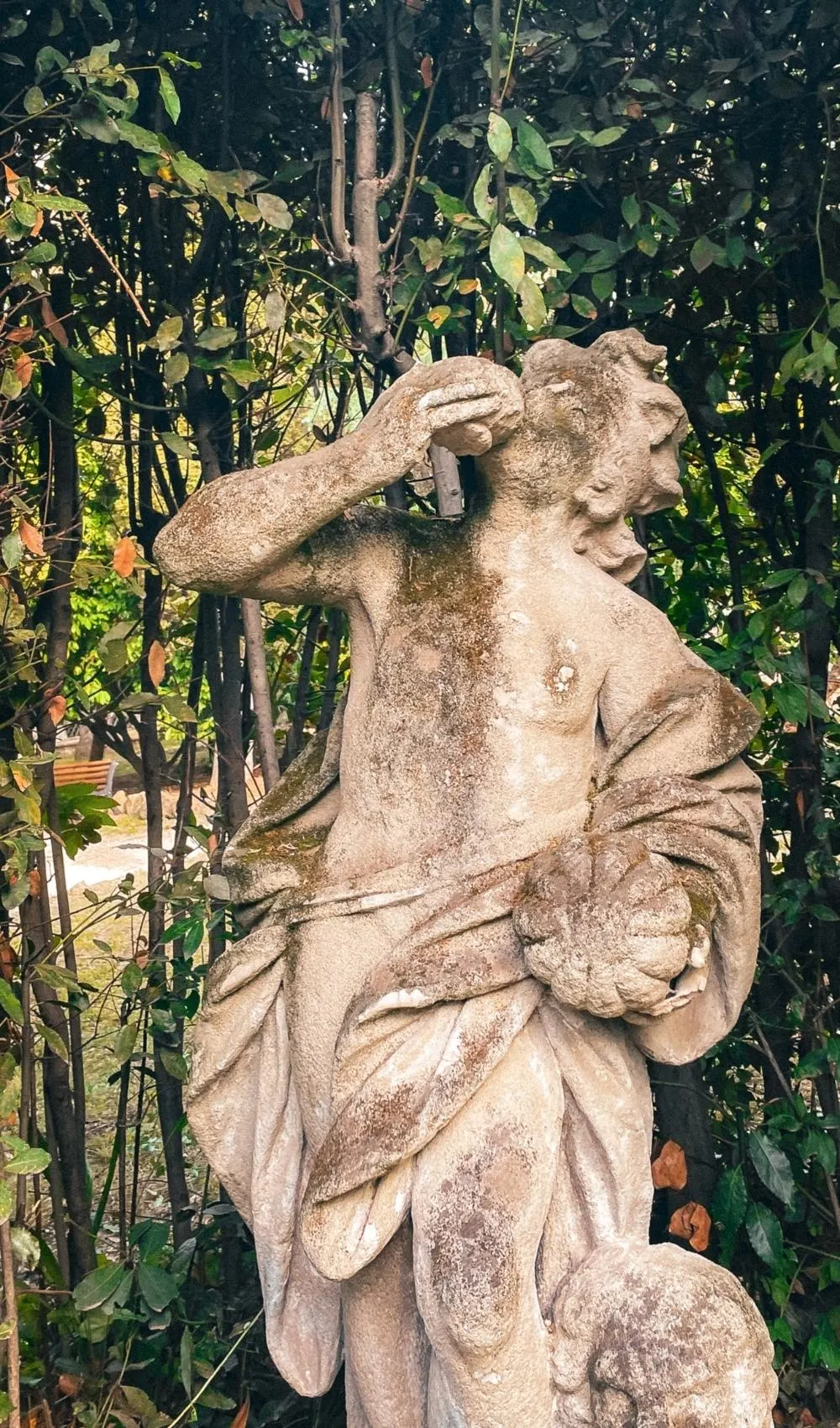
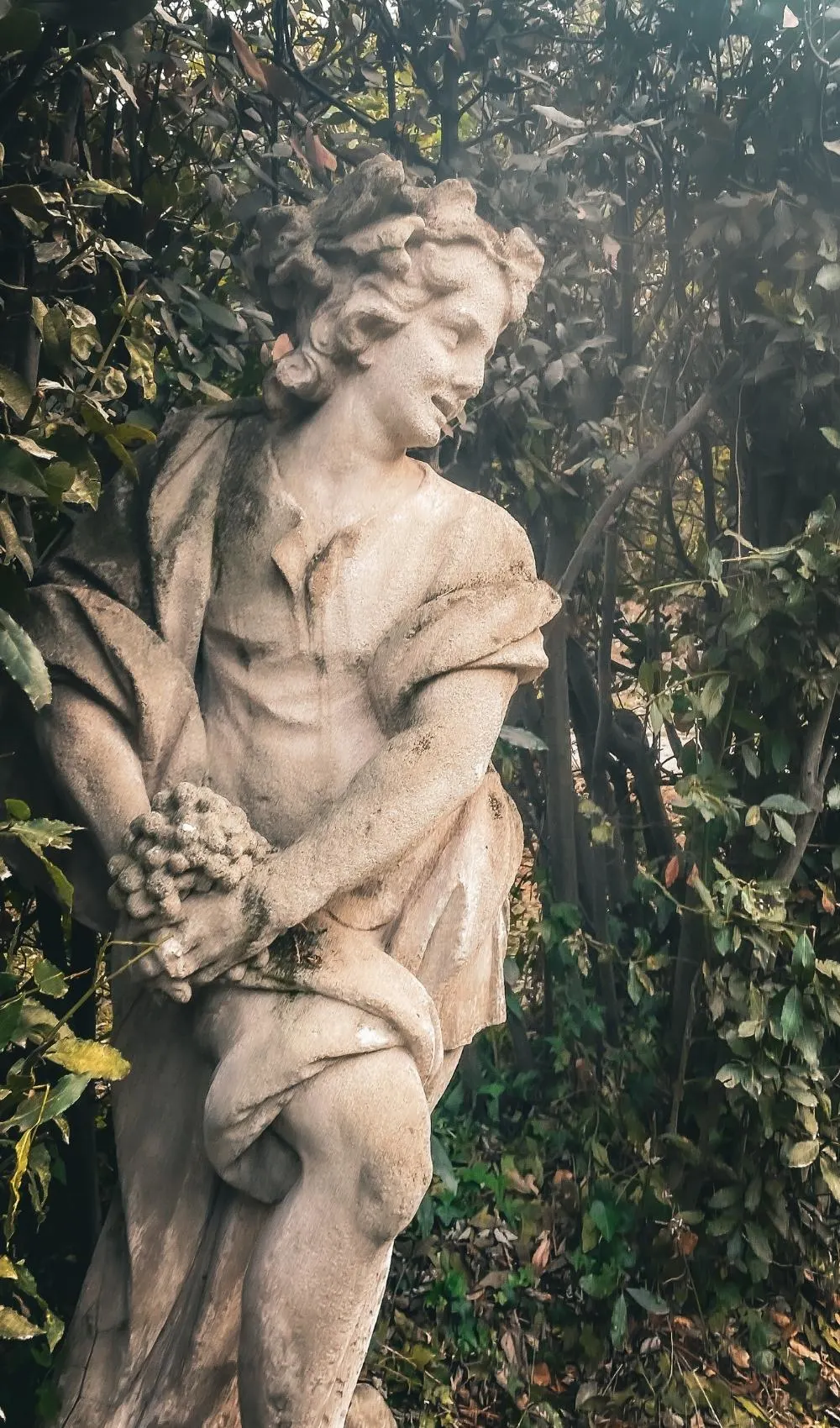
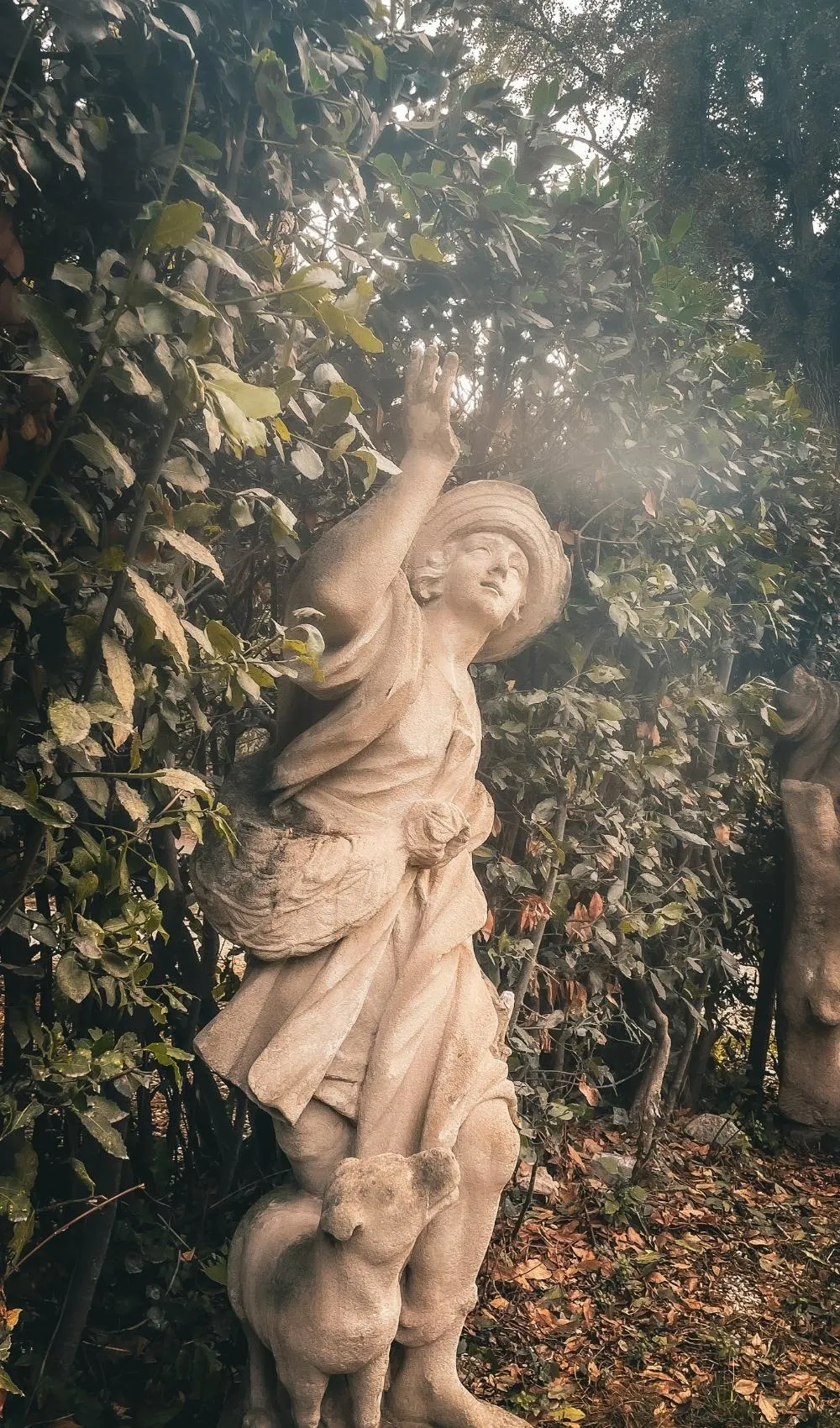
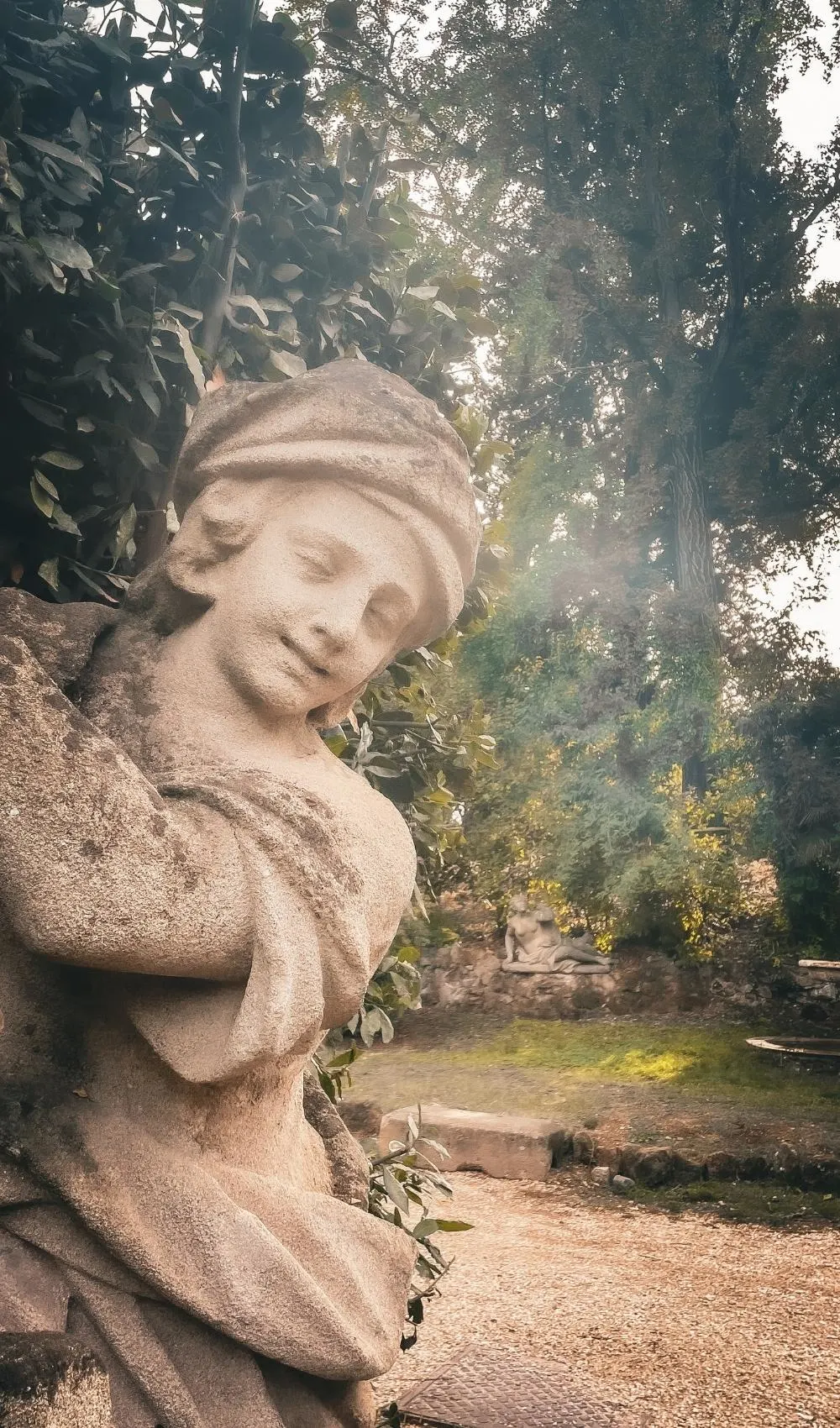
The Esedra dei 12 Mesi (Allegory of the 12 Months) is a collection of twelve statues set in a half circle, and this place alone makes Villa Sciarra one of the most instagrammable places in Rome.
The twelve figures represent the 12 months of the year, depicted in various scenes that reflect the changing seasons and agricultural activities.
Read: The Best Halal Restaurants in Rome














Villa Sciarra: Statue of the Fauno Portavaso

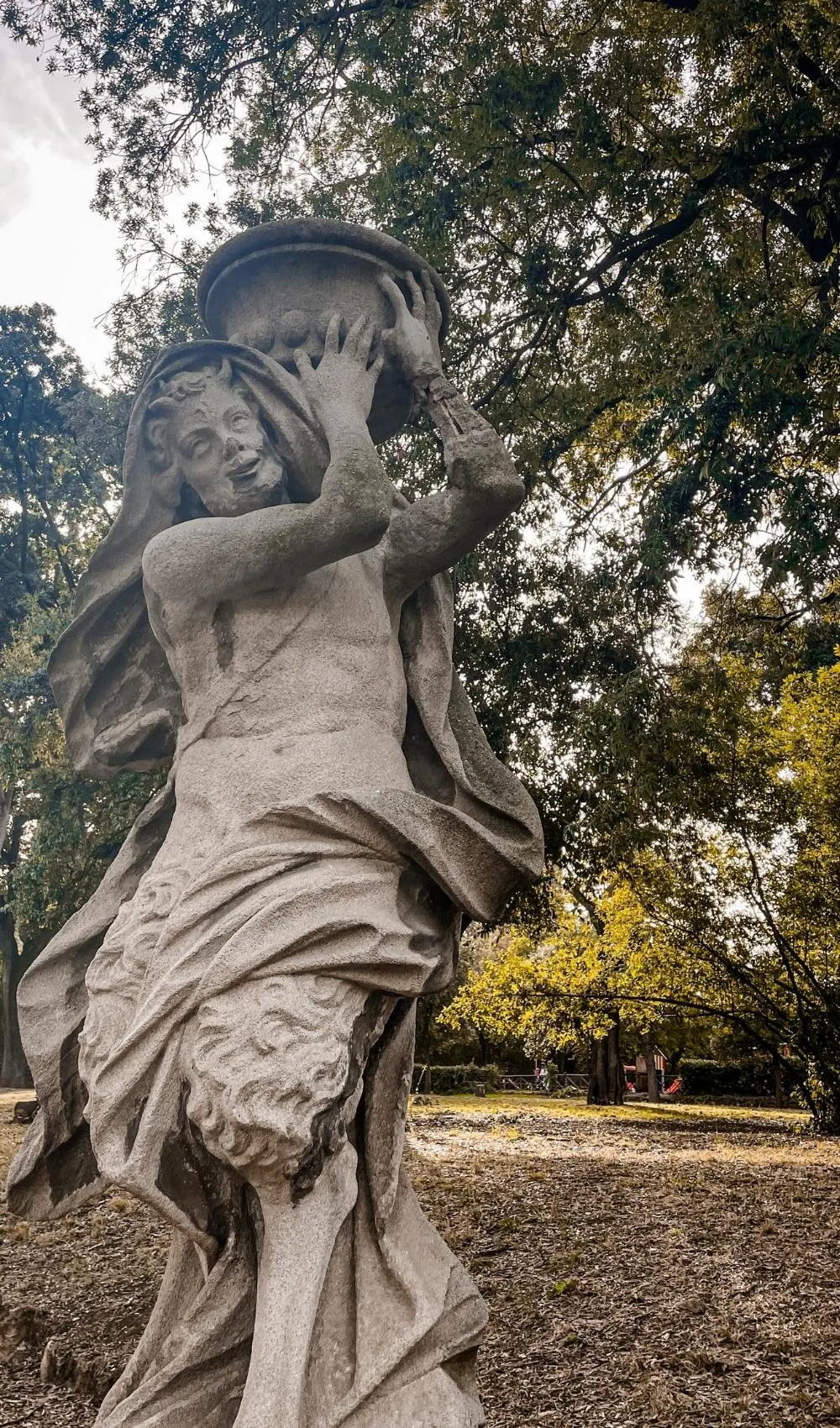
Close to the Esedra dei 12 Mesi, you will find yet another beautiful statue of Villa Sciarra, the Statue of the Fauno Portavaso.
This sculpture depicts a faun carrying a vase, with all the features of the mythical creature; a tail, pointed ears, and goat legs.
The faun is indeed a half-human, half-goat creature, and it’s quite fun to see just how many faun sculptures are scattered around the villa.
Read: The Best Makeup Shops in Rome
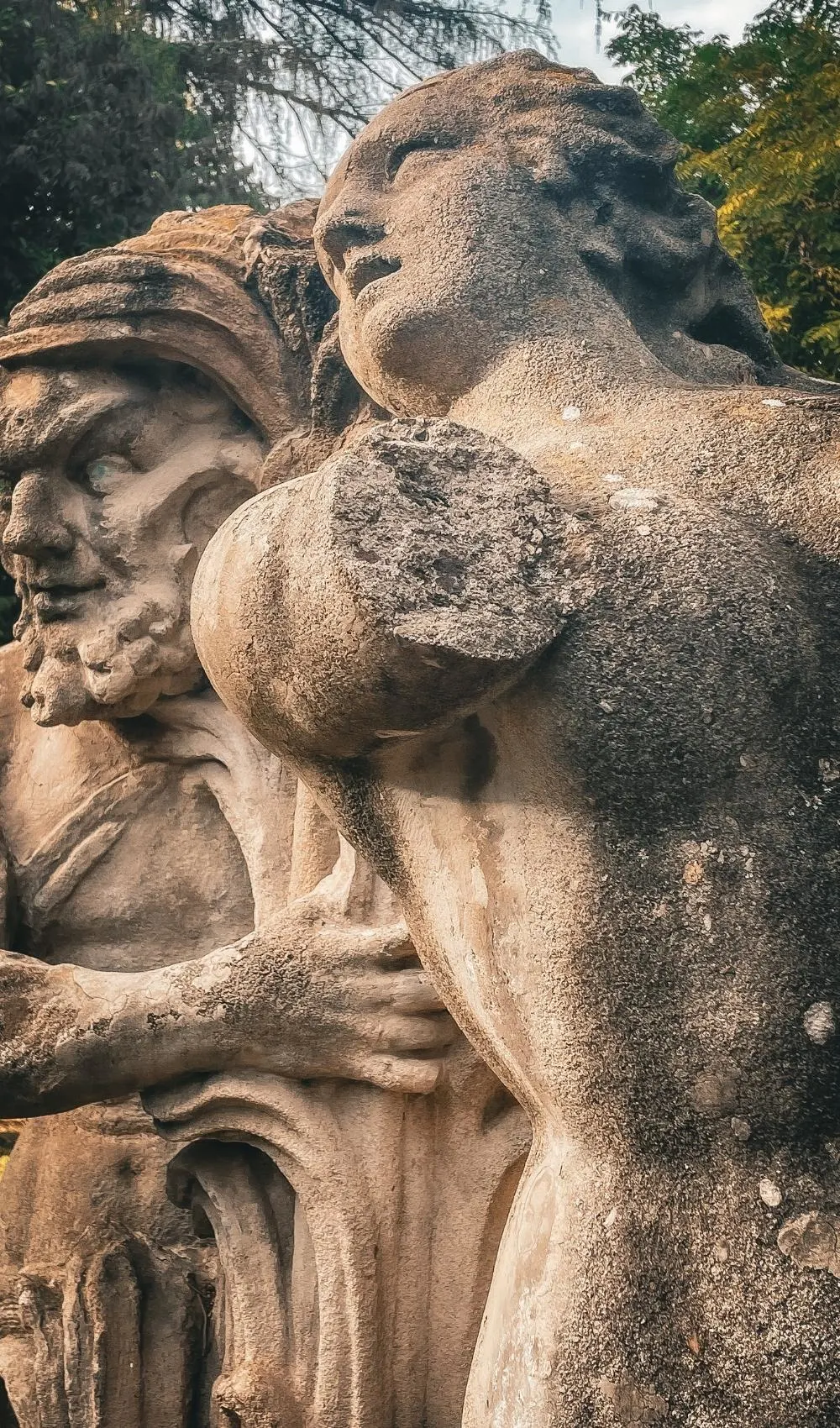
Villa Sciarra: Statues of Pan and Siringa

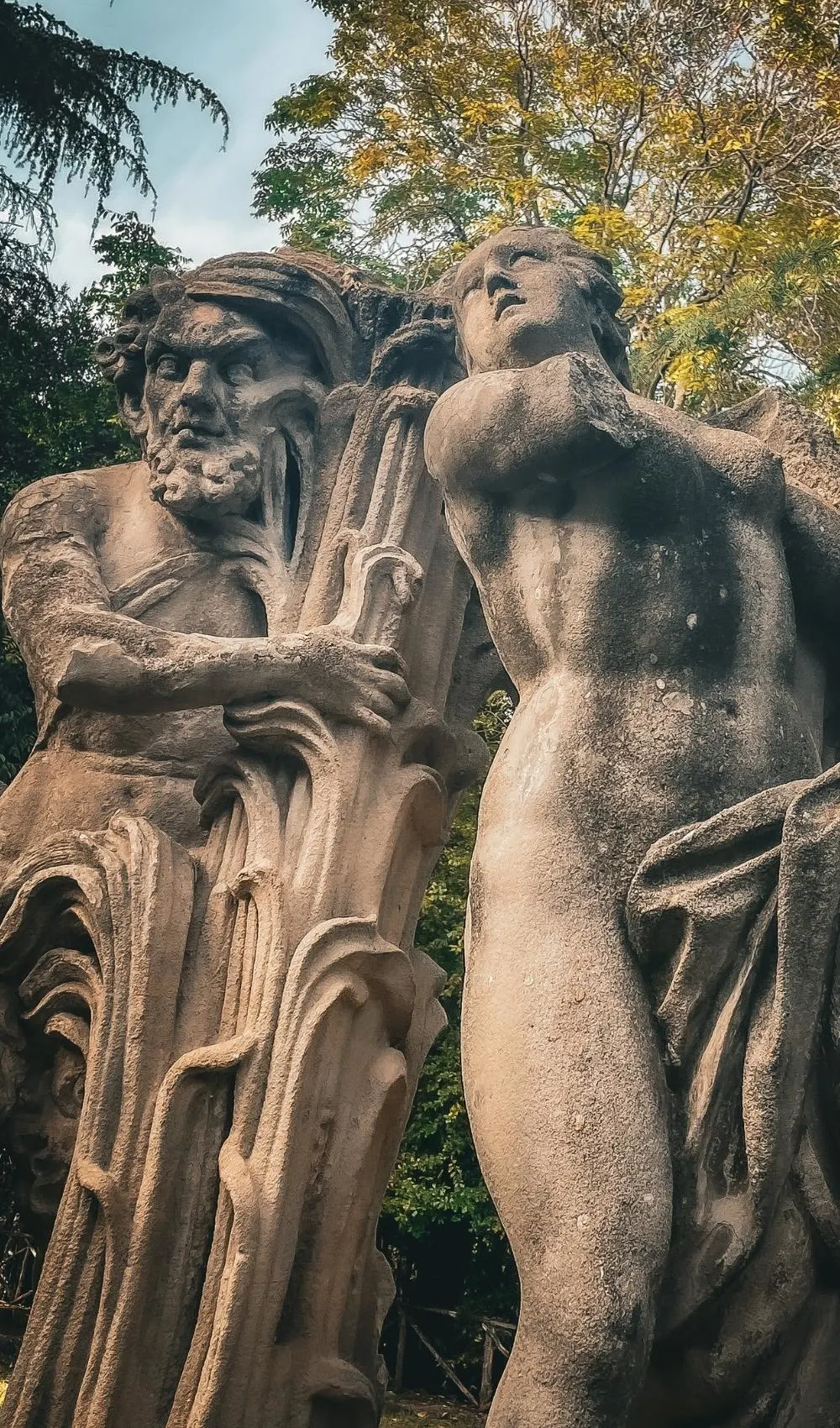
The statues of Pan and Siringa at Villa Sciarra are two of my favorites and depict the Greek god Pan and the nymph Sinringa, also called Syrinx.
These are the statues that made me feel the most, as their expressions are almost human and really showcase the skills of the sculptor.

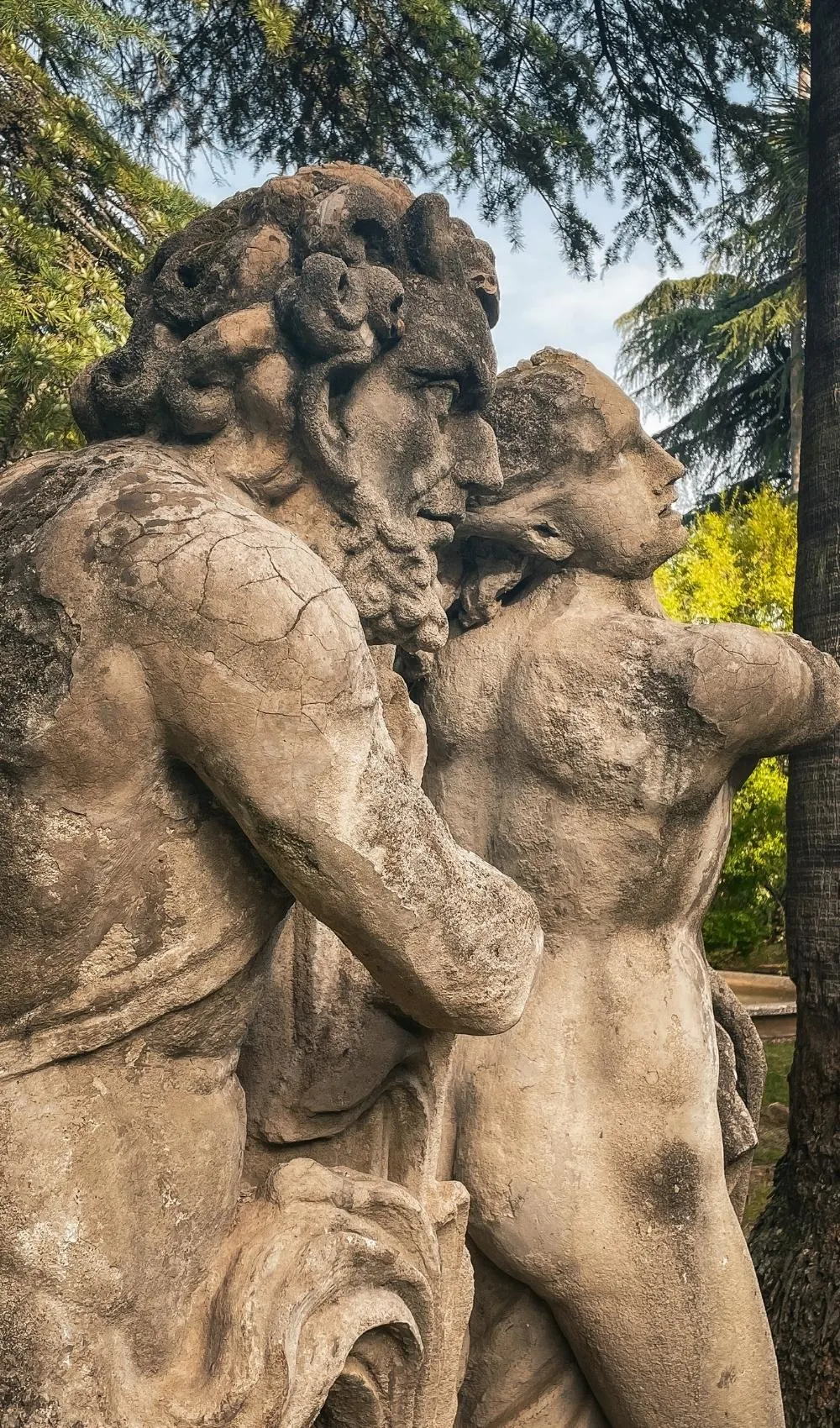
The Greek myth tells the story of Pan chasing Siringa, who, in her attempt to escape, was transformed into reeds.
Pan, in sorrow, crafted the first pan flute from these reeds.
These two statues are crafted in the same classical style all the statues at Villa Sciarra are crafted in, and again, it’s simply incredible to be able to discover these in the heart of Rome.
Read: The Best Shopping Spots in Rome

Villa Sciarra: Statues of Apollo and Dafne

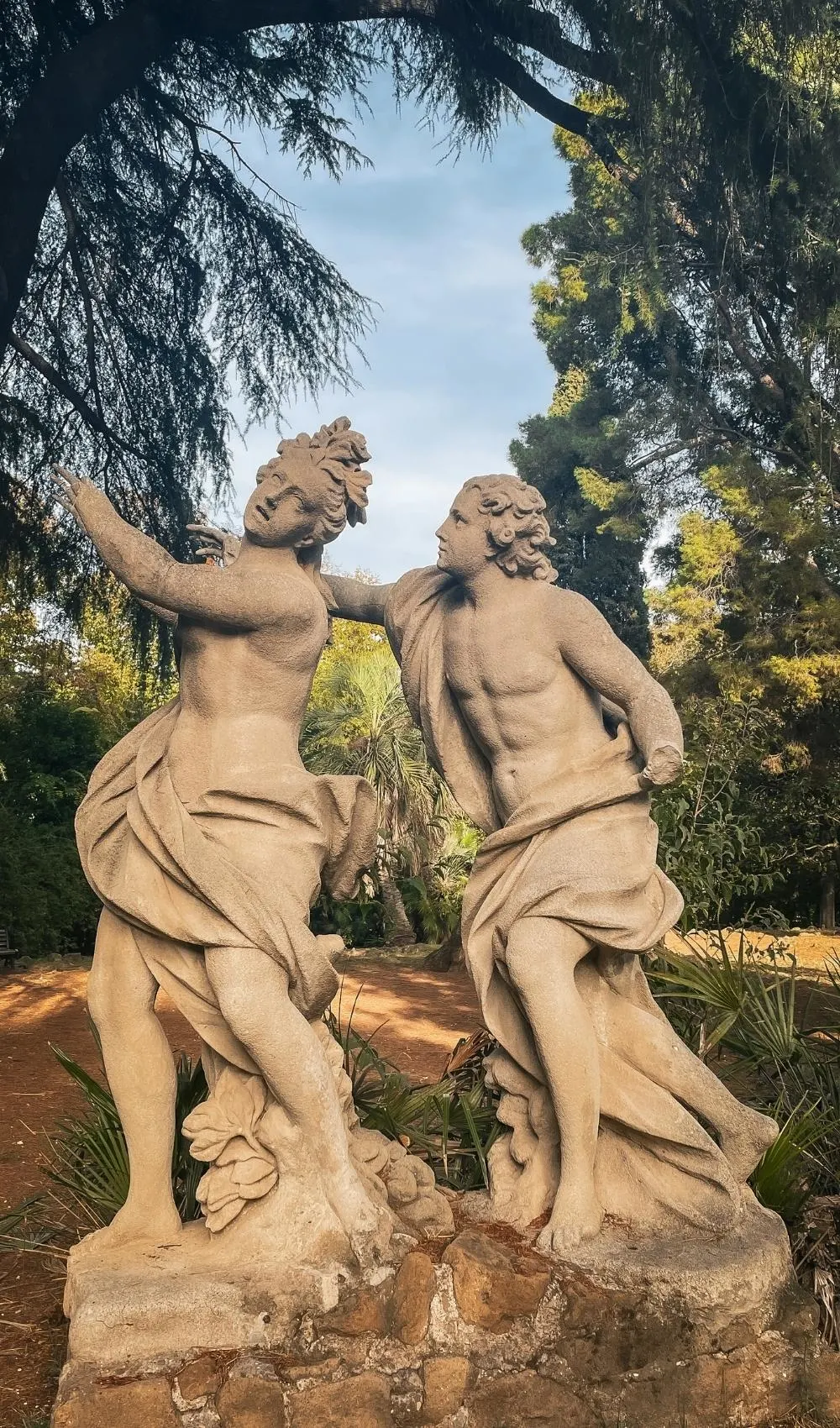
The Statues of Apollo and Daphne are two other favorites of mine, depicting the Greek god Apollo and the nymph Daphne.
Both part of Greek mythology, these are particularly beautiful and the statues at Villa Sciarra represent Daphne escaping the amorous pursuits of Apollo and slowly transforming into a laurel tree.

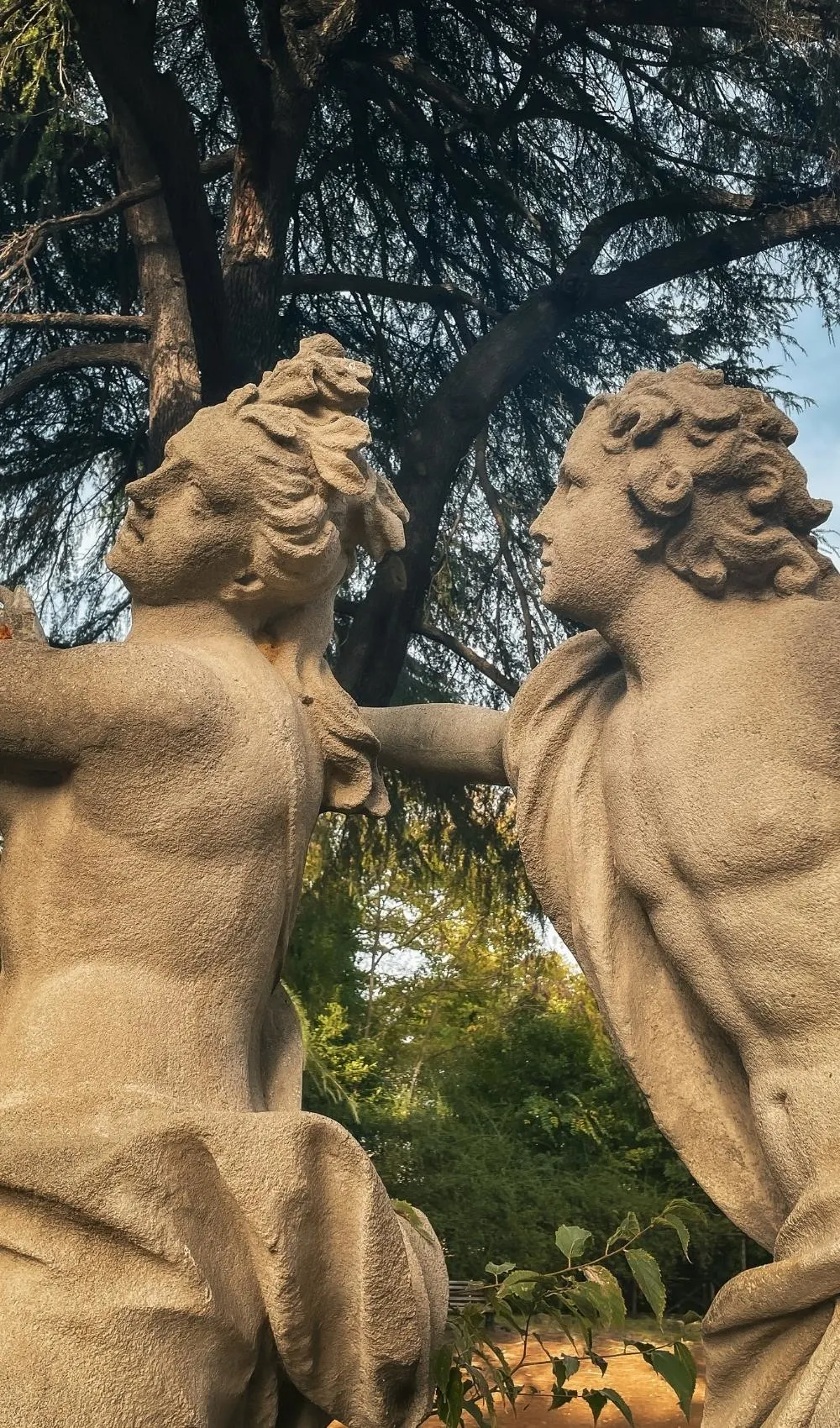
We can see at the bottom of the statue Daphne transforming into the laurel tree, with Apollo’s outstretched hand reaching towards her as she transforms.
Read: The Most Magical Gardens Near Rome
Villa Sciarra: Statues of Diana and Endymion

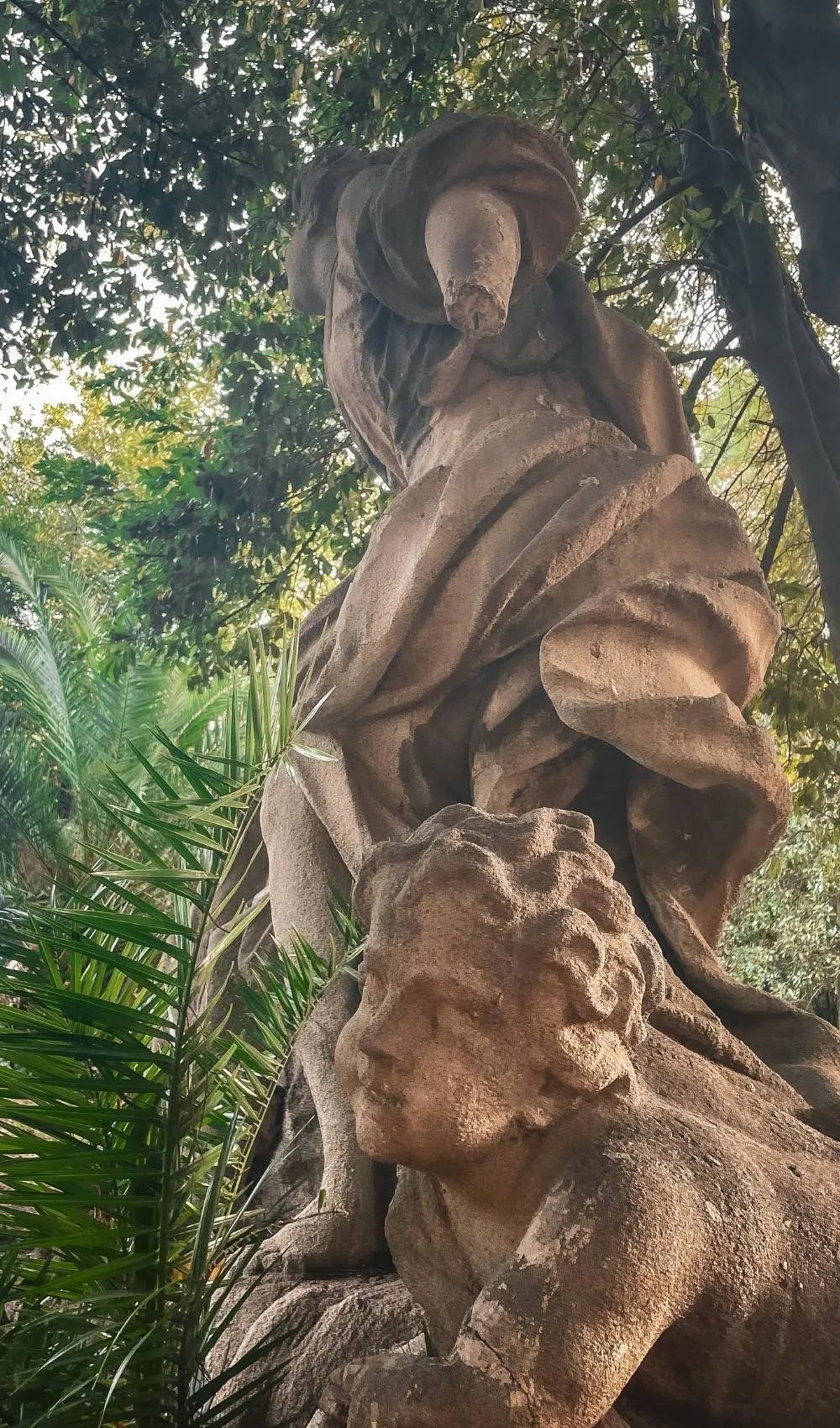
Another sculptural group worth seeing at Villa Sciarra is the statues of Diana (Artemis in Greek mythology) and Endymion.
Diana was the goddess of the hunt and wild animals, while Endymion was a handsome shepherd.

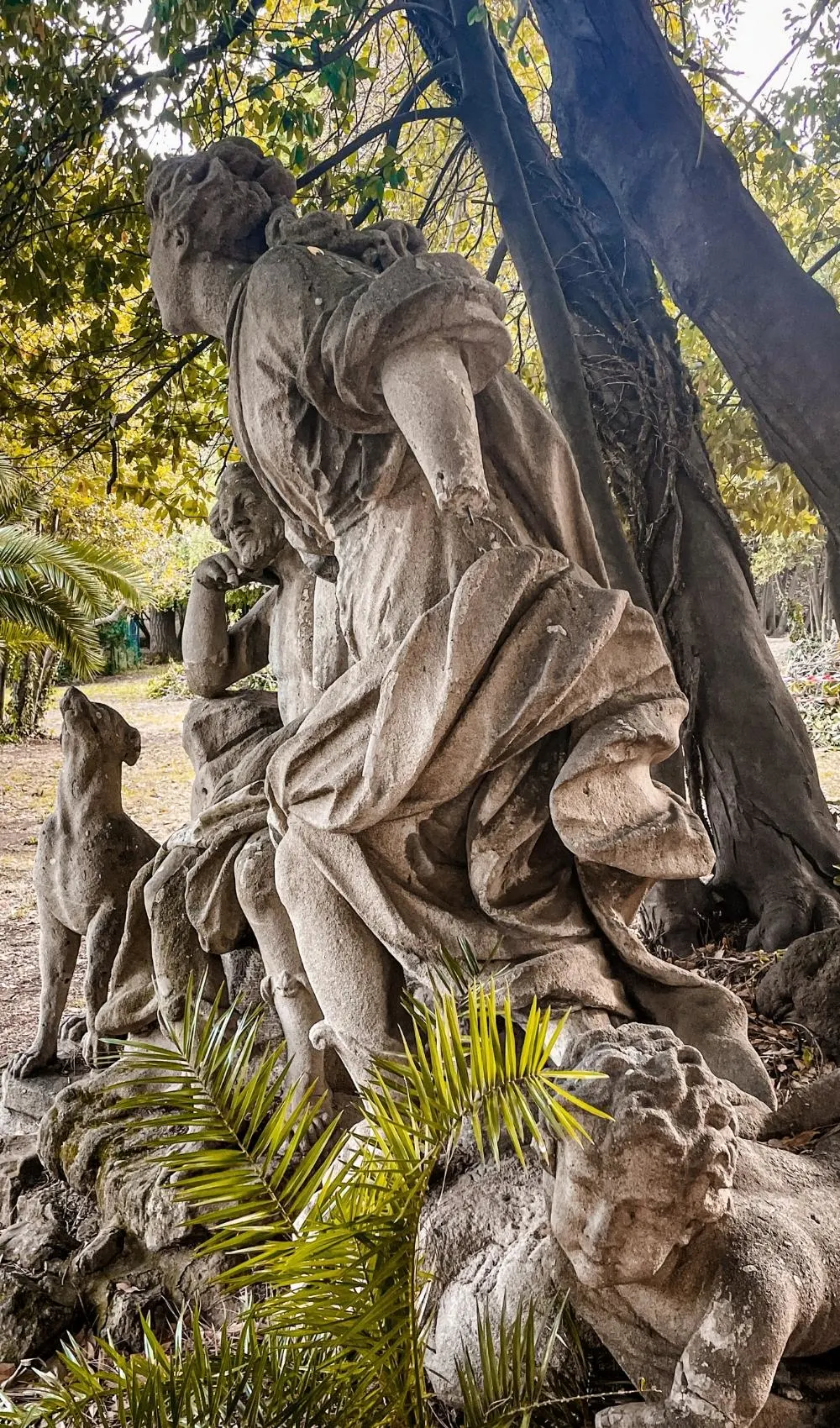
One version of their myth tells the story of Diana falling in love with Endymion, putting him into eternal sleep so that she could visit and admire him whenever she pleased.
That is why Endymion at Villa Sciarra is represented with closed eyes, with his dog nearby.
These two are located right next to a beautiful pond, near the entrances of the villa and stunning to admire.
Read: The Best Cafes to Work in Rome
Villa Sciarra Fountains
Villa Sciarra: Fontana dei Fauni (Fontana dei Satiri)

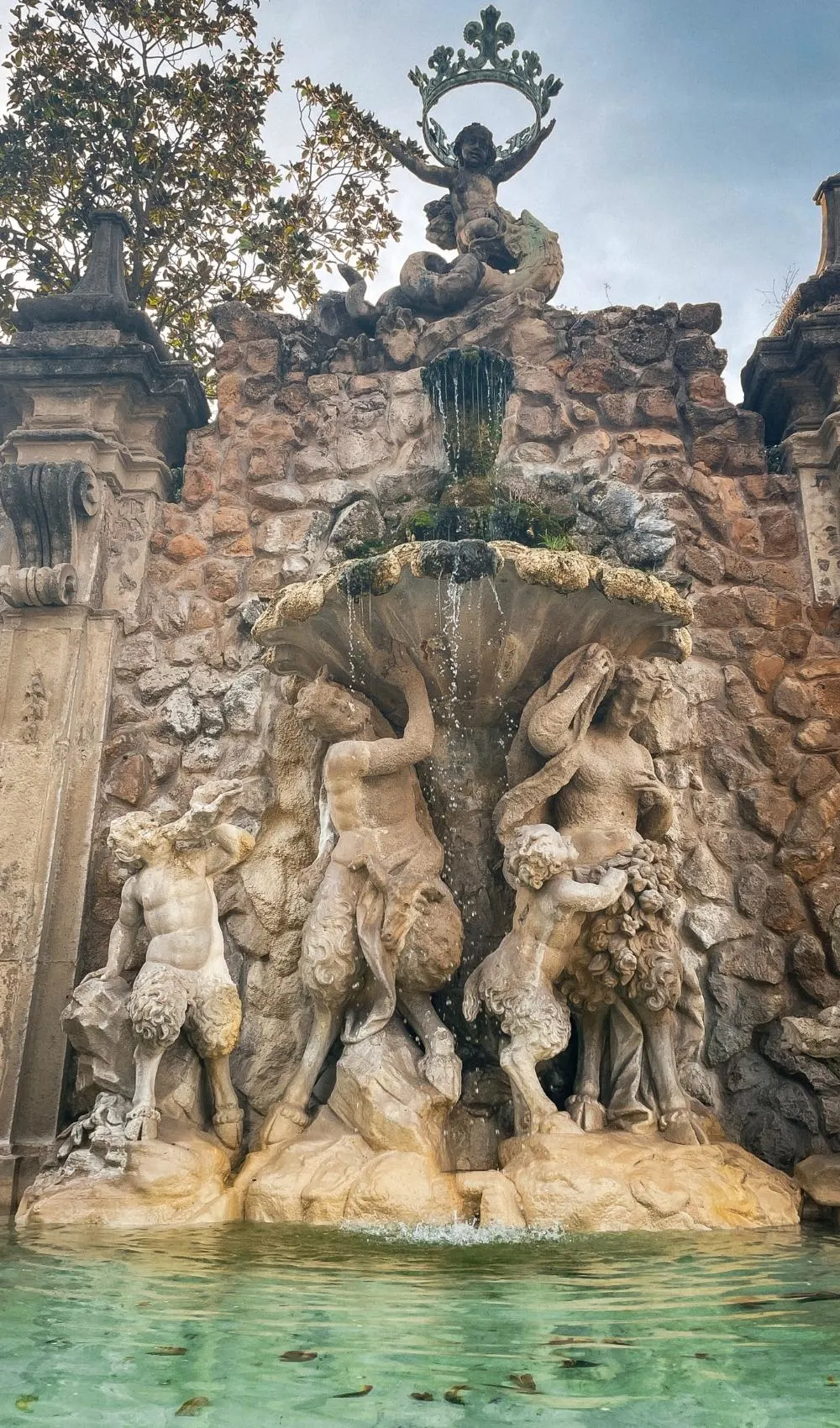
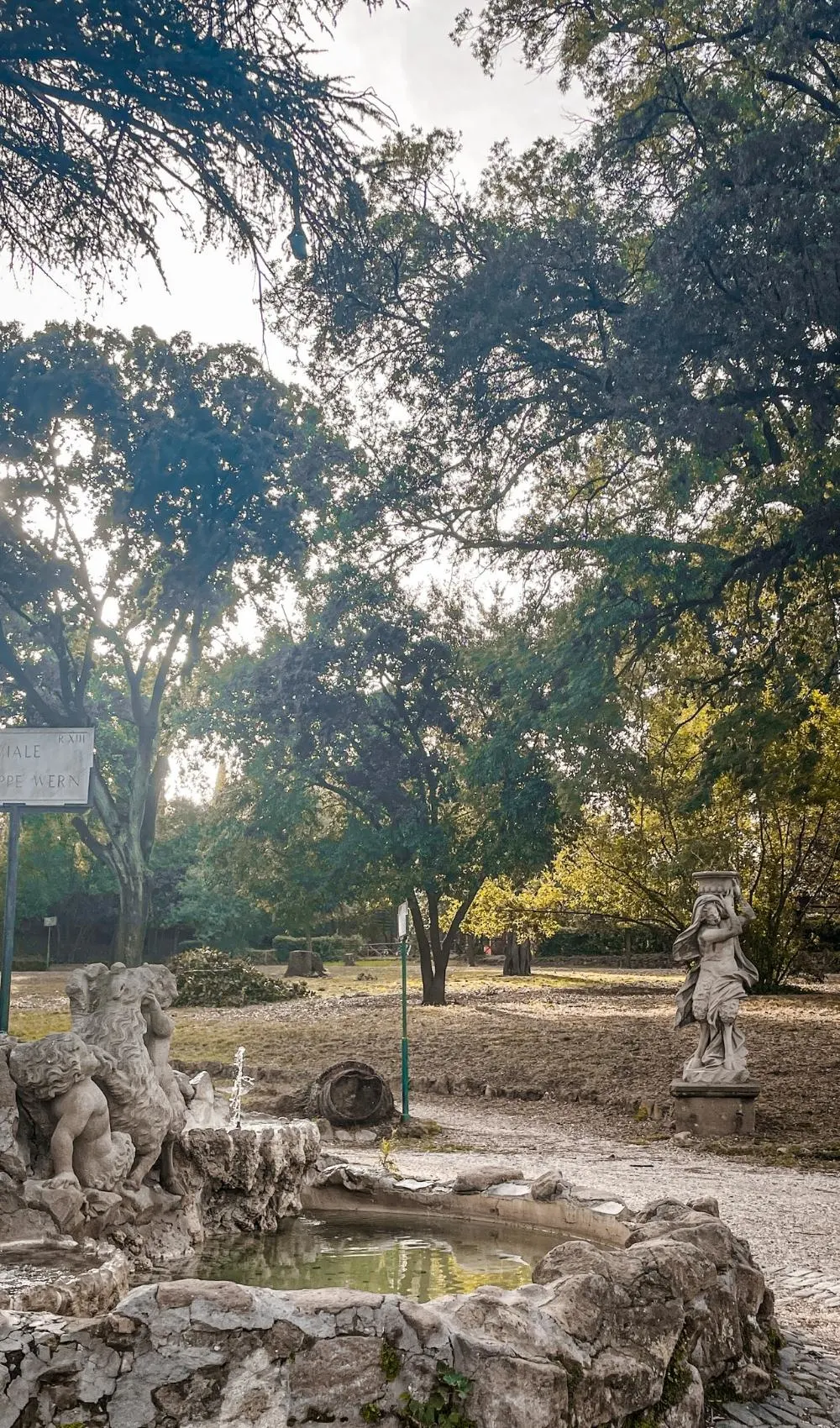
A few ornate fountains are scattered around Villa Sciarra, one of the most important being the Fontana dei Fauni, also known as the Fontana dei Satiri.
Again, we see here statues of fauns similar to the Fauno Portavaso and its vase held up high.
Fauns represent the untamed and primal aspects of nature as well as the celebration of life and its joys, and those depicted on the Fontana dei Fauni, are, again, crafted in a classical design.
Read: The Best Beaches Near Rome
Villa Sciarra Fountains: Fontana dei Putti e Biscione

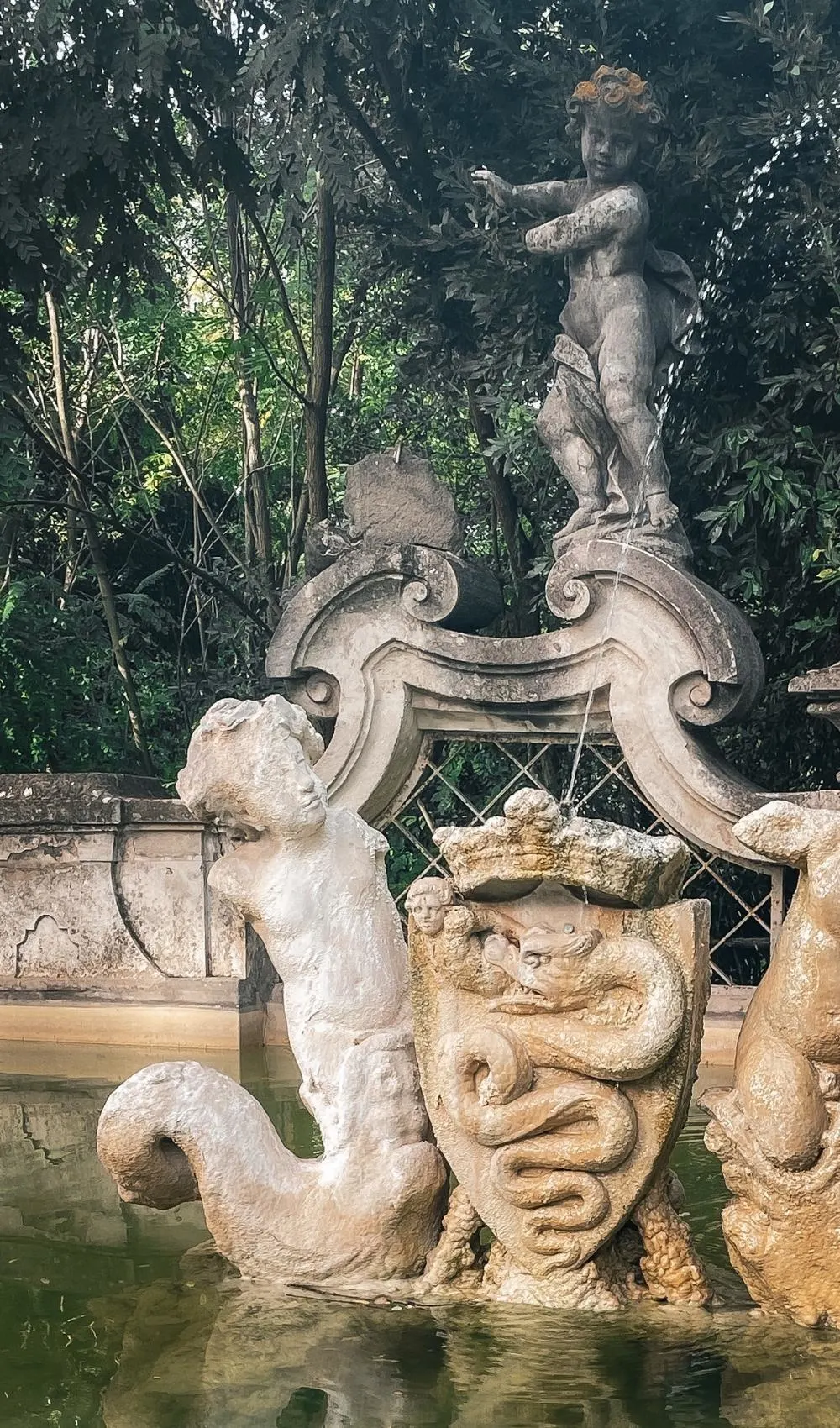
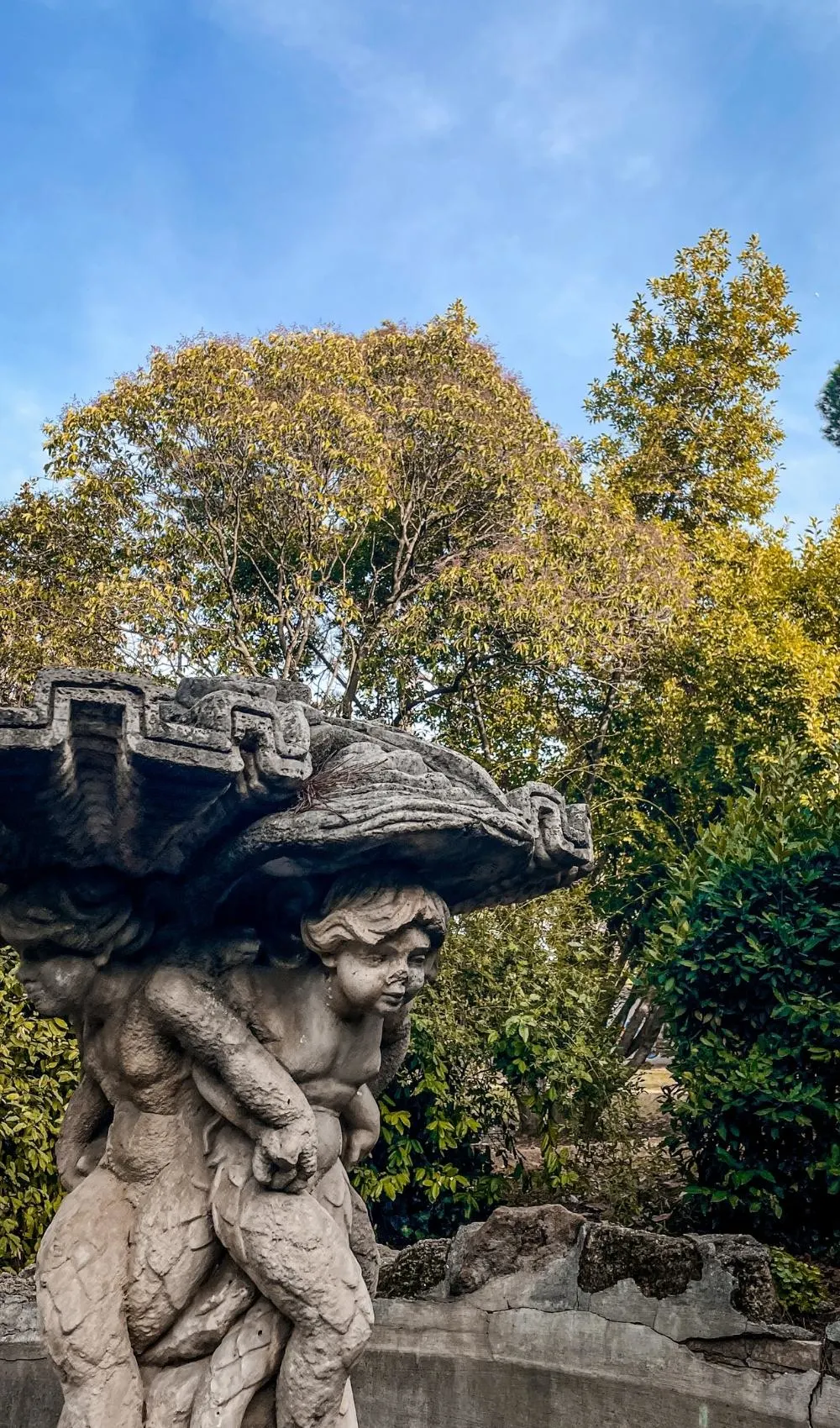
Another one of the most important fountains at Villa Sciarra is the Fontana dei Putti e Biscione, adorned with cherubs and a serpent.
Symbolism is strong throughout the entire villa, and probably even stronger with this beautiful fountain as it is laden with historical references.


Putti are chubby, naked infant boys which represent innocence, love, and joy and the biscione is an ancient symbol associated with various meanings, including transformation, renewal and protection.
The Biscione is also often associated with the Visconti family in Milan, and historically significant in Italian history.
The Fontana dei Putti e Biscione is yet one of the villa’s best hidden gems, and a soothing place with benches around to relax for a bit.
Read: The Best Vegan Restaurants in Rome
Villa Sciarra Fountains: Fontana della Tartaruga (Fountain of the Turtle)

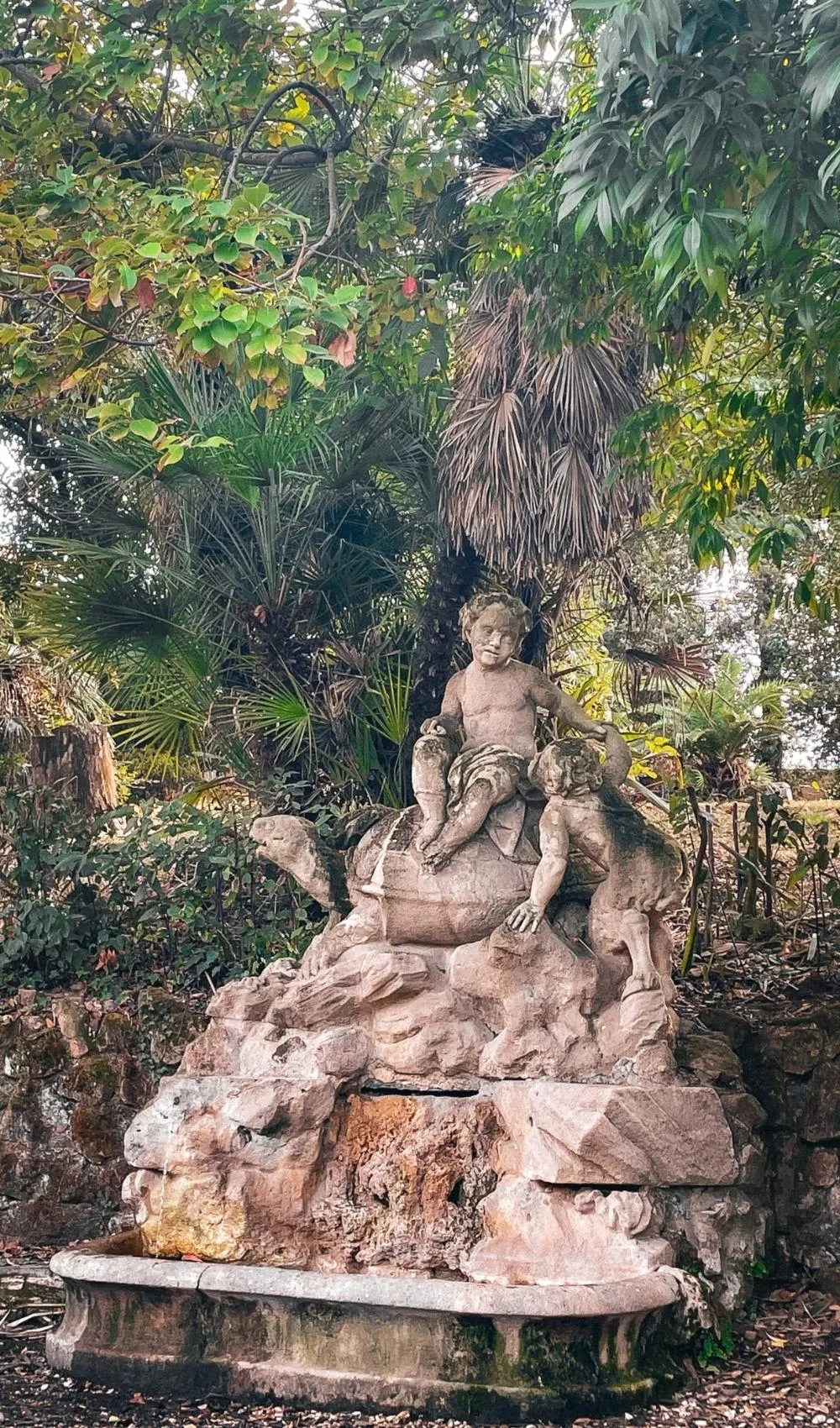
A few fountains at Villa Sciarra depict animals, and that’s the case of the Fontana della Tartaruga (Fountain of the Turtle).
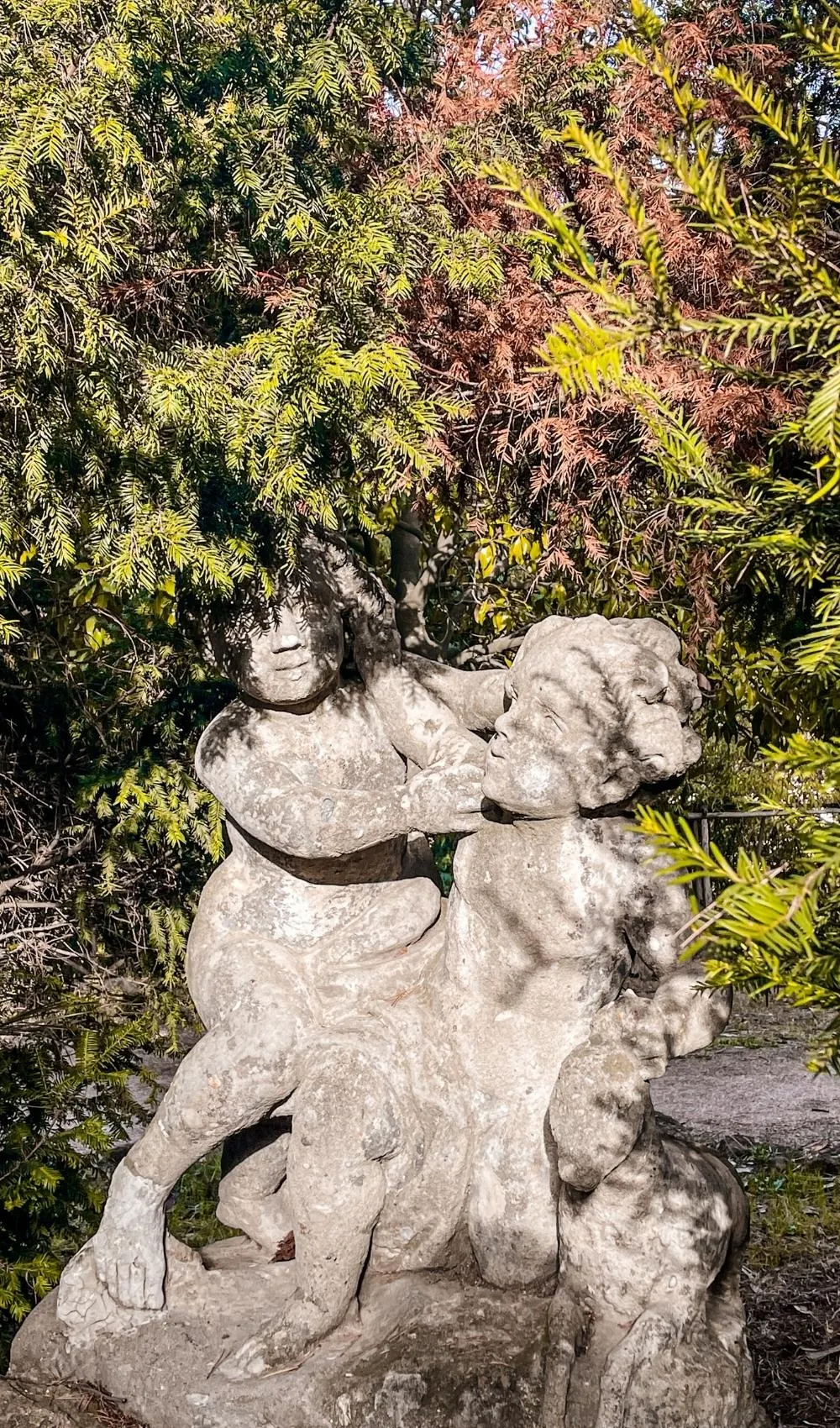
As with all the beautiful statues, sculptures and fountains of the villa, you have to walk around to come across the Fontana della Tartaruga, which is adorned with an infant and a faun climbing on top of the turtle.
Turtles are typically associated with themes of protection, stability and wisdom, and the trio makes for an interesting sight within Villa Sciarra.
Read: The Best Things to Do in Rome at Night
Villa Sciarra Fountains: Fontana della Lumaca (Fountain of the Slug)

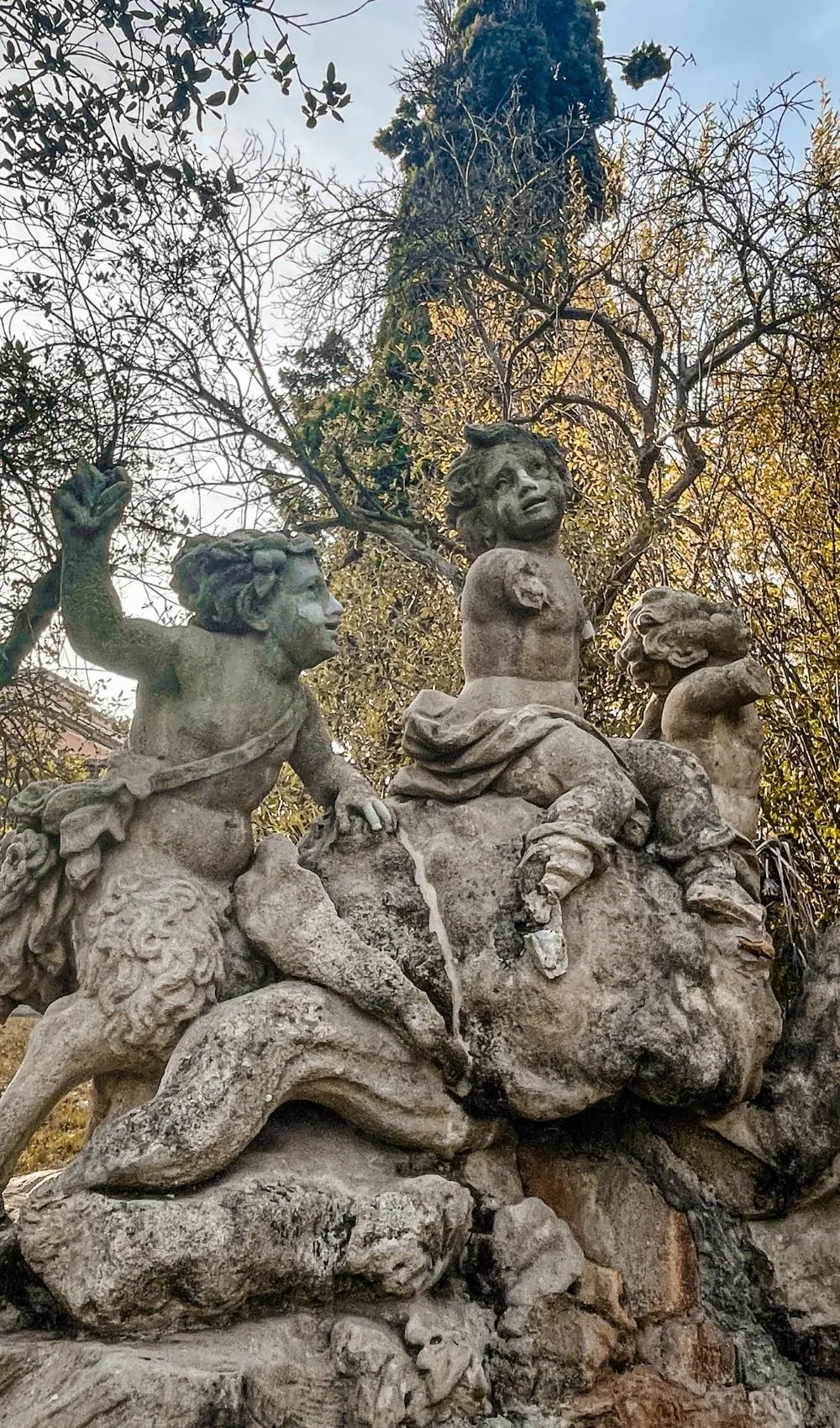
Other Curiosities in Villa Sciarra, Rome
Casino Barberini


The Casino Barberini, also known as the Casino dell’Aurora, is a historic villa located within Villa Sciarra.
It is not always open to the public but is still a beautiful 17th-century villa worth checking out from the outside as its Baroque style makes for perfect pictures if you wish to snap a few.
If you can visit the Casino Barberini, though, do so as the ornate interior depicts mythological and allegorical scenes all more beautiful than the previous one.
The intricate Baroque detailing and frescoes are enough to take your breath away, and the highlight of Casino Barberini is probably the Aurora Room, named after the fresco depicting the Roman goddess of dawn, Aurora.
Read: The Prettiest Neighborhoods in Rome
Other Statues and Sculptures at Villa Sciarra, Rome






Villa Sciarra: Tempietto Circolare

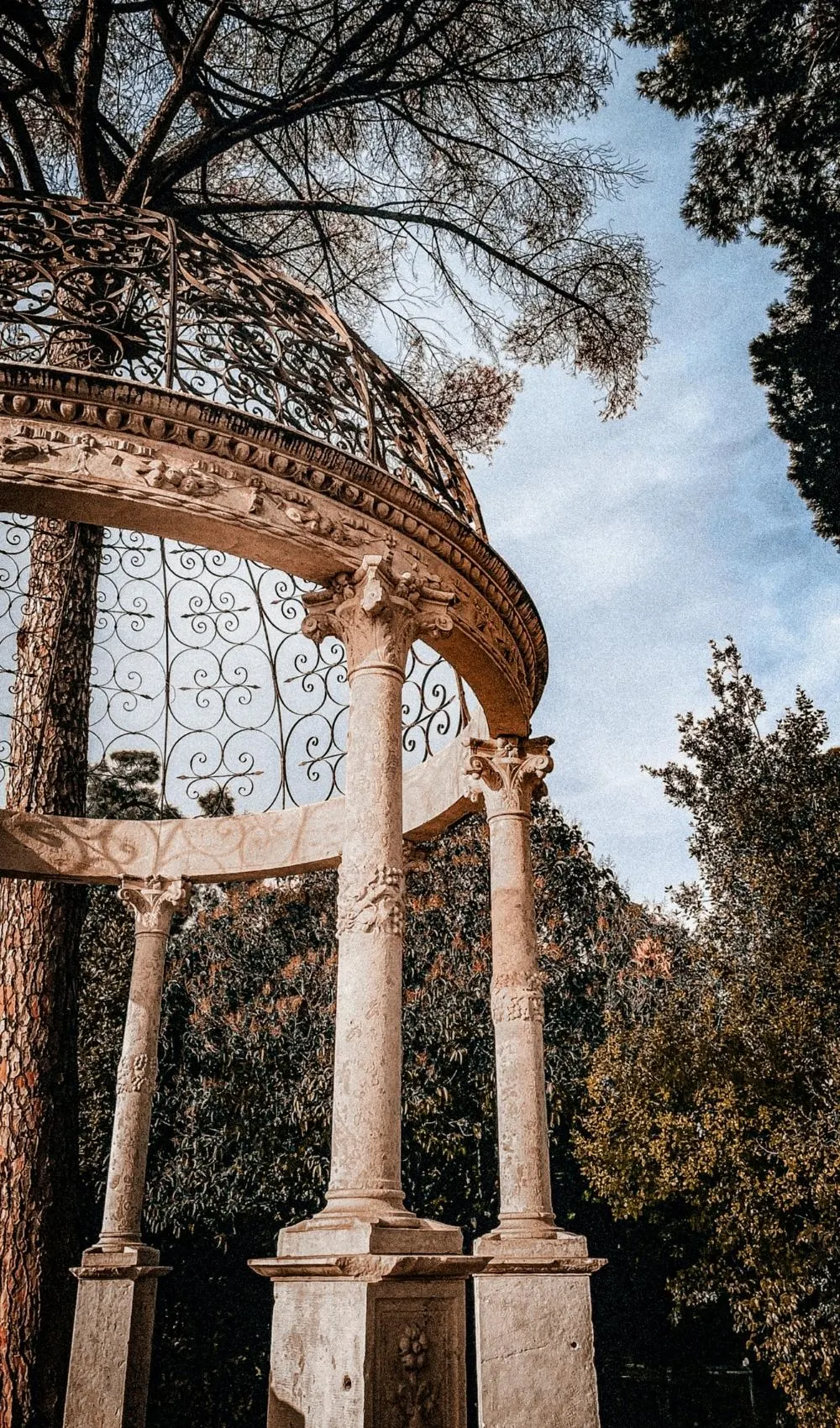
One of Villa Sciarra’s main highlights is the Tempietto Circolare, a small circular temple with a carved dome and beautiful pillars.
Another really romantic spot, perfect if you’re looking for free things to do in Rome on a date, for instance.
Around the tempietto, you have a pergola and since you’re at the end of Villa Sciarra, you can really enjoy a beautiful view of Rome around this spot.

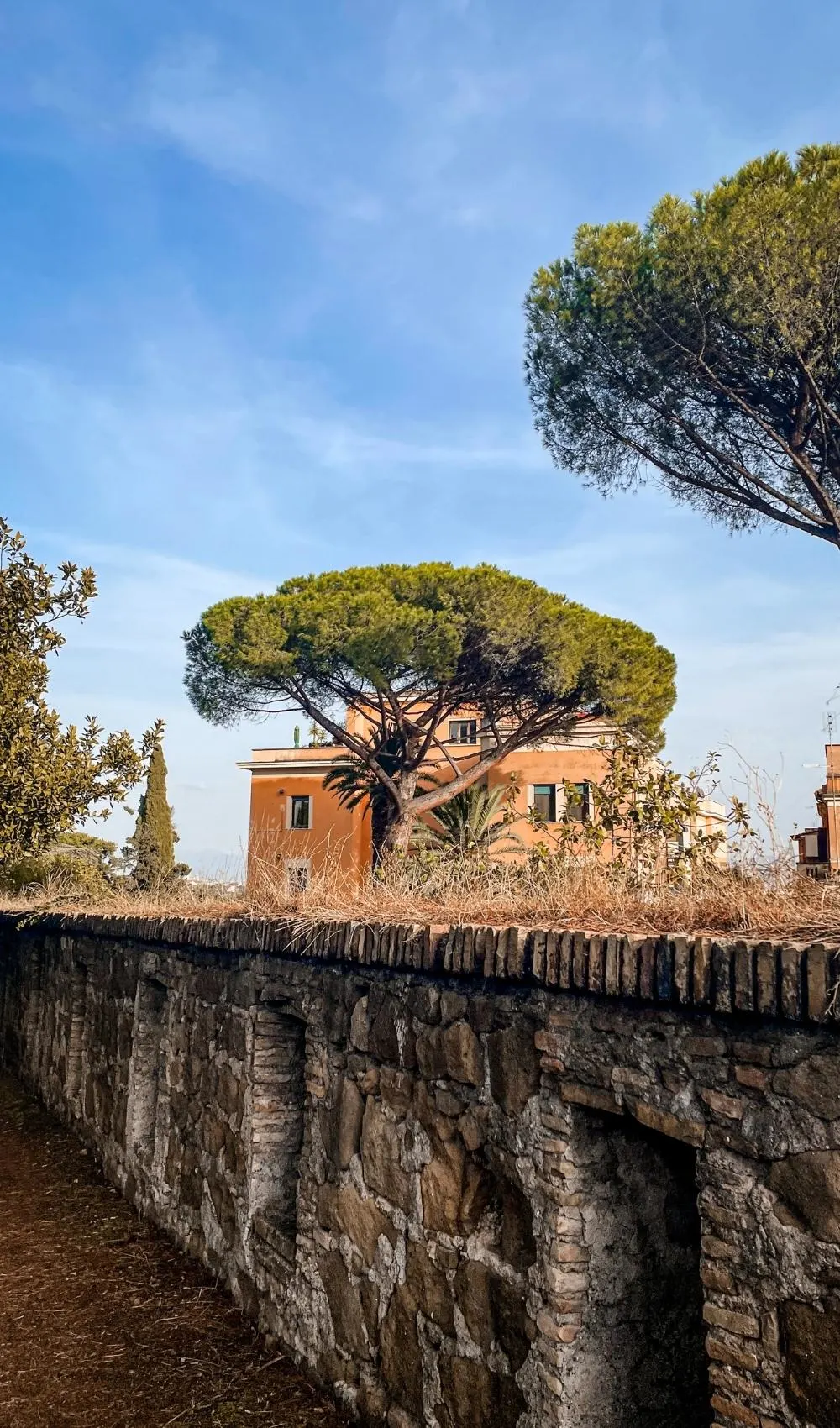
Usually, Roman villas are kept very clean and people respect their rich history; it’s therefore rare to find street art in Rome inside villas and parks like Villa Sciarra.
However, I did find an inscription that resonated with the vibe you feel when walking around Villa Sciarra: When death takes my hand, I will hold you with the other and promise to find you in every lifetime.

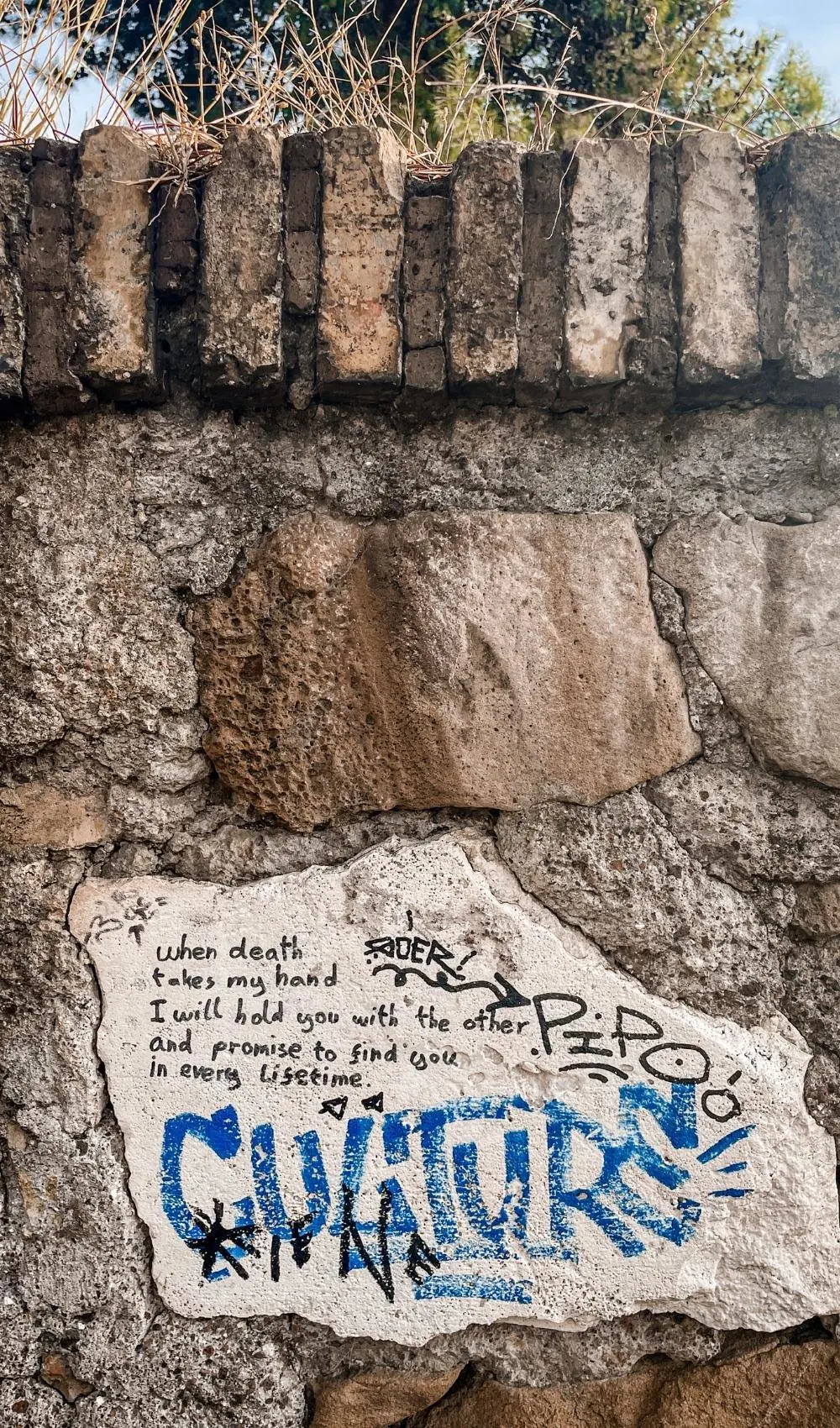
For whoever would like to find places to see the sunset in Rome, Villa Sciarra also offers a few viewpoints.
The one you should definitely walk towards makes for a secluded, romantic spot which offers a straight view on the Altare della Patria (Vittoriano), a huge, white building close to the Colosseo that symbolizes Italian nation and its values.
Read: The Best Ice Cream Shops in Rome
Villa Sciarra, Rome: How to Visit the Hidden Gem in Trastevere

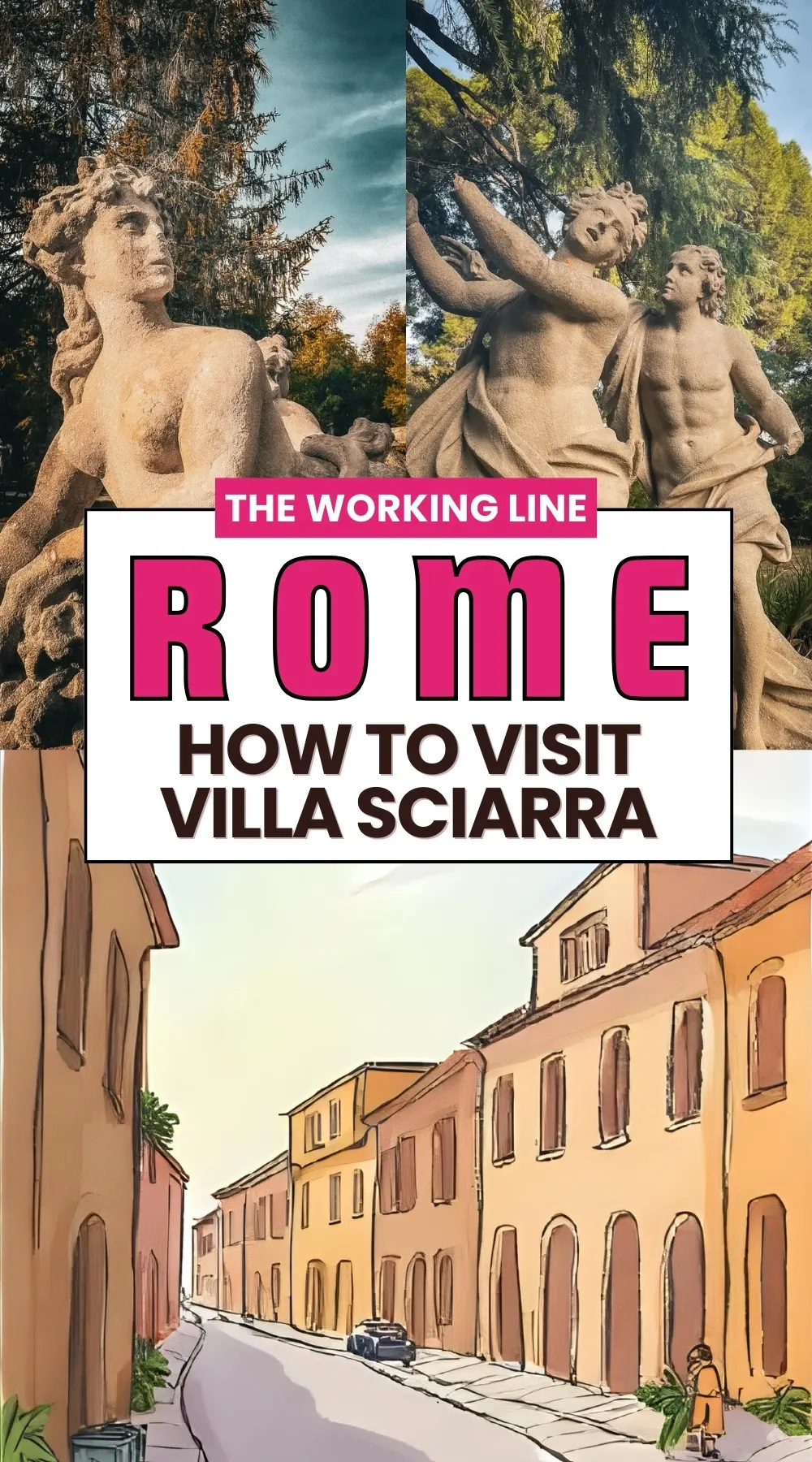
There you have it, my complete overview of the beautiful Villa Sciarra in Trastevere!
Hopefully, these pictures will have taken you away from the bustling city center with the will to tread its immaculate paths.
Close to Villa Sciarra, you have yet another one of the most beautiful villas of Rome; Villa Pamphili, even bigger, and differently, gorgeously serene.
The common point between the Roman villas is that you’re sure to find incredible sculptures, statues and fountains – and that’s something you can’t put a price on.
And since the parks and gardens themselves are usually free… These off-center villas are some of best hidden gems to visit on a budget!