

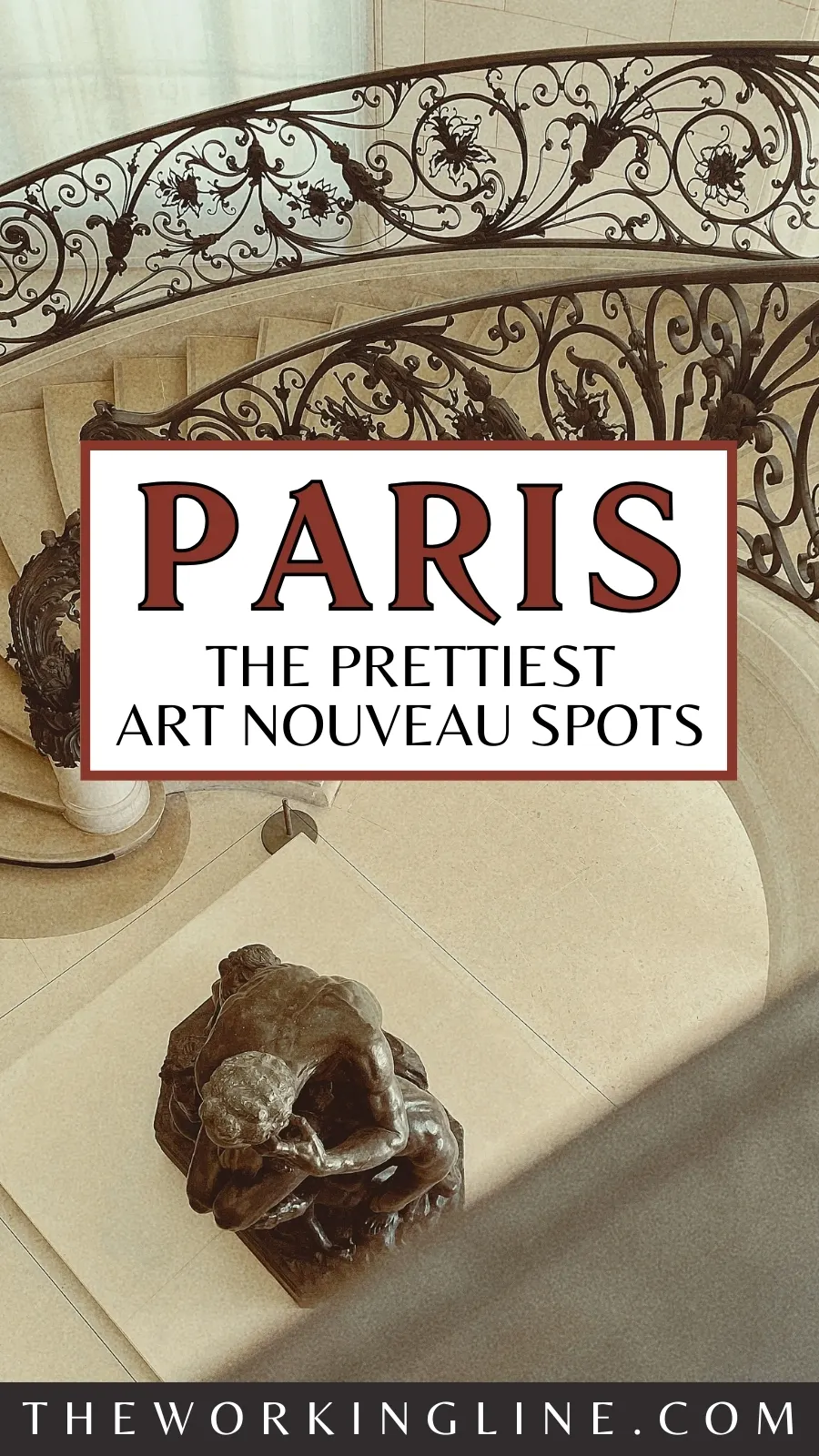
A local’s guide to the most beautiful places for Art Nouveau in Paris; wonderful buildings like the Immeuble Lavirotte, and free spots like the Petit Palais!
They say Paris is the city of love.
It is only very recently, since moving here, that I’ve realized how every architectural, sculptural, and cultural detail truly contributes to this reputation – stripping away the Hollywood clichés to reveal a genuine French romanticism.
This is what makes the city, to me, one of the most beautiful in the world.
A major part of this beauty is the persistence of Art Nouveau, a style born during the Belle Époque.
Today, I wanted to share with you some of the most beautiful Art Nouveau places you can still see in Paris.
Art Nouveau in Paris: 17 Beautiful Places, Shops and Cafes

A Bit of History: The Difference Between Belle Époque and Art Nouveau
While the terms are often linked, there is a key difference.
The Belle Époque refers to the historical period of peace and prosperity, while Art Nouveau is the specific artistic and architectural reaction against the rigid academic art of the 19th century.
The Belle Époque lasted for a relatively short time, from the end of the Franco-Prussian War in 1871 to the start of the First World War in 1914.
It was an era of incredible invention – cinema was born, the telephone was invented, and cities saw the spread of electricity and the birth of the Paris Metro in 1900.
Art Nouveau flourished at the tail end of this era, between 1890 and 1910, following movements like Neoclassicism and the Beaux-Arts style seen at the Grand Palais.
Its lines are curved and asymmetrical, with motifs inspired by nature: flowers, insects, flowing hair, or sinuous branches.
Architects used wrought iron, glass, and colorful ceramics to create an organic, joyful look.
Though Art Nouveau was once considered “lesser” compared to classical architecture, it was actually a bold celebration of the joie de vivre and the blossoming Parisian bourgeoisie.
Here, decoration is intrinsic to the art itself, seen in organic forms like the Guimard metro entrances or the Lavirotte buildings, such as 3 Square Rapp and 29 Avenue Rapp.
The Universal Exhibition of 1900 served as the grand intersection of the Belle Époque and Art Nouveau.
This is why so many of Paris’s iconic monuments – like the Pont Alexandre III, the Petit Palais, and those famous metro stations – float so beautifully between these two legendary influences.
Department Stores with Art Nouveau Architecture and/or Decor
Art Nouveau in Paris: Printemps Department Store

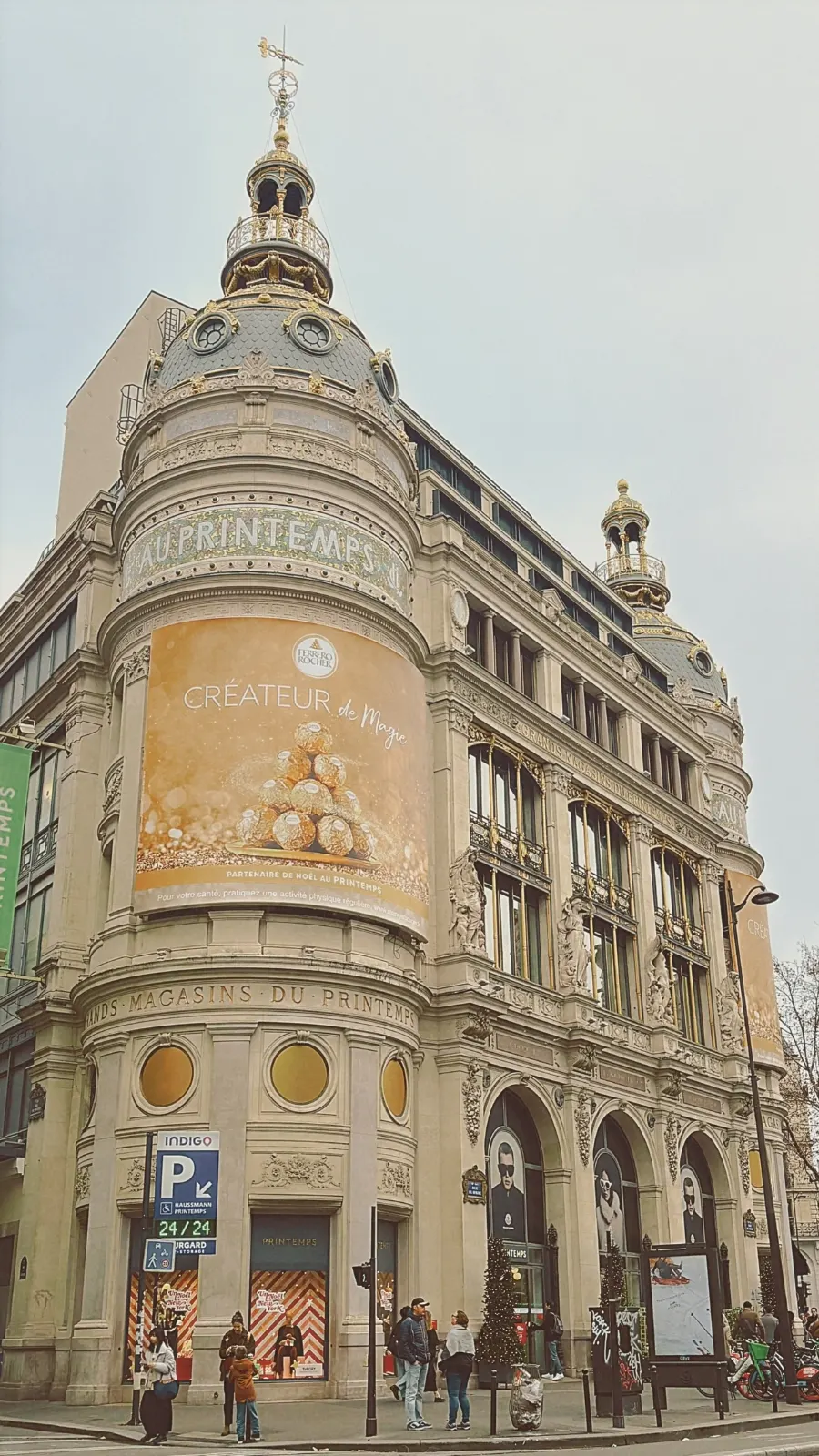
Printemps is the first example of Art Nouveau in Paris that I wanted to mention.
Beyond being one of the most beautiful buildings in the city, it is also a perfect example of the marriage between Art Nouveau and Art Deco in the stairs and interior.
Rebuilt after a fire in 1881, Printemps Haussmann is famous for its stained-glass dome dating back to 1923.
This dome, with its floral and organic motifs, hits right at the heart of the Art Nouveau style, while the facade – with its statues representing the seasons and golden exterior mosaics – is a perfect example of the curved lines typical of the Belle Époque.
Art Nouveau in Paris: Galeries Lafayette Department Store

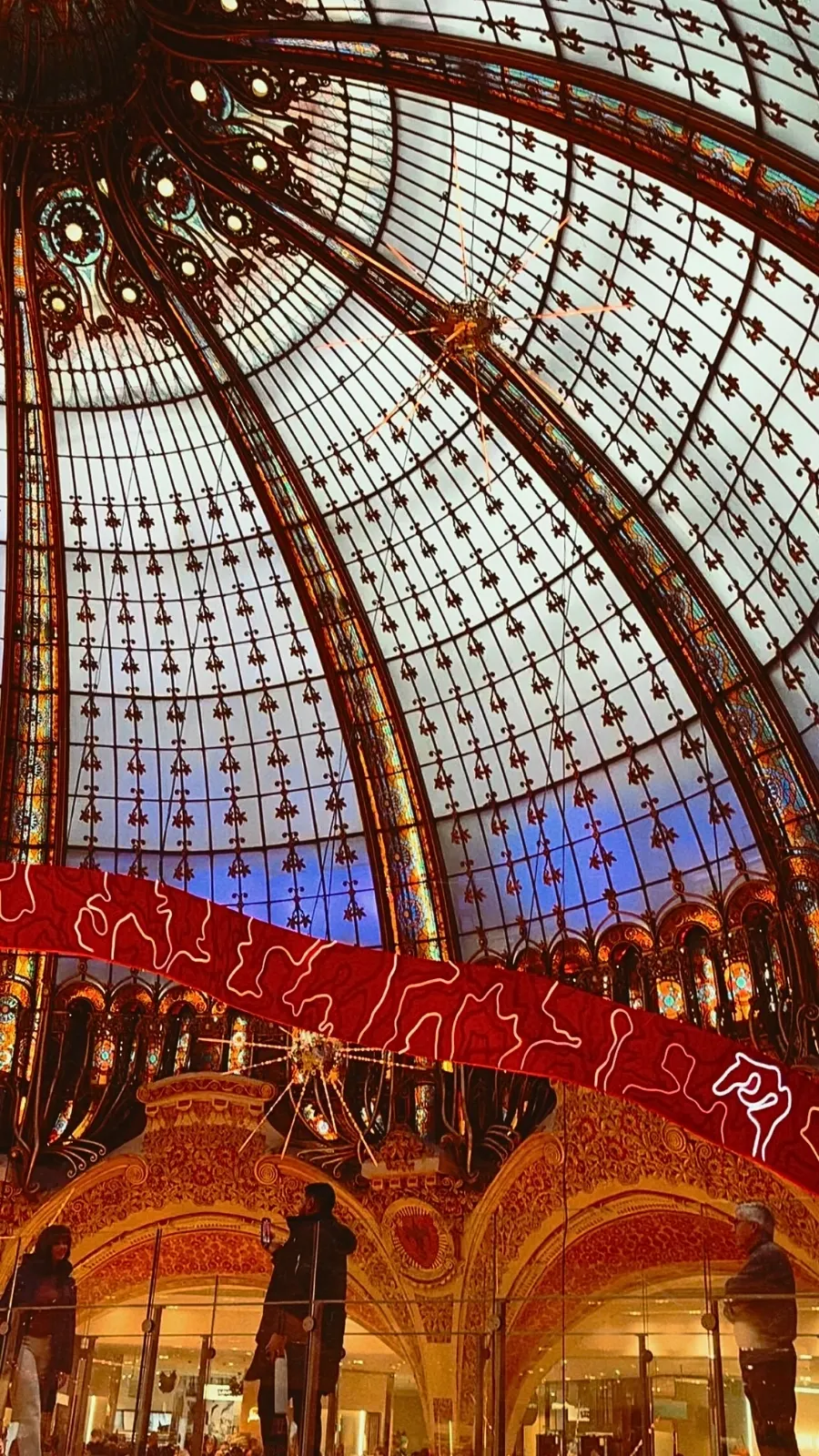
Next, you have another of the great department stores of Paris, Galeries Lafayette, located only a few minutes from Printemps.
The dome designed by Ferdinand Chanut is a masterpiece of Art Nouveau, a feeling reinforced by the delicate ironwork of the balconies.
Art Nouveau in Paris: La Samaritaine Department Store

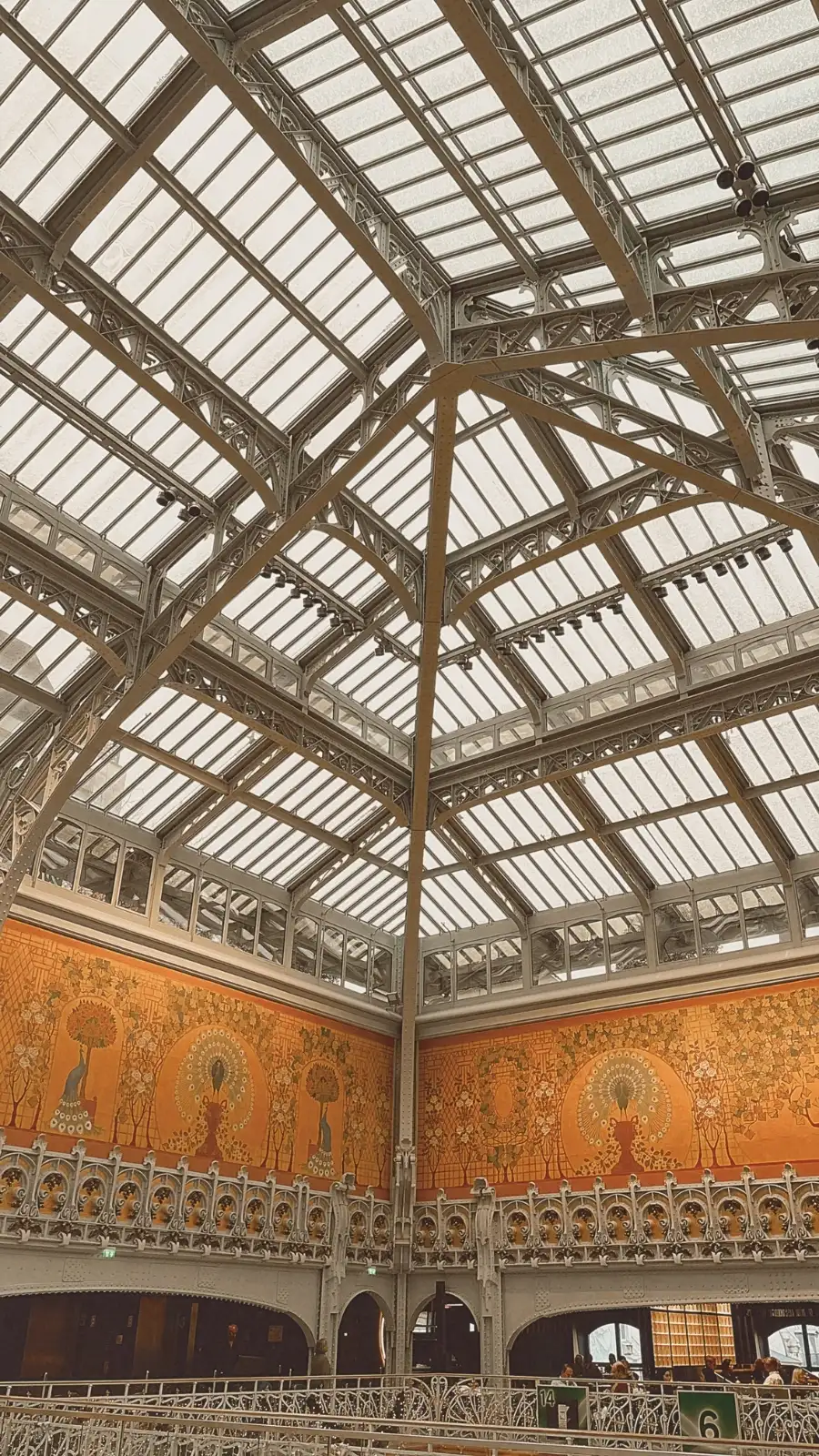

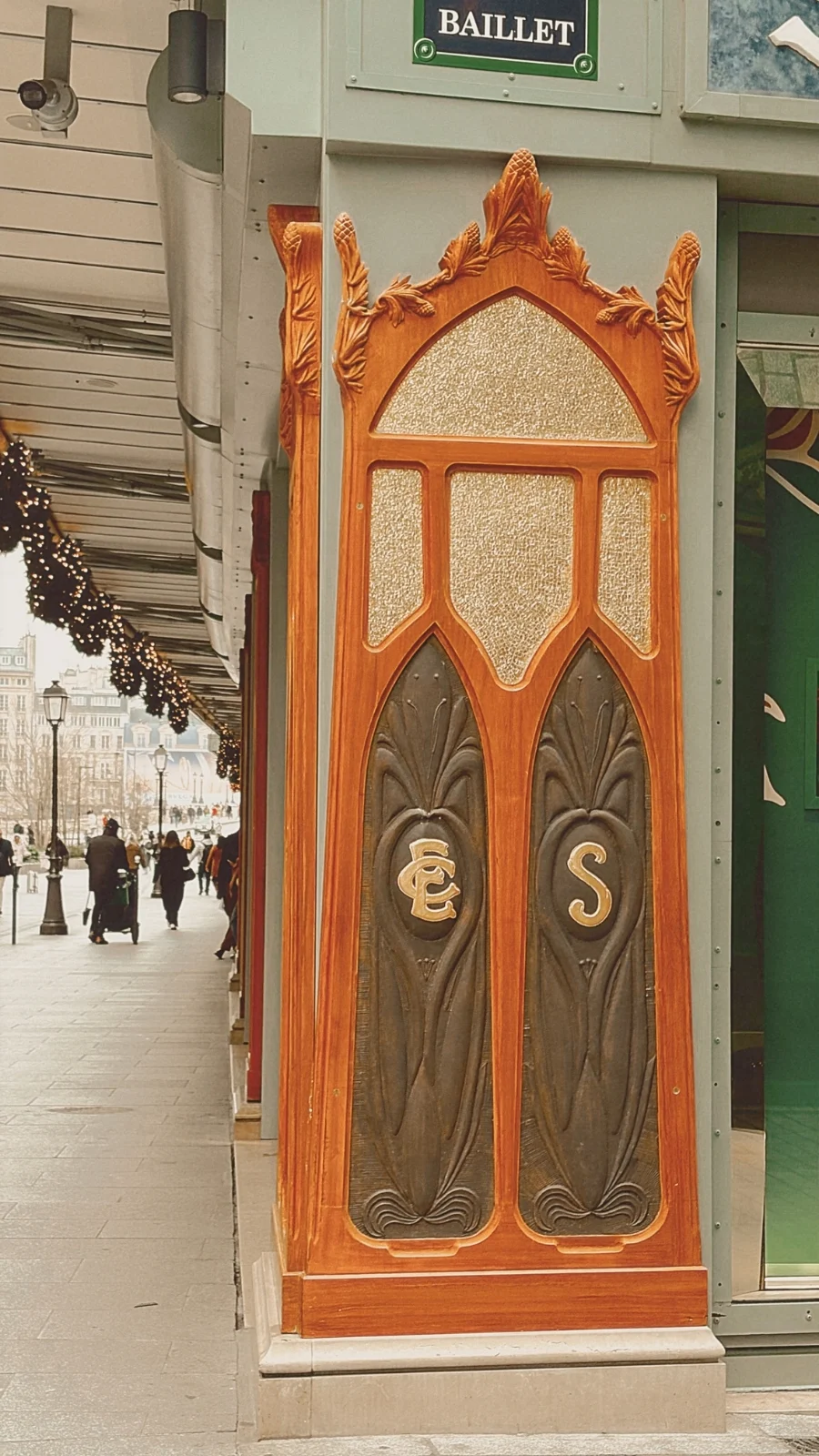
La Samaritaine, like Printemps, sits at the crossroads of Art Nouveau and Art Deco.

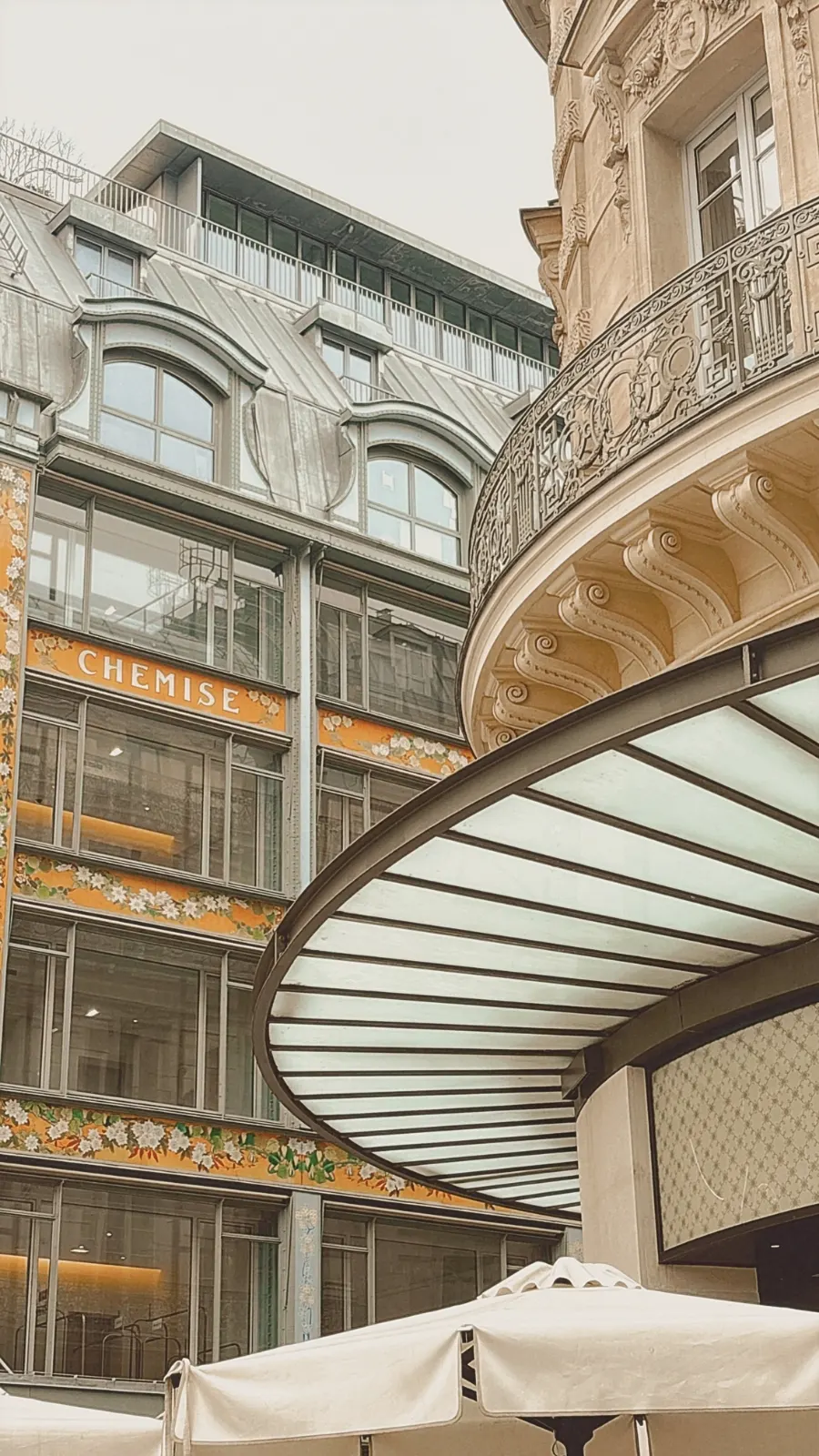
The facade by Frantz Jourdain dates back to 1905, where one can admire magnificent glazed tiles with floral decorations, as well as an immense fresco at the very top of the department store.
Art Nouveau in Paris: Fnac Building, ex-Magasins Réunis, Ternes

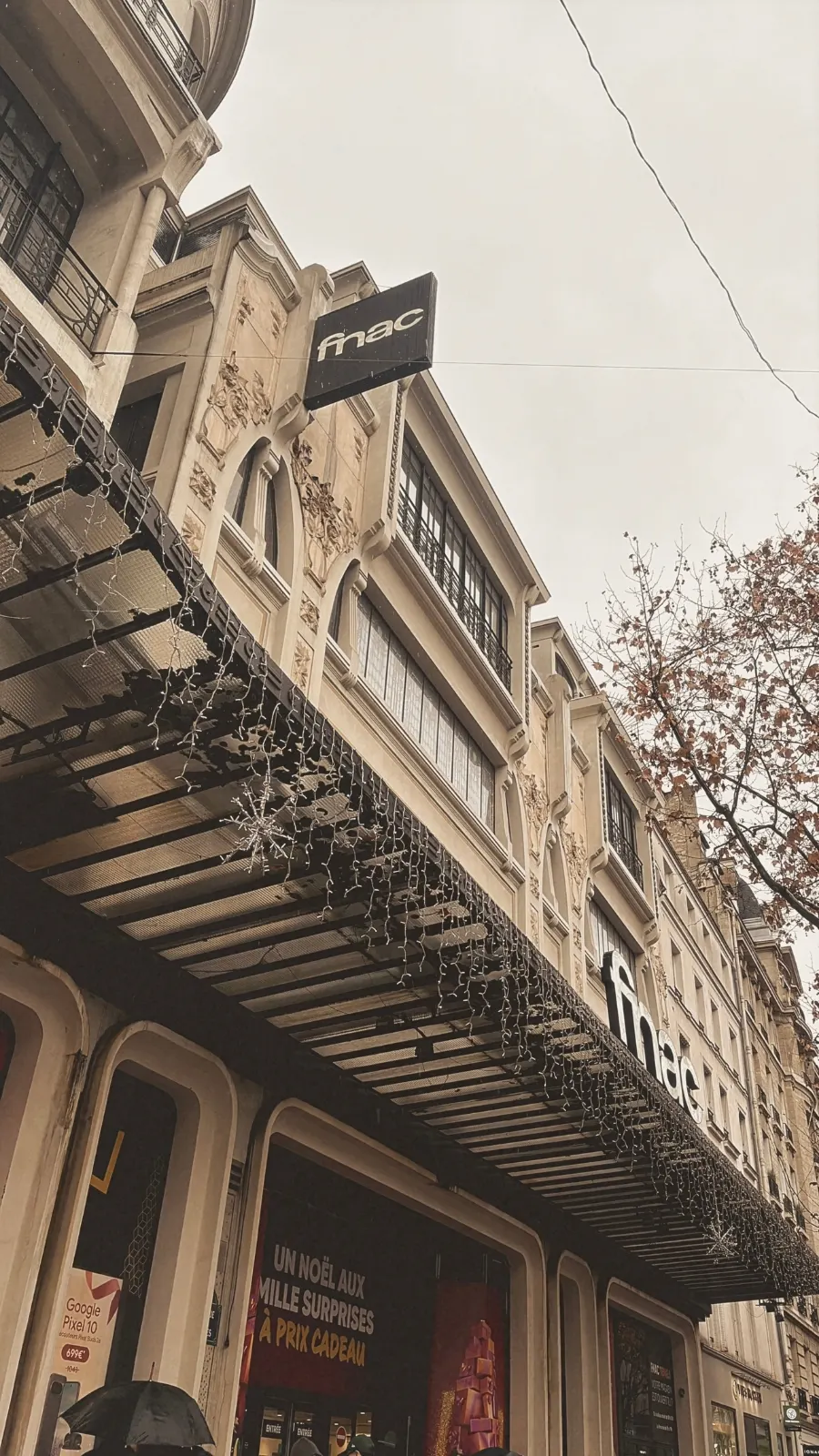

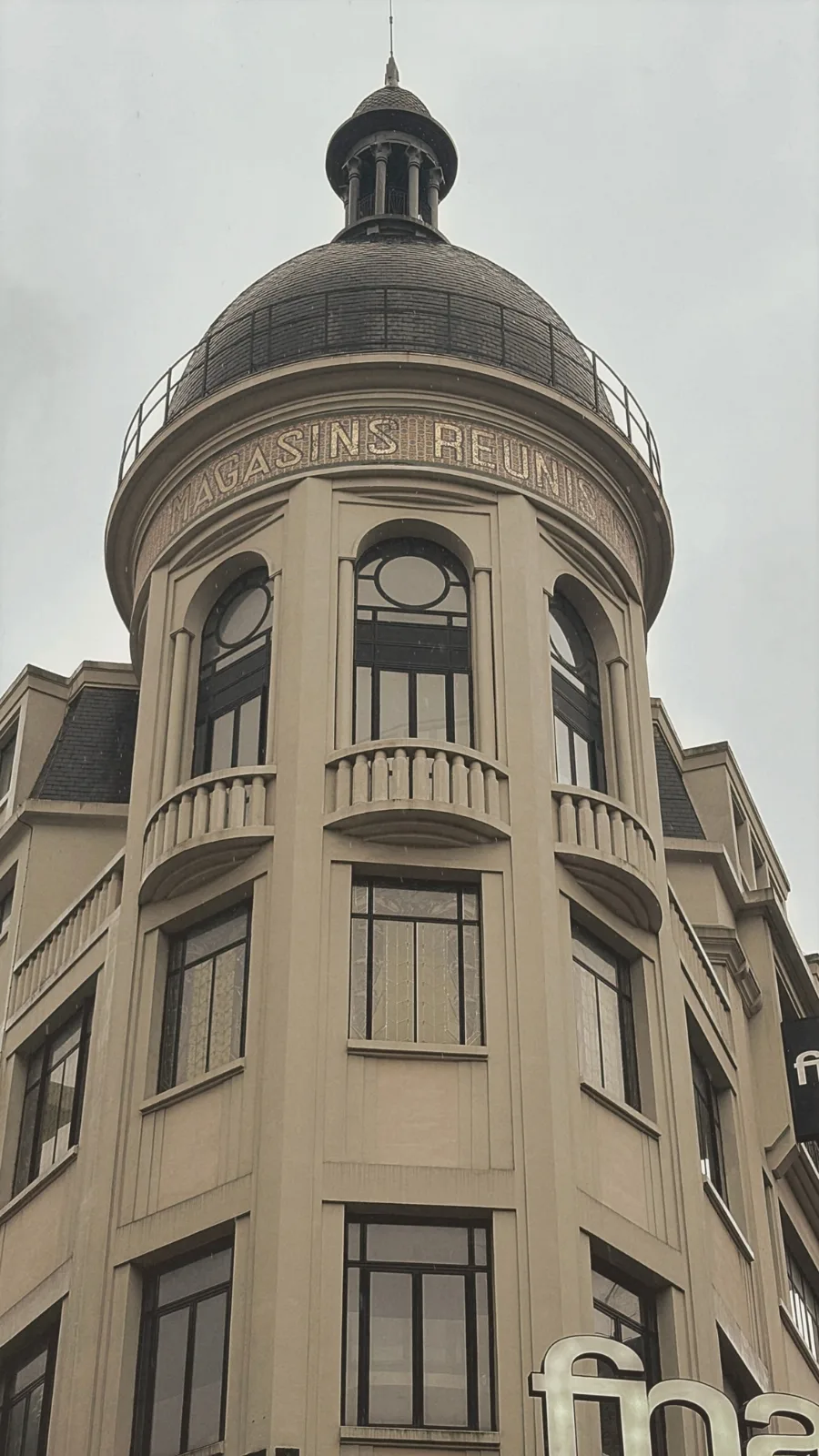
If we head closer to the Arc de Triomphe, just steps away from the Ternes metro station, we find a building bearing the inscription “Magasins Réunis.”
Although the building now houses a massive Fnac bookstore, it is above all a refined example of Art Nouveau.
Built in 1912, it features the same wrought-iron work typical of the era, along with a distinct roundness in its large windows and floral sculptures.
Public Buildings & Monuments With Art Nouveau Architecture and/or Decor
Art Nouveau in Paris: Petit Palais

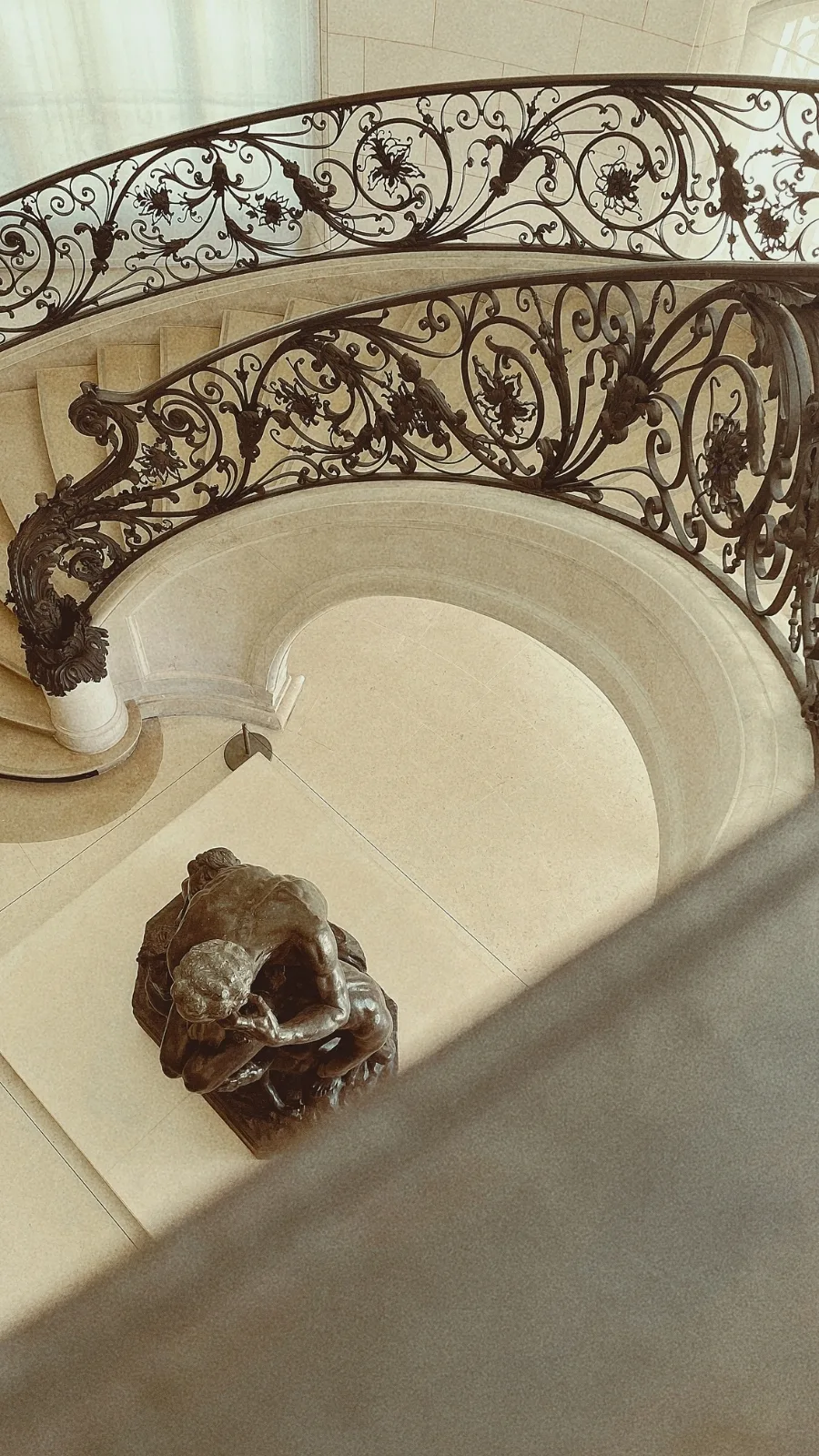

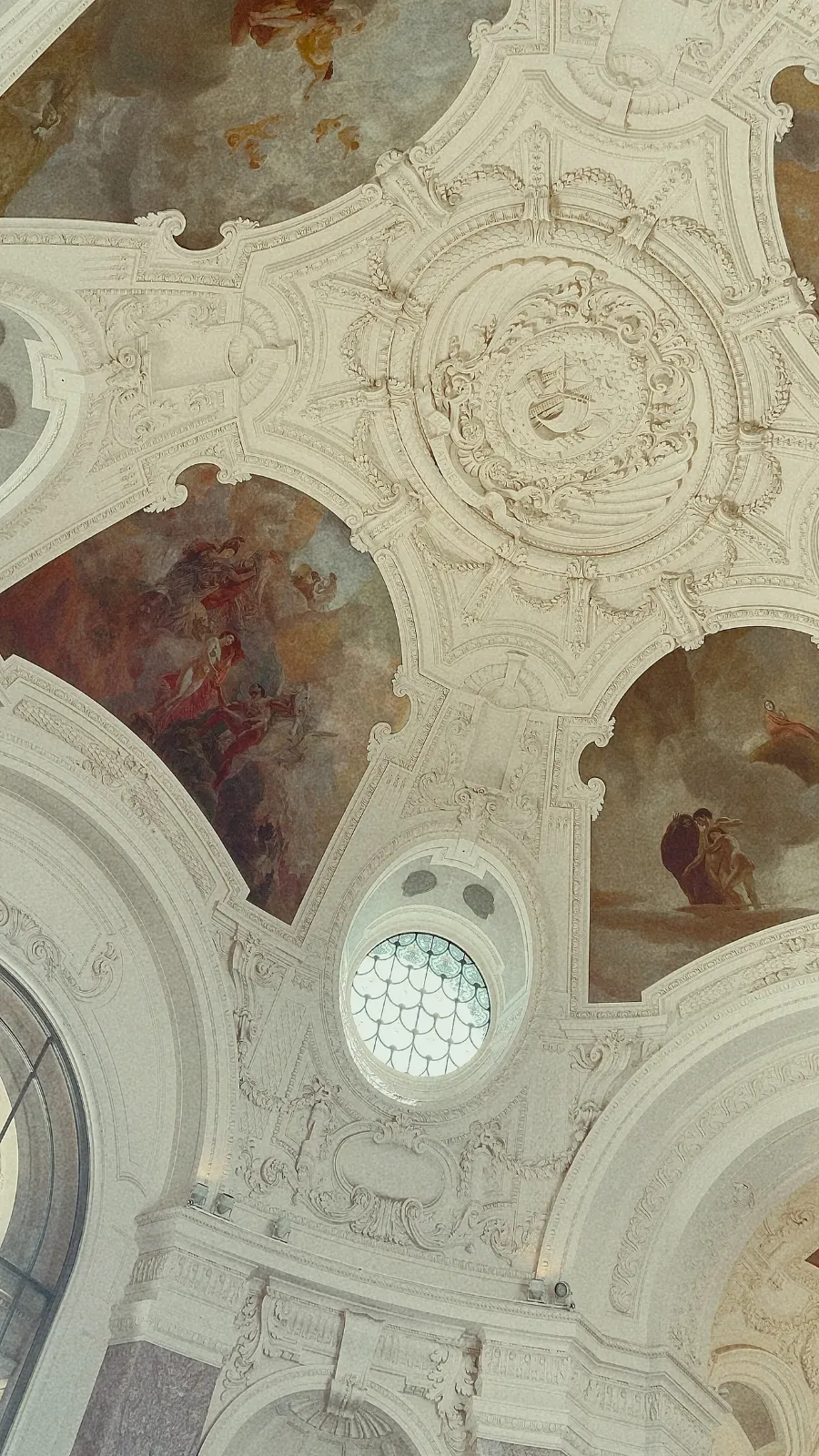
Between Concorde and the Champs-Élysées Clémenceau station lies one of the most beautiful free museums in Paris, the Petit Palais.

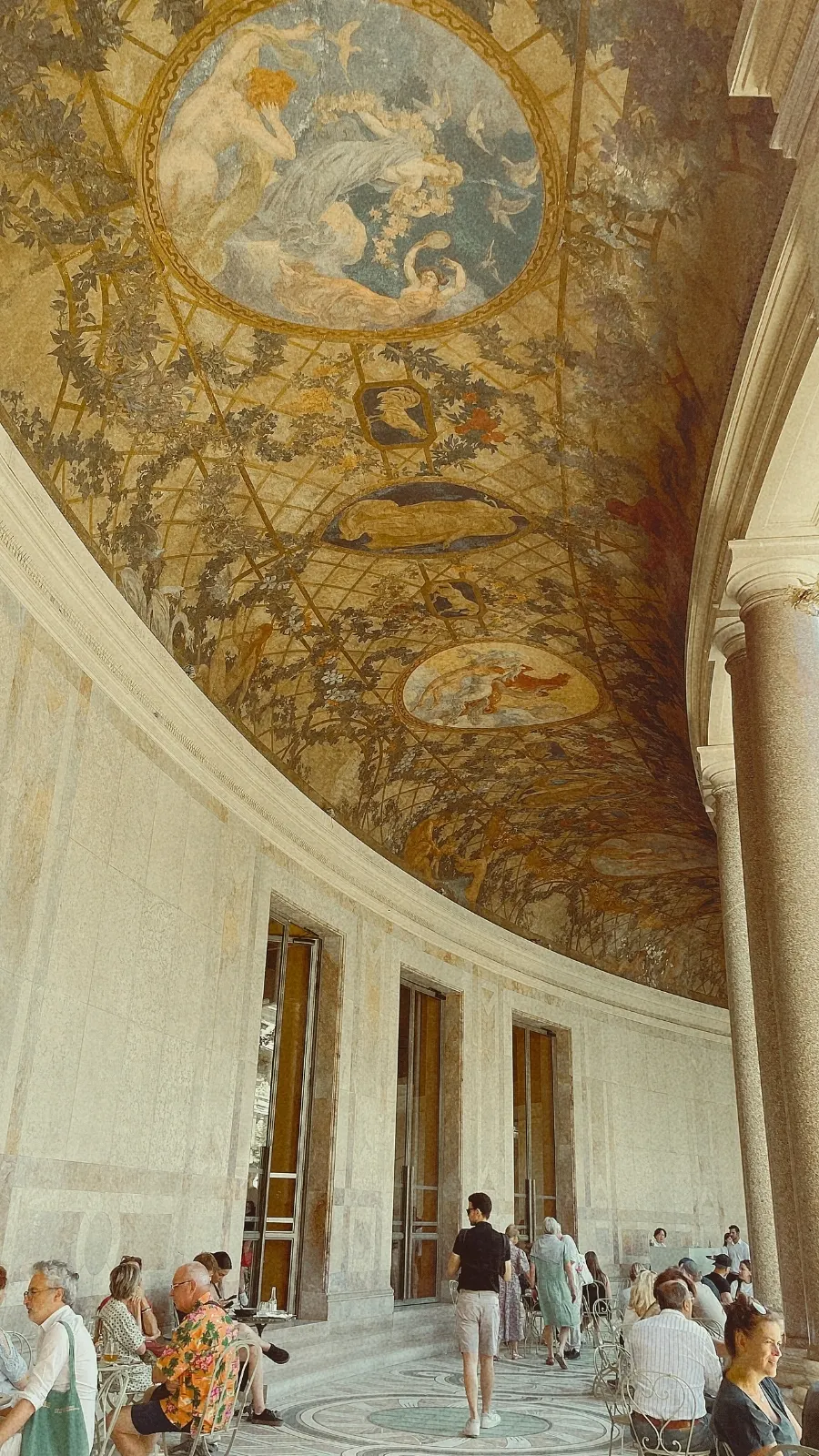
Built for the Universal Exhibition of 1900 by Charles Girault, the Petit Palais showcases Art Nouveau influence in the wrought iron of its entrance as well as the curved, colorful mosaics of its secret garden.
Art Nouveau in Paris: Pont Alexandre III

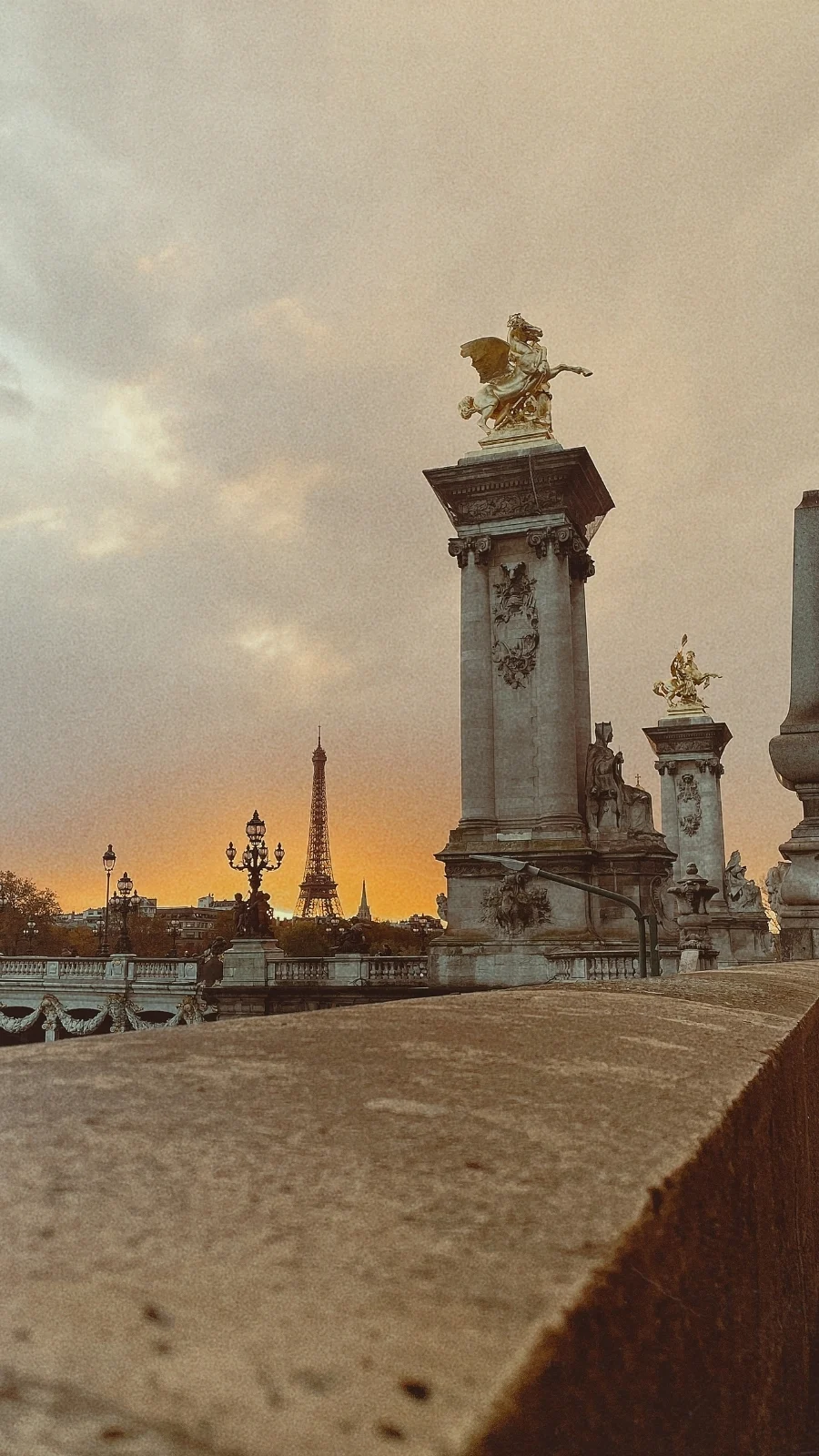
With its magnificent view of the Eiffel Tower, the Pont Alexandre III, which dates to 1900, is the most decorated bridge in Paris, with a line adorned with nymphs, cherubs, and marine-themed lampposts.
Architecture & Private Residences
Art Nouveau in Paris: Lavirotte Building, Avenue Rapp

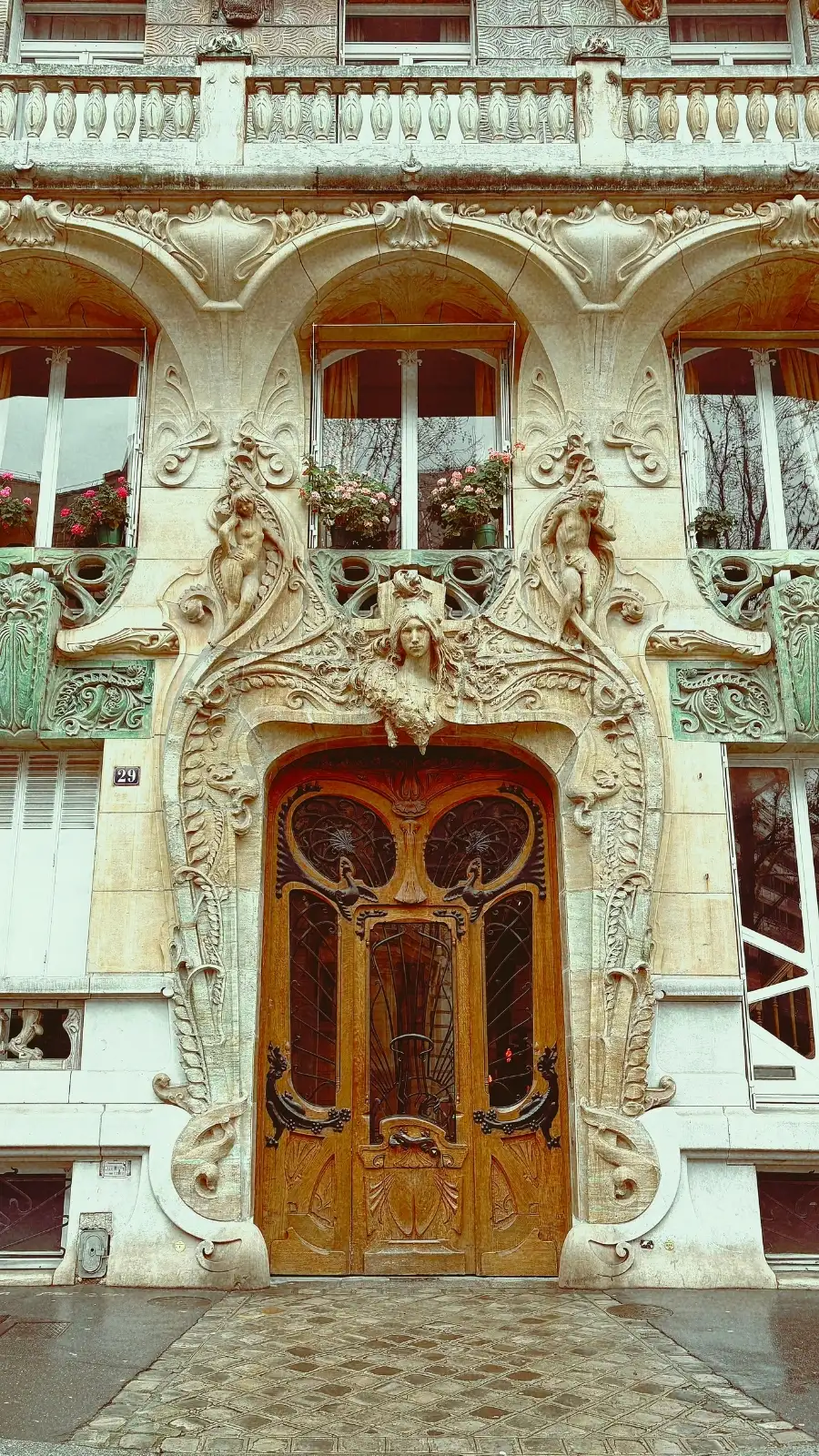
We now head toward a private building, also with a magnificent view of the Eiffel Tower, located at 29 Avenue Rapp in the 7th arrondissement of Paris.
The Lavirotte building was designed by the architect Jules Lavirotte in 1901, and it is one of the most incredible facades you will ever have the chance to admire in Paris.

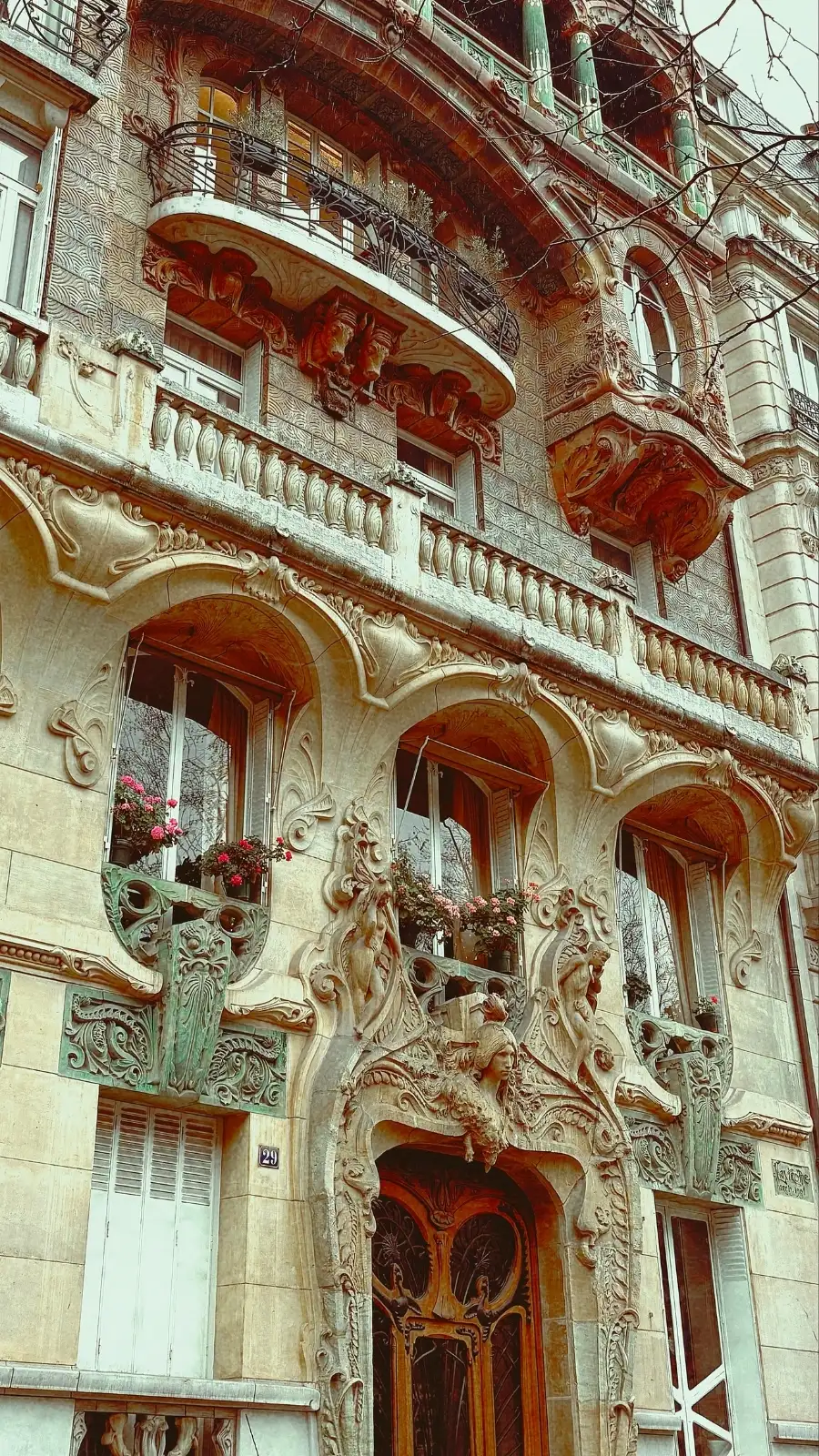
It is notably covered in places with colorful ceramic tiles by the ceramist Alexandre Bigot, who lived in the building, and it is finished with a highly suggestive door.
Art Nouveau in Paris: 3 Square Rapp

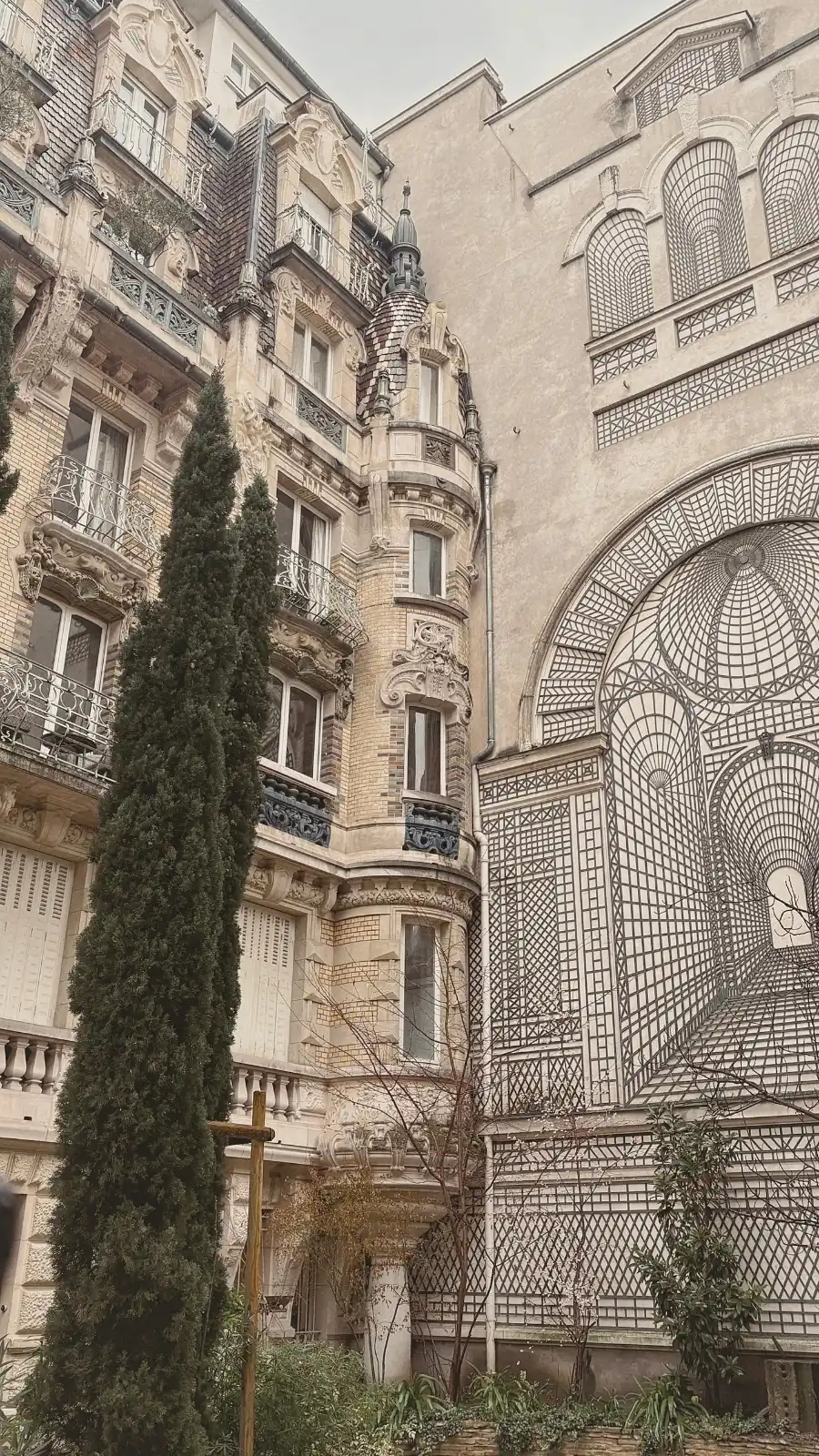
Just steps away from the Lavirotte building sits 3 Square Rapp, also designed by Jules Lavirotte.
There, you find a magnificent turret, beautiful rounded doors, and wrought iron that is equally delicate and representative of Art Nouveau in Paris.
Art Nouveau in Paris: Villa Frochot near Pigalle

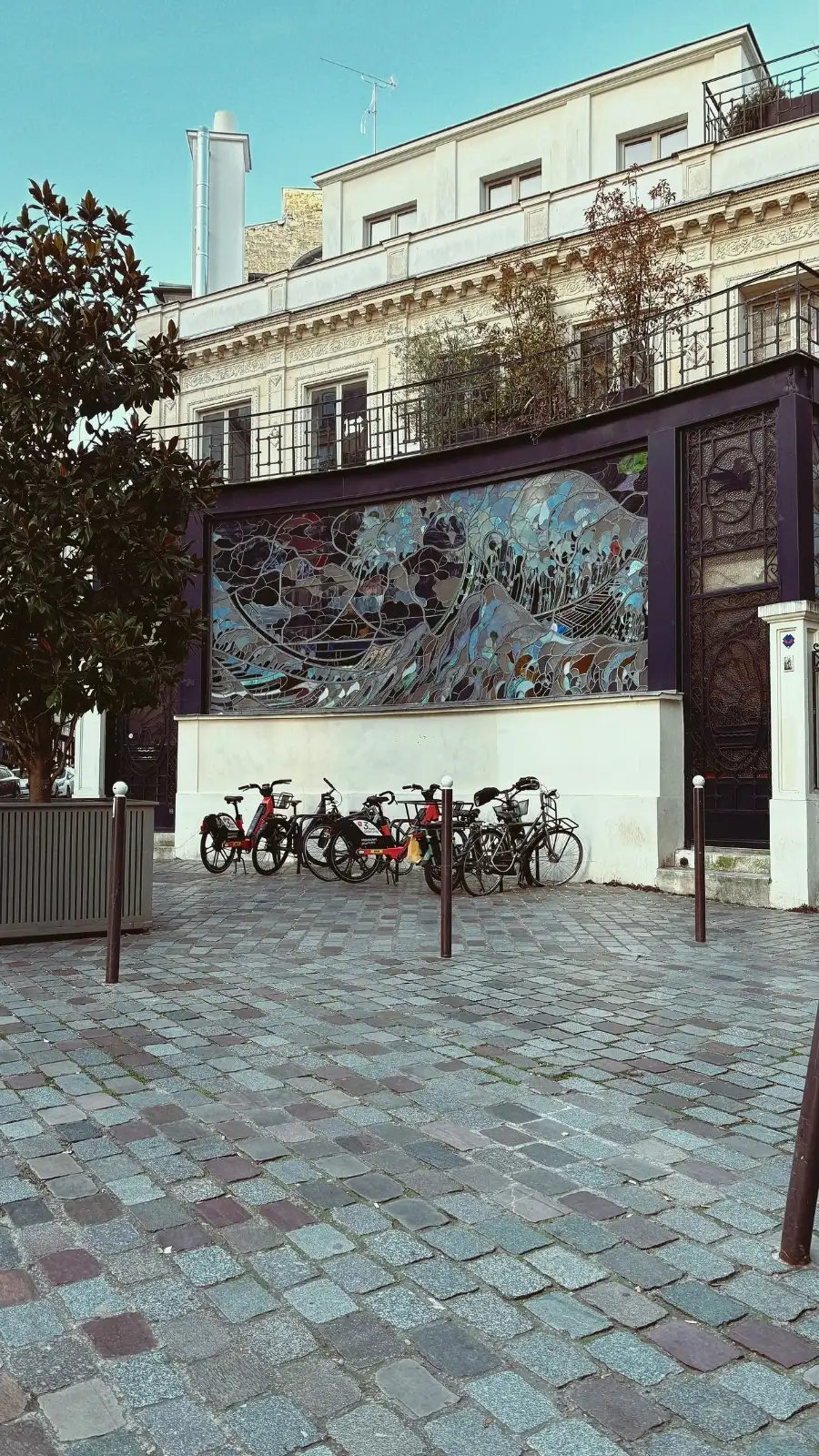
Only a few minutes’ walk from the Pigalle station, at the end of Rue Frochot, you find Villa Frochot, a gated alley of sophisticated houses.

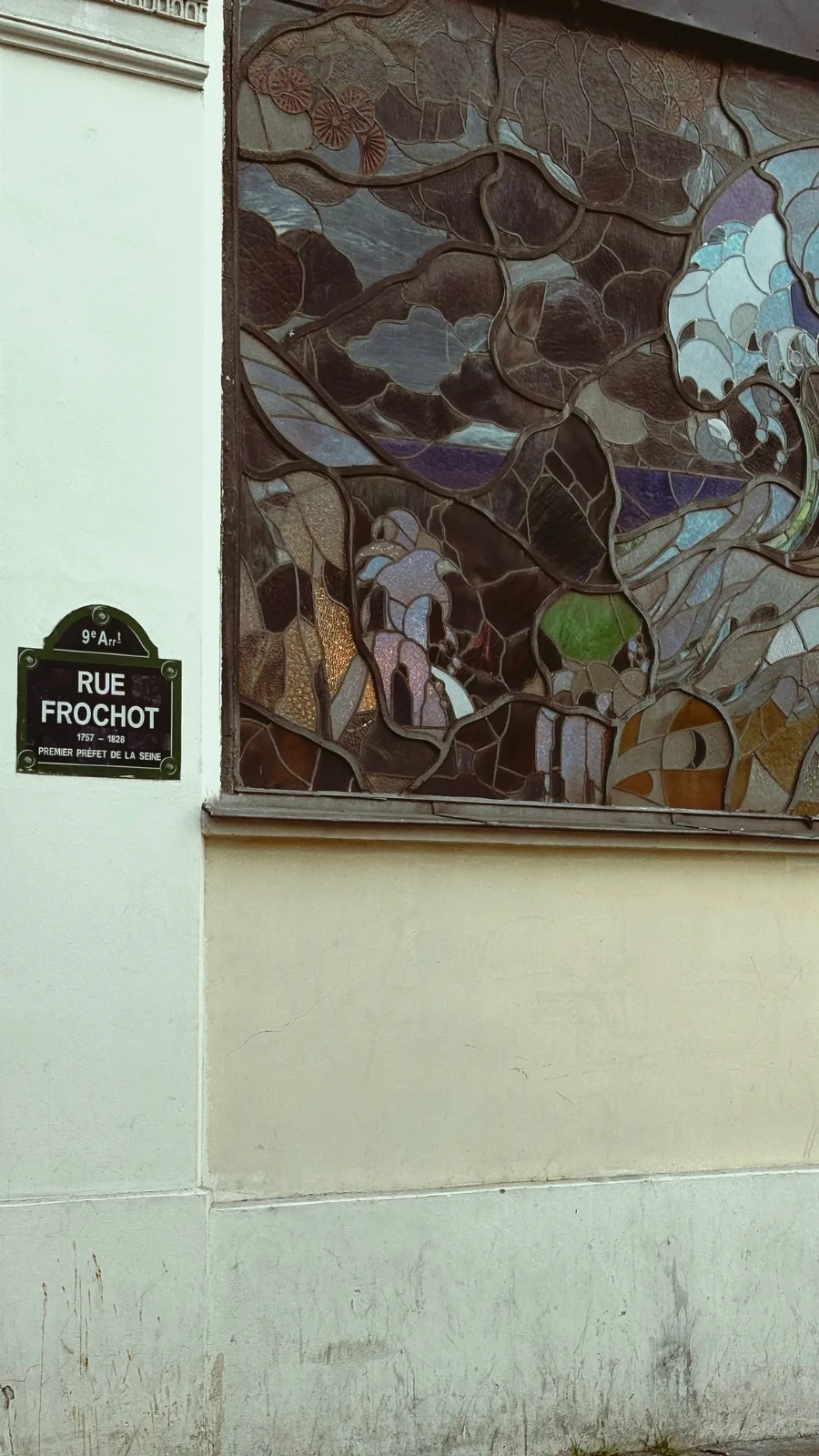
There, you will find an incredible stained-glass canopy inspired by Hokusai’s Great Wave, reflecting the Japanese influence that was one of the powerful driving forces behind Art Nouveau.
Dining & Nightlife
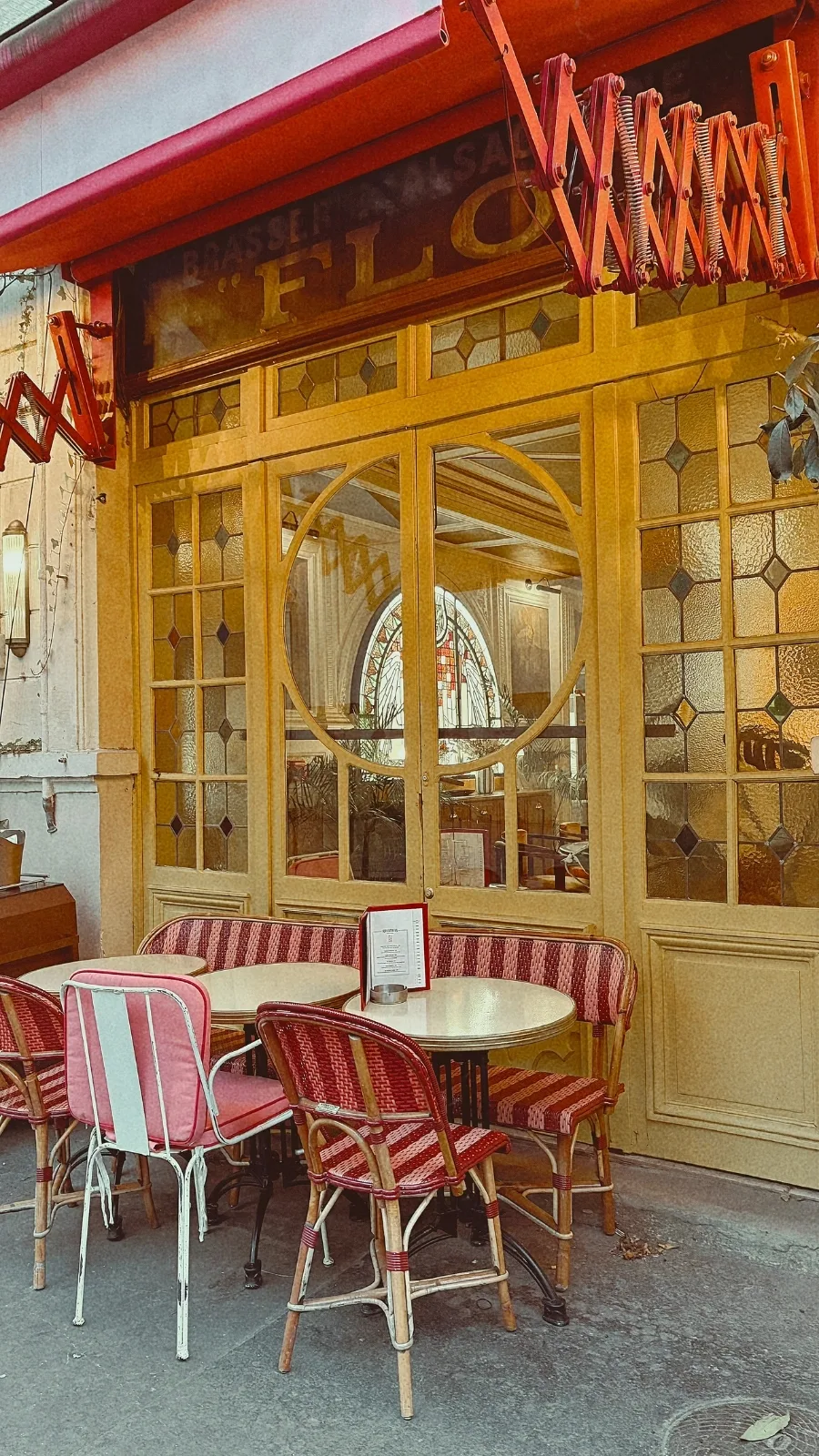
Art Nouveau in Paris: Brasserie Floderer, Cour des Petites Écuries

I briefly lived in the 10th arrondissement of Paris near Château-d’Eau.
I loved wandering through the neighborhood’s passages, such as Passage Brady with its many Indian restaurants, and the Passage de l’Industrie with its vaulted entrance.

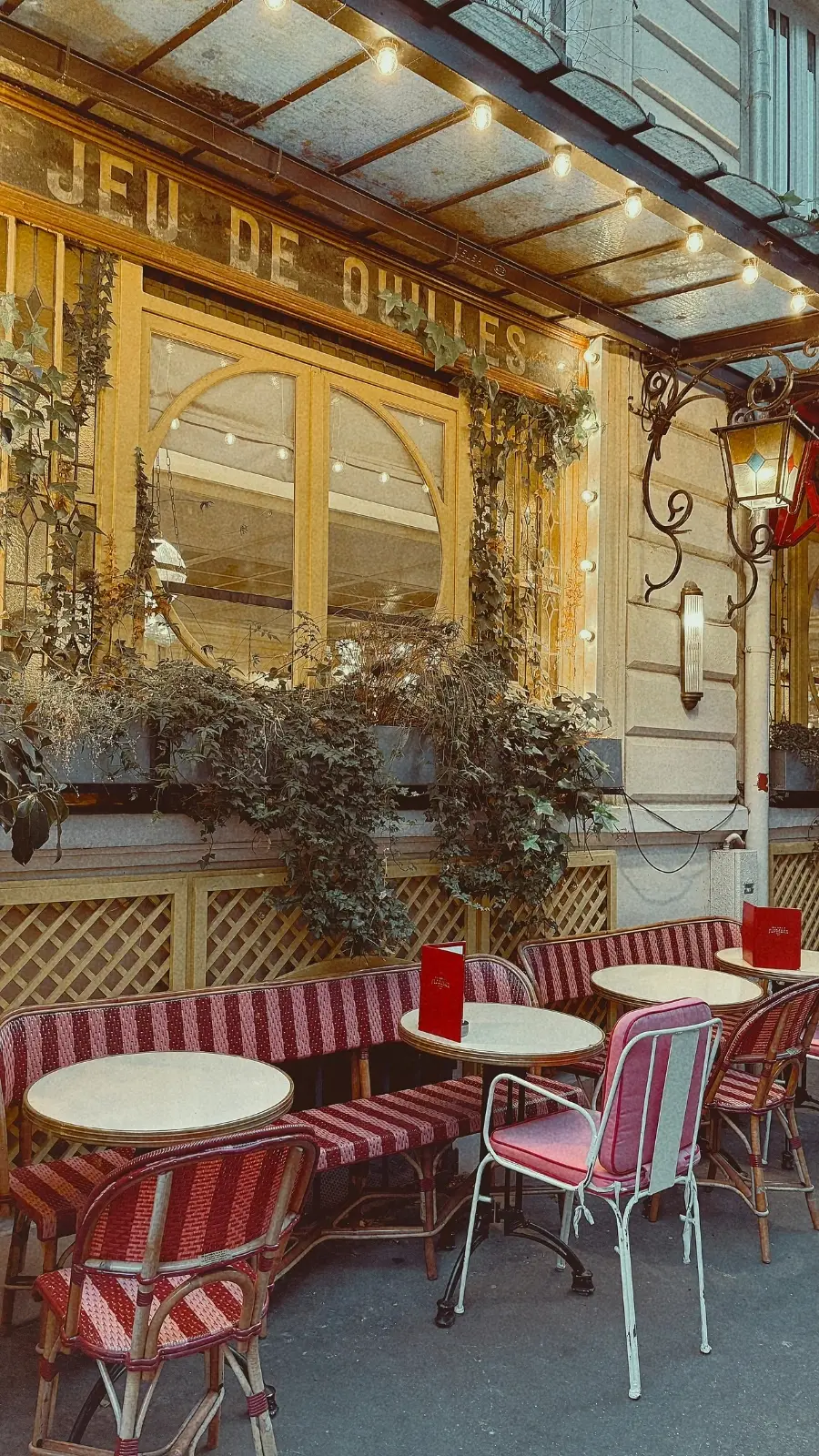
You will find a hidden courtyard in the 10th arrondissement near these two passages: the Cour des Petites Écuries.
It is there that you’ll find Brasserie Floderer, one of the oldest brasseries in Paris, featuring an Art Nouveau decor with floral stained glass and carved wood.
Art Nouveau in Paris: Brasserie Mollard, Saint Lazare

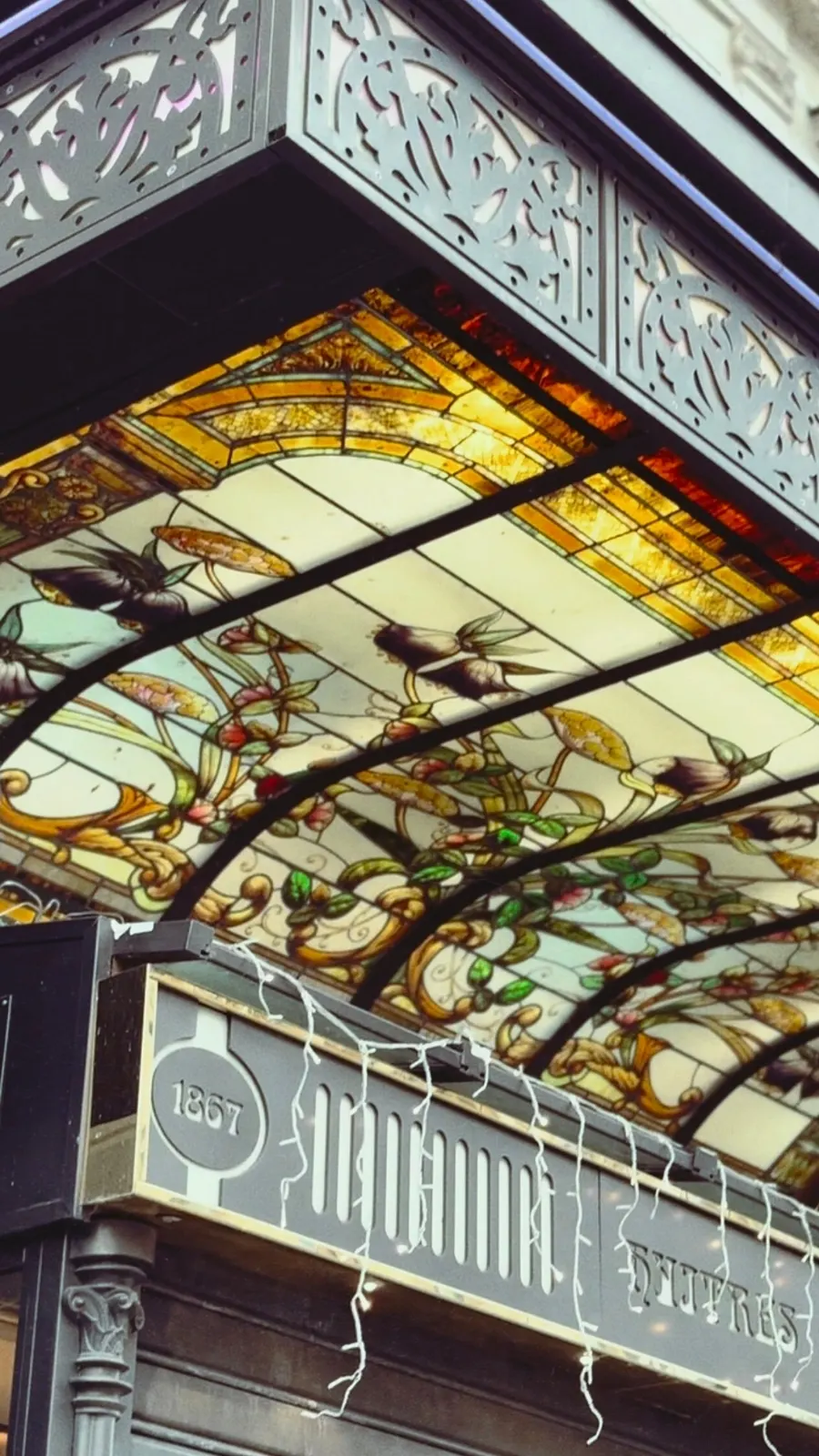
In the same style, near Saint-Lazare, is the Brasserie Mollard, whose interior dates back to 1895.
It possesses a richness made of mosaics, marble columns, and ceramic decor representing nature and travel themes.

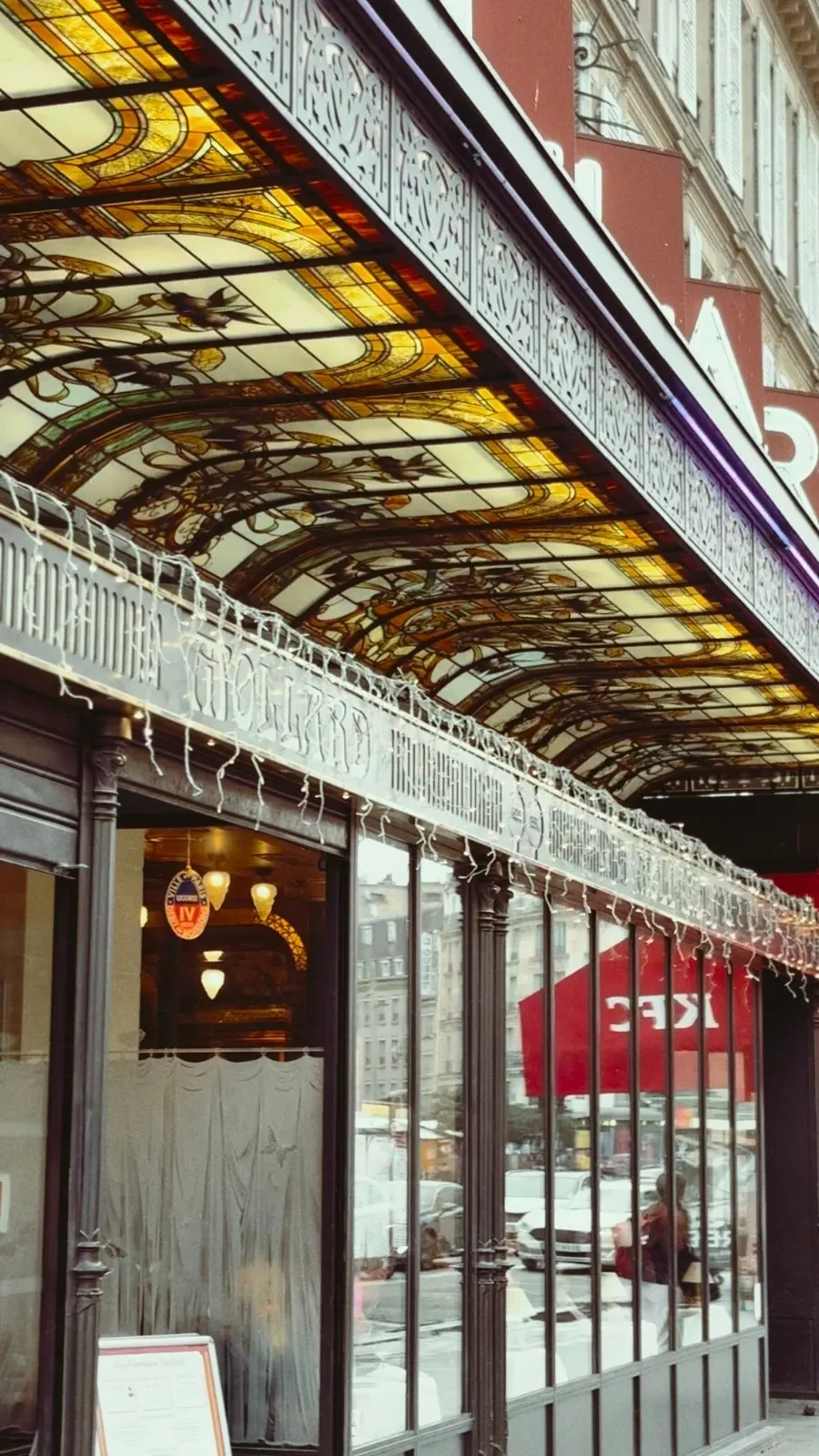
Brasserie Mollard is one of the oldest brasseries in Paris, like Brasserie Floderer or Brasserie Bofinger, and the entrance alone, with its plant-motif stained glass, sets the tone.
Art Nouveau in Paris: Moulin Rouge and Moulin Rouge Boutique

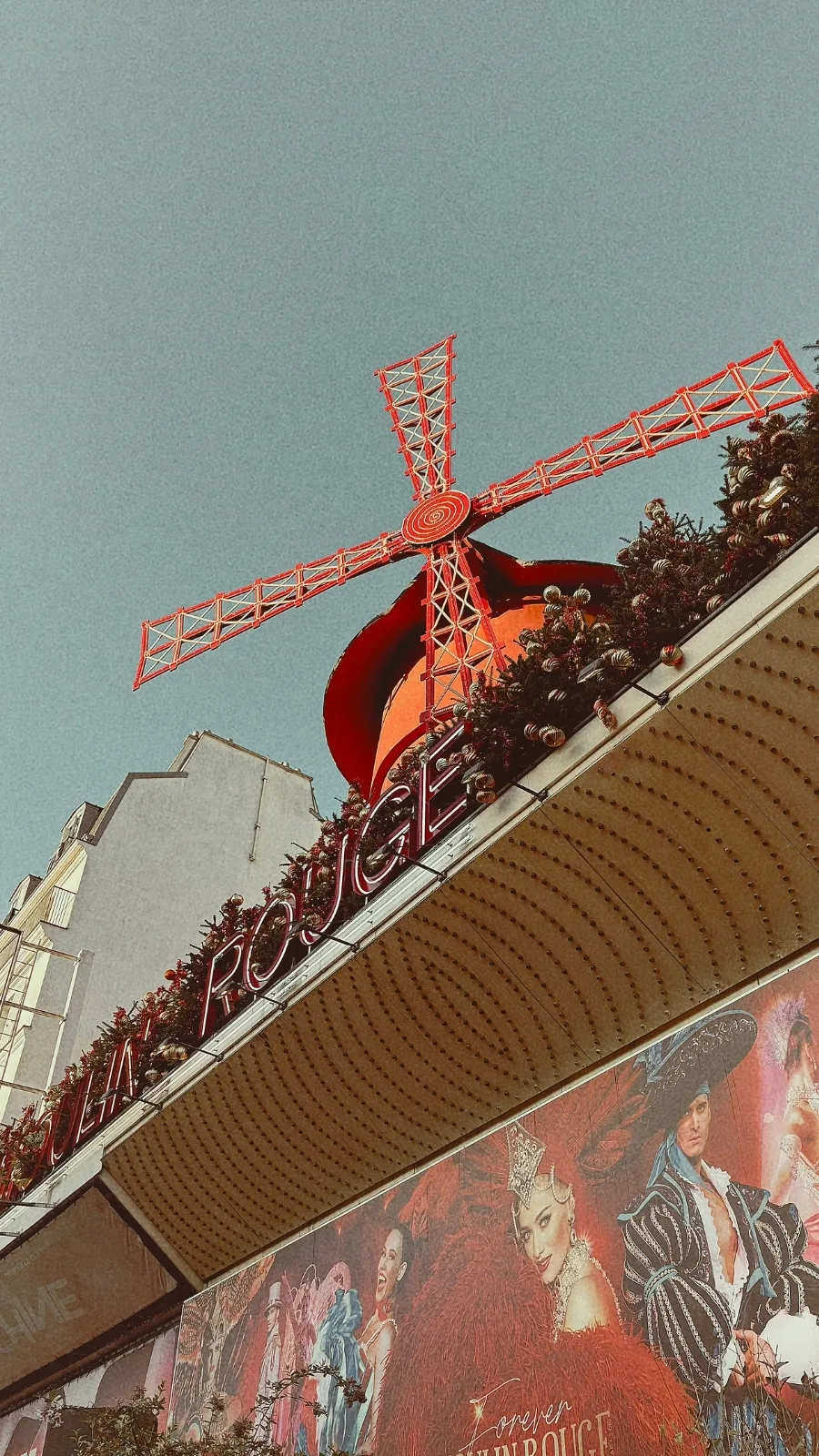

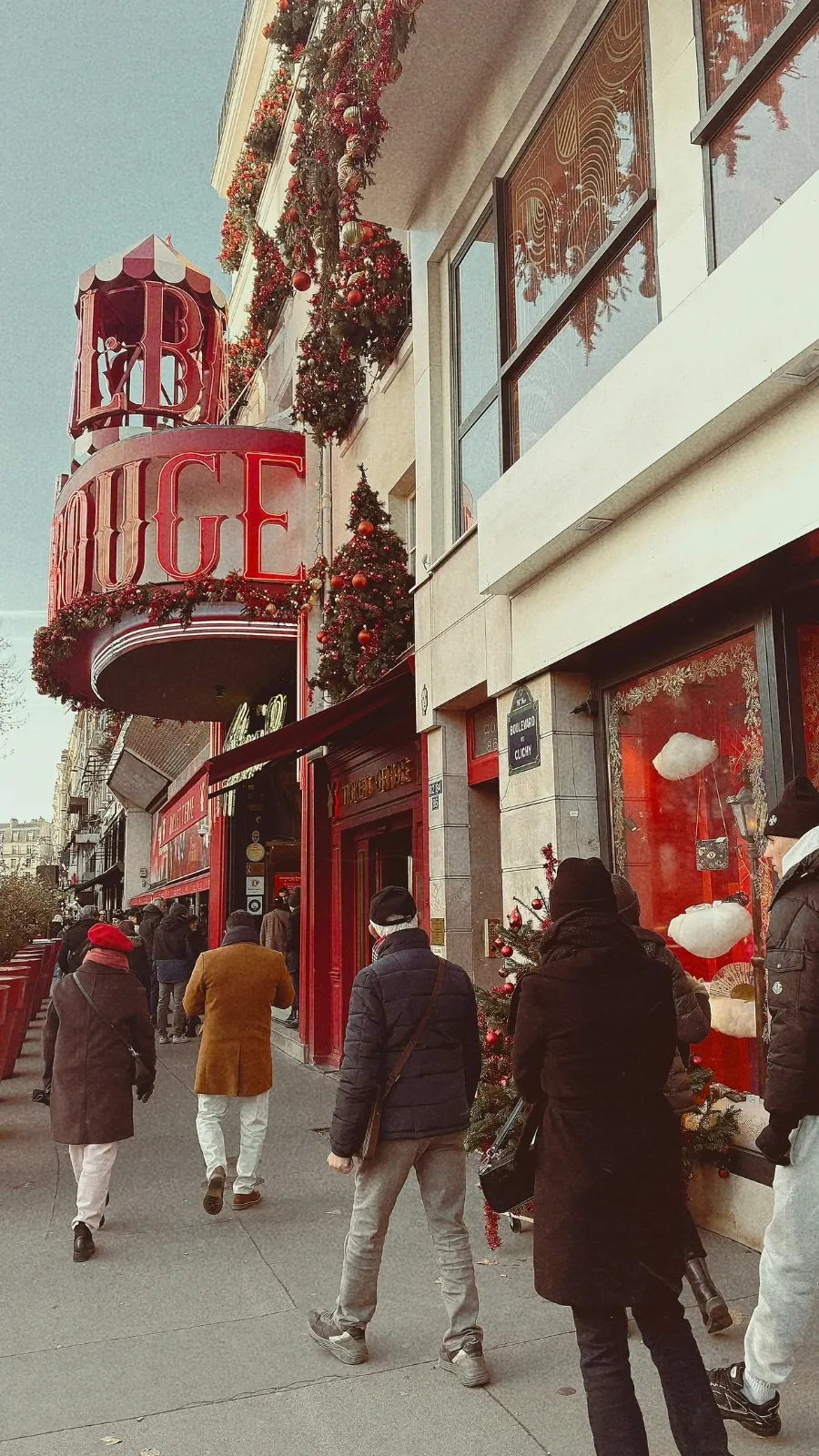

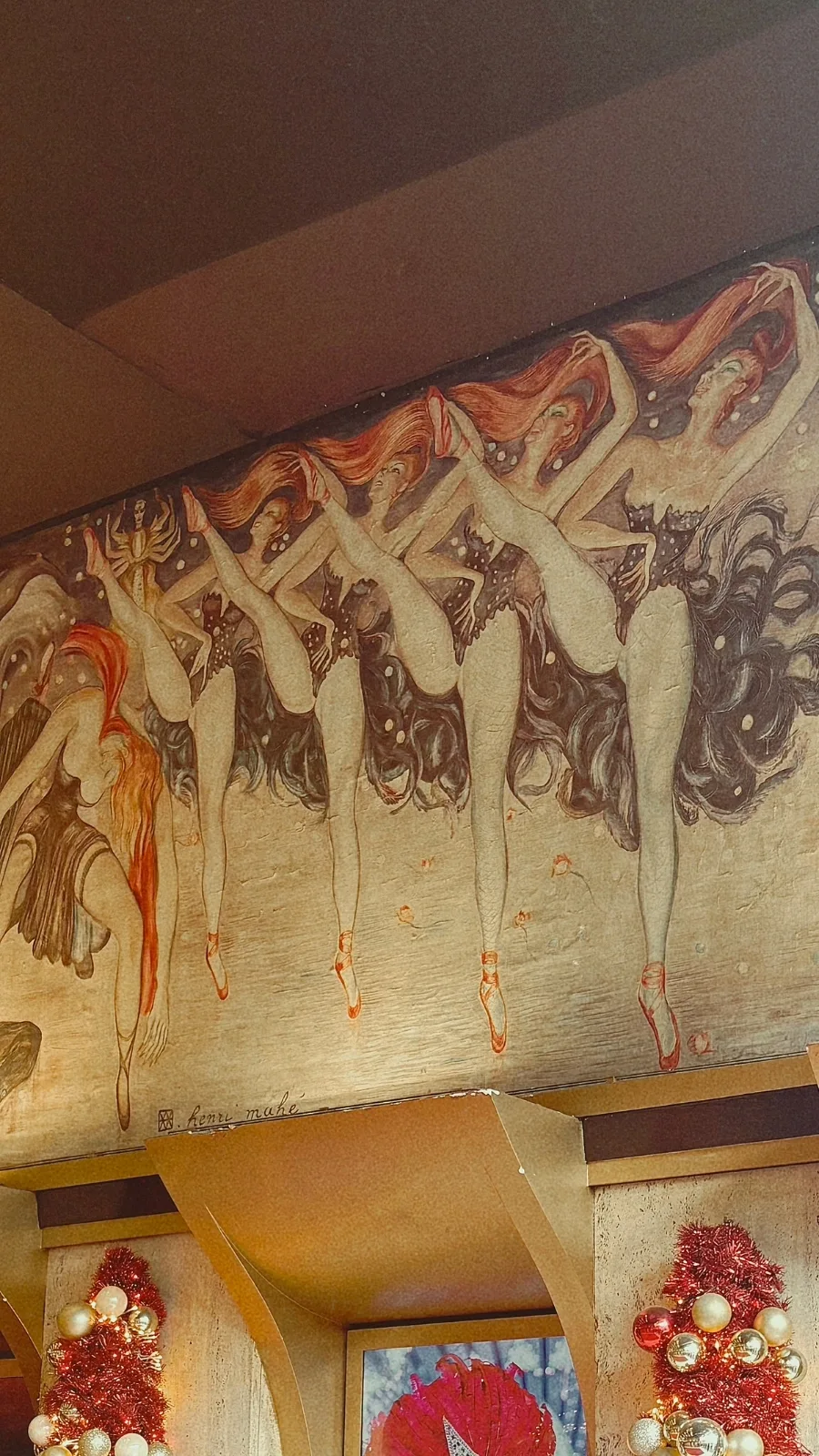
If we return toward Pigalle, we find one of the most famous views of Paris: that of the Moulin Rouge.
Even though the original windmill was destroyed in a fire, the Belle Époque spirit persists.

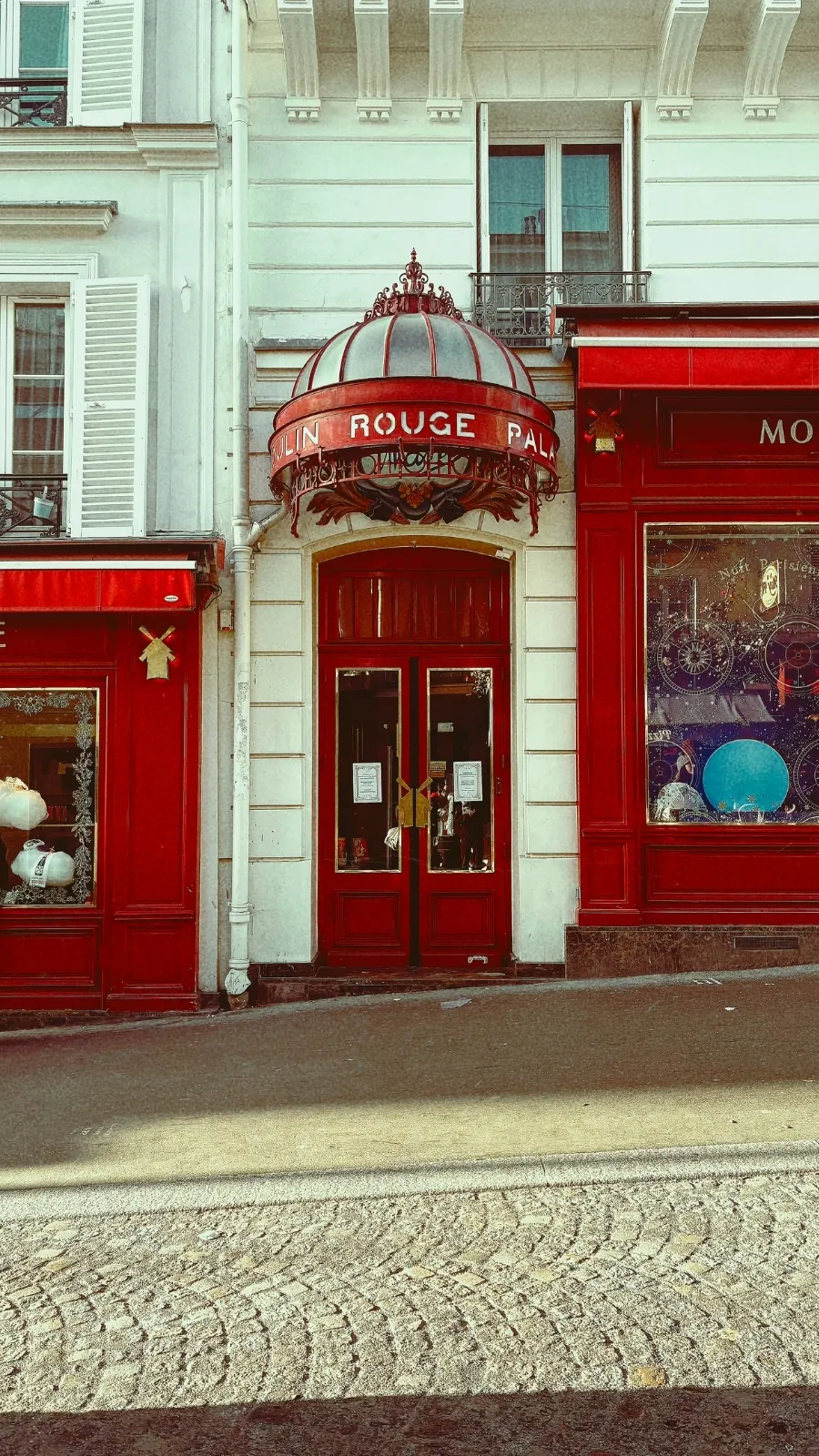
The Moulin Rouge boutique at the bottom of Rue Lepic perfectly reflects the aesthetic of spicy Montmartre, with curves and a bright red color that evokes the cabaret’s beginnings in 1889.
Art Nouveau in Paris: Boissonerie, Rue de la Seine, 6th Arrondissement
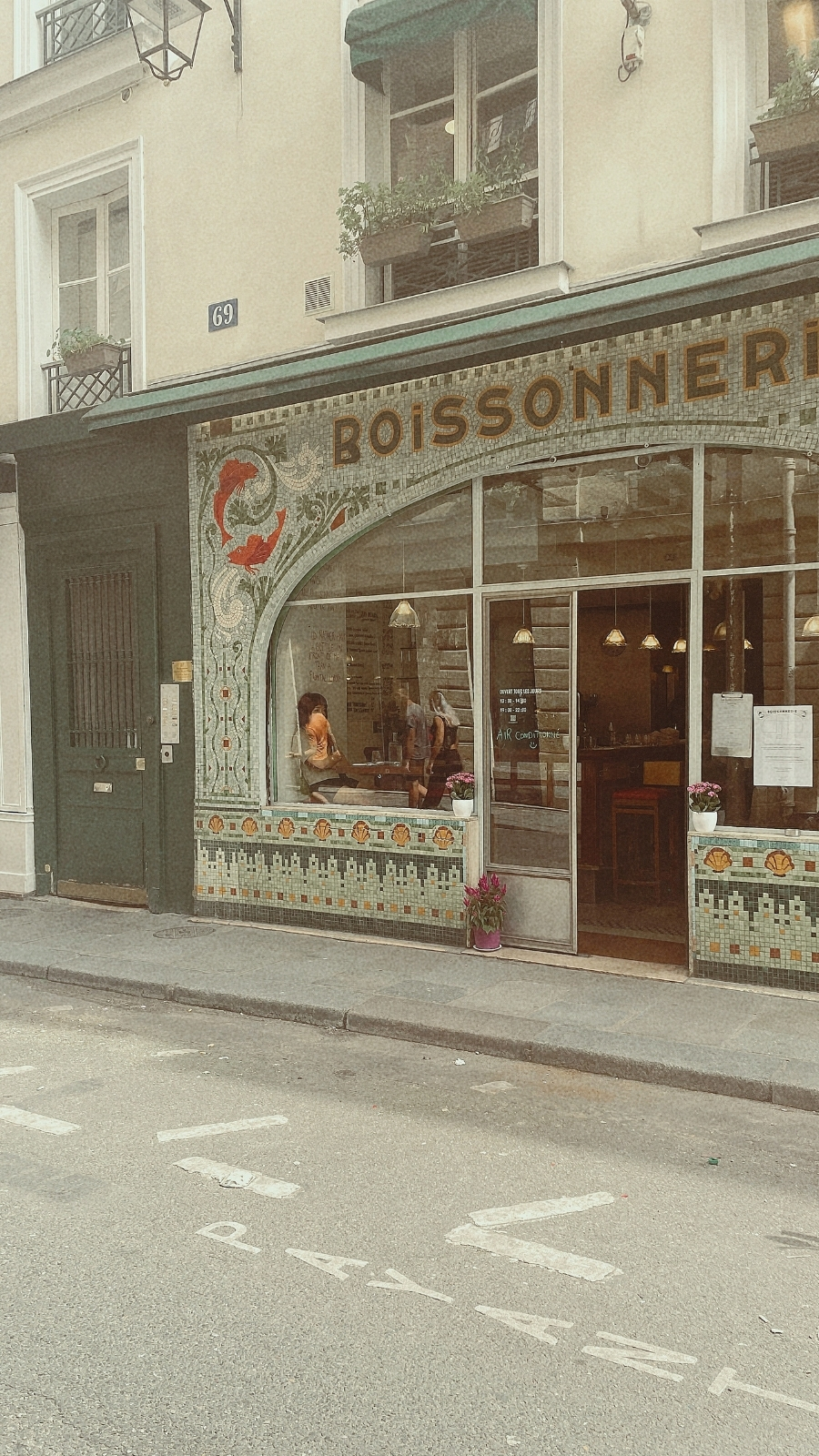
Rue de Seine in Saint-Germain-des-Prés, in the 6th arrondissement of Paris, holds several hidden gems such as tiny art galleries, but also a curious facade of colored mosaics: that of La Boissonnerie.
Today, it is a classic and sophisticated restaurant, and only the decorative elements of the original storefront remain.
Art Nouveau in Paris: Lux Bar Montmartre

Rue Lepic in Montmartre is filled with small vintage shops like the Moulin Rouge boutique I mentioned earlier, but also À la Mère de Famille.
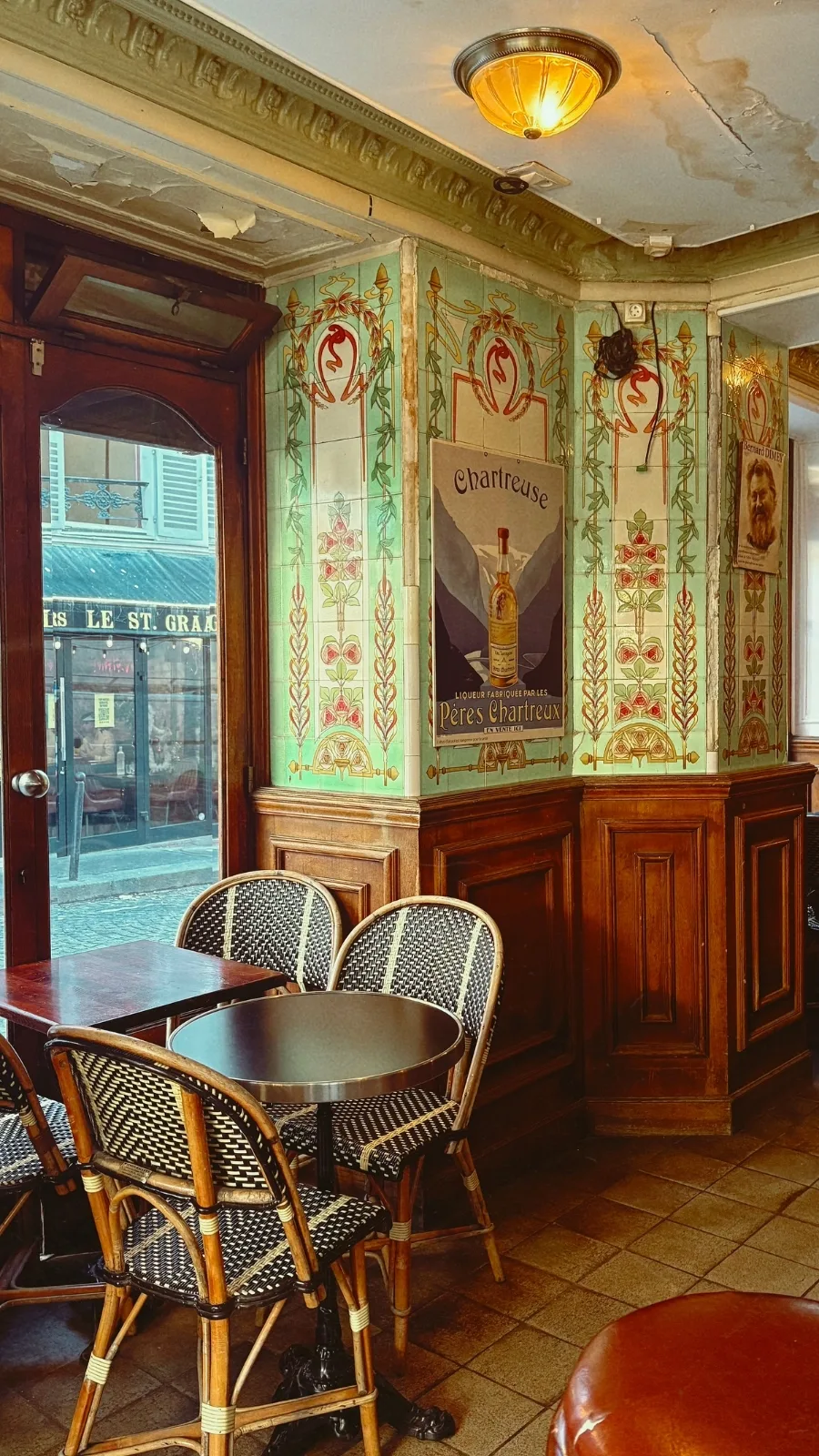
On Rue Lepic, you also find the Lux Bar with its wooden storefront.
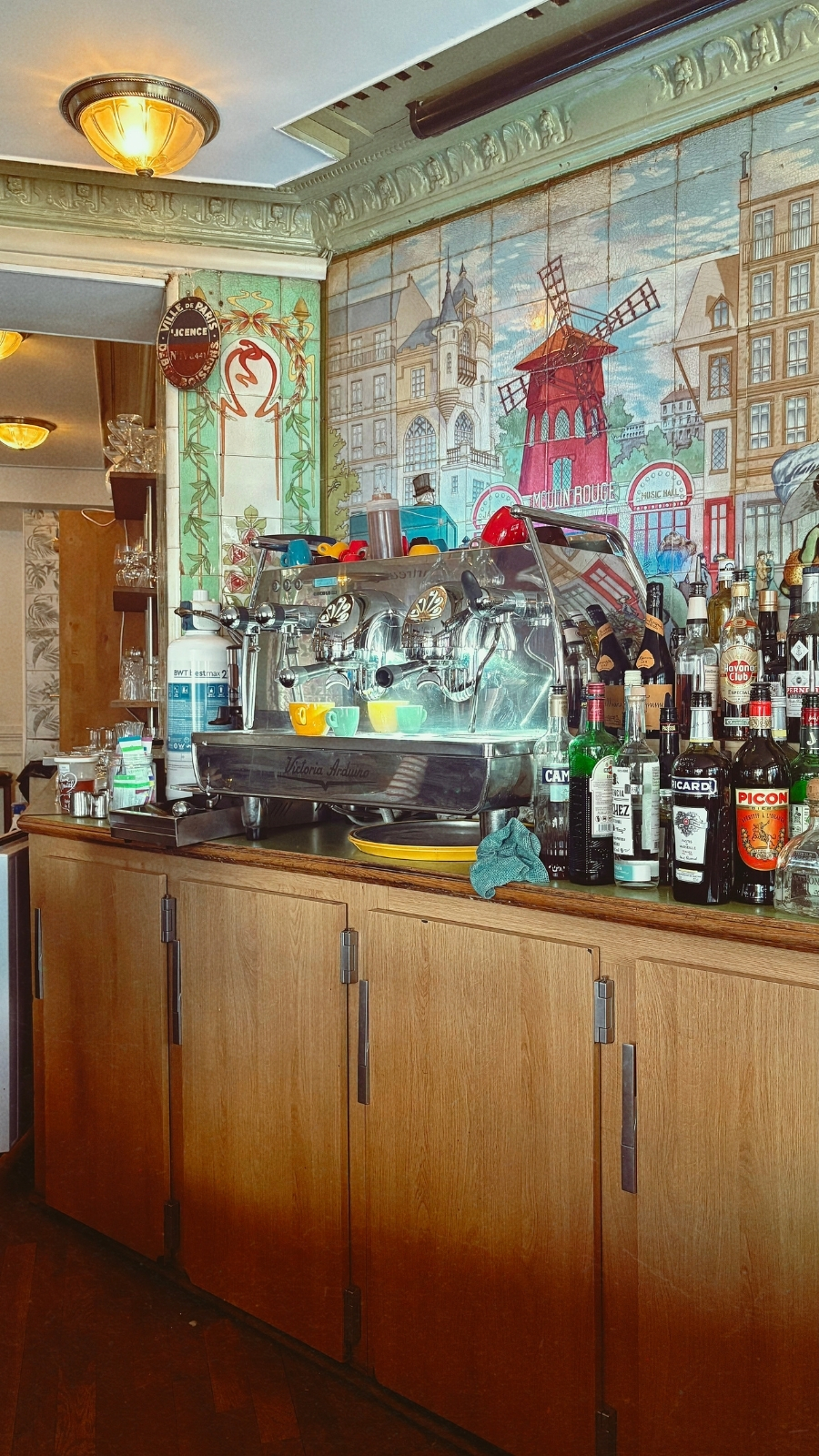
It’s a hidden jewel of Montmartre whose facade dates back to 1910, featuring interior mosaics depicting the Moulin Rouge, one of the most beautiful examples of everyday Art Nouveau in the neighborhood.
Industrial Art & Transit
Art Nouveau in Paris: Hector Guimard Metro Station Entrances
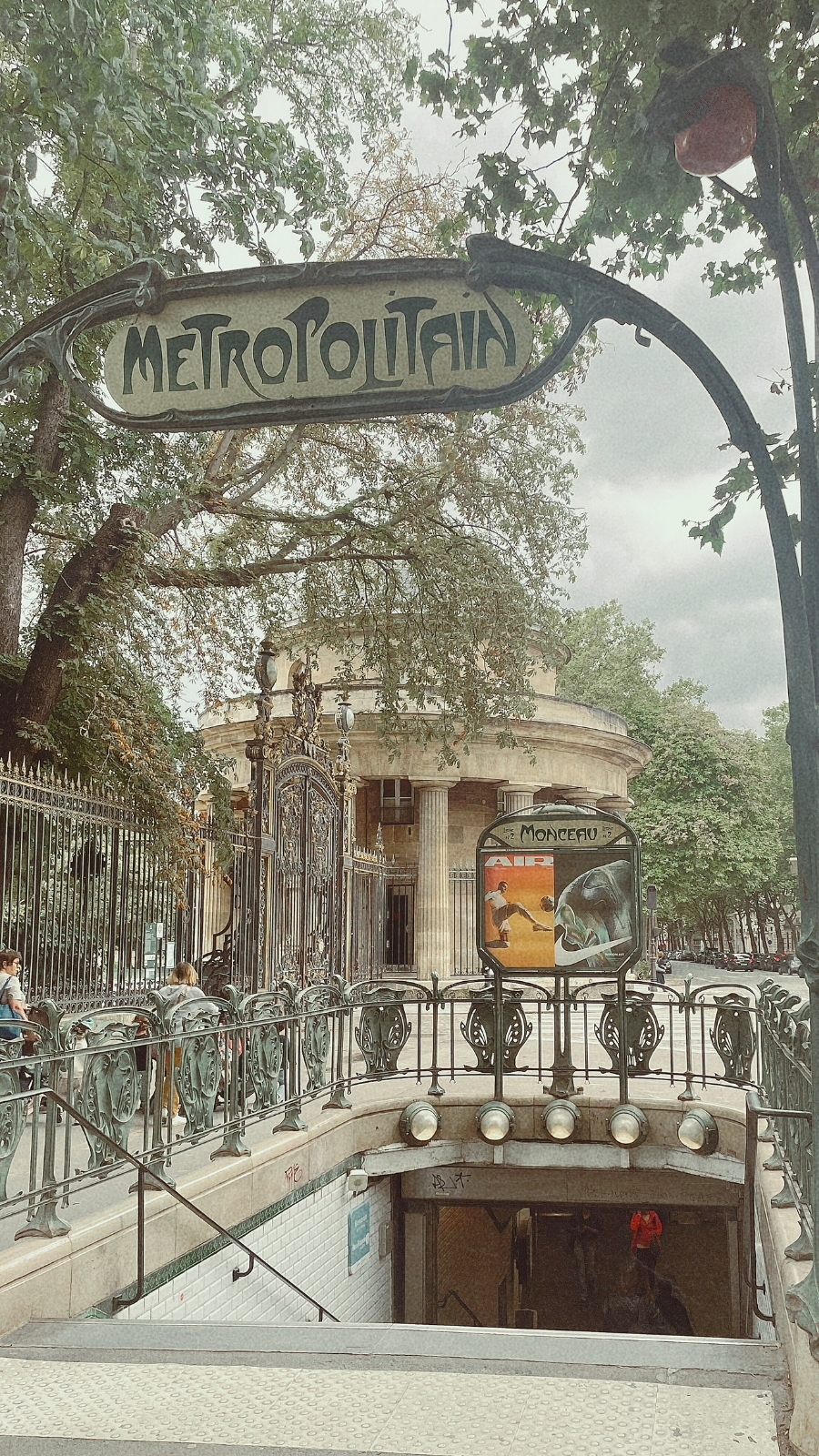
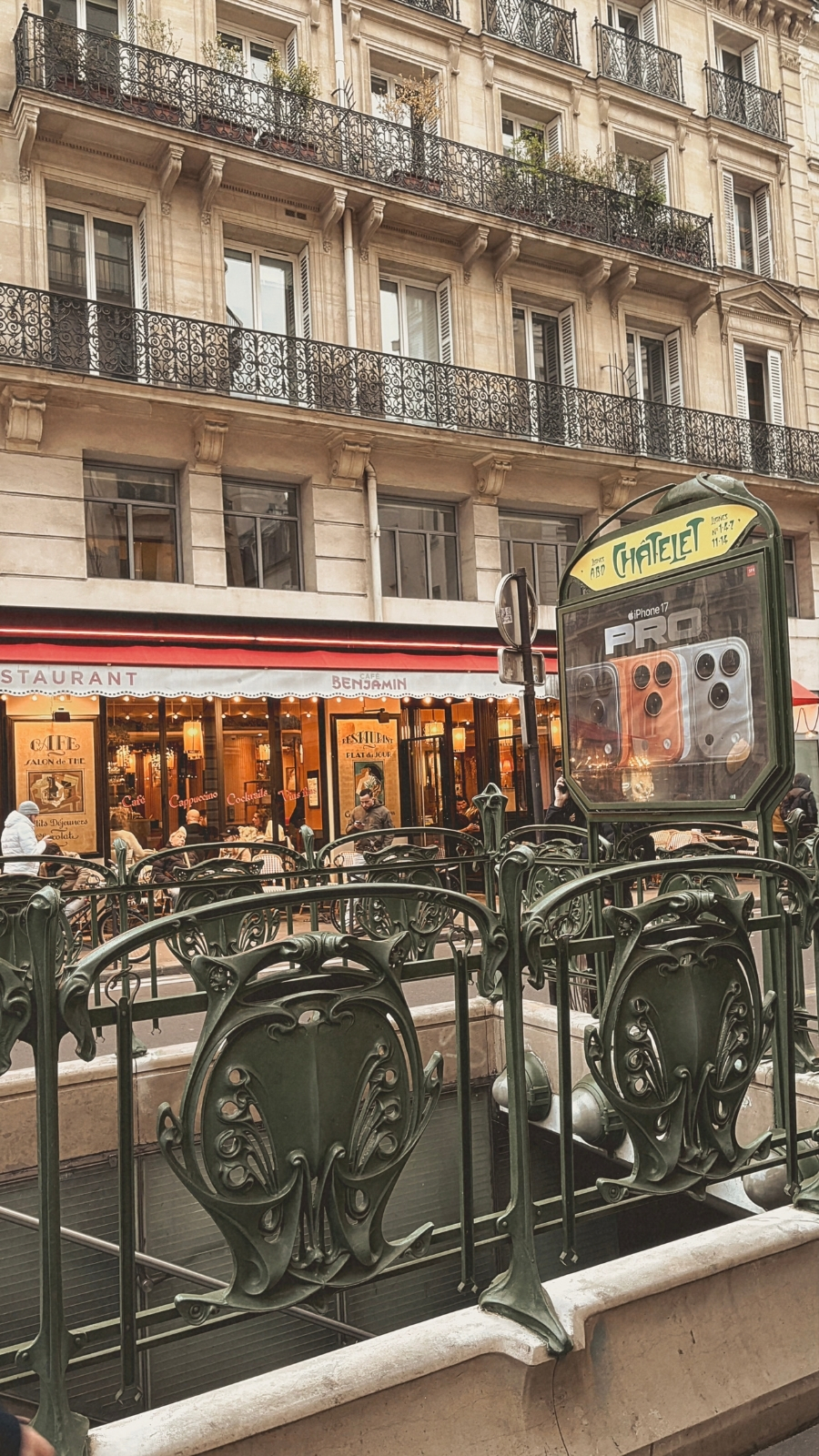
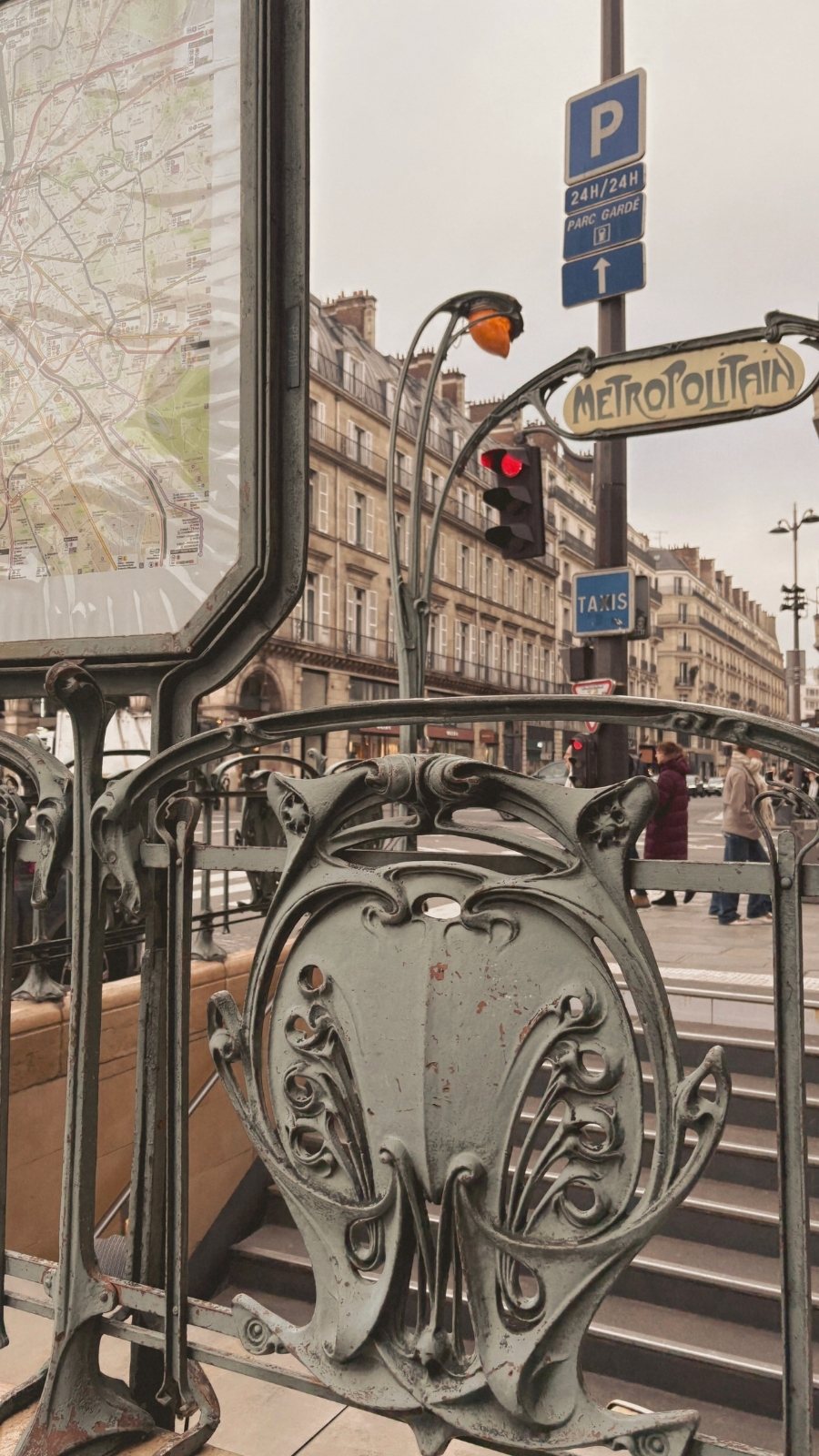
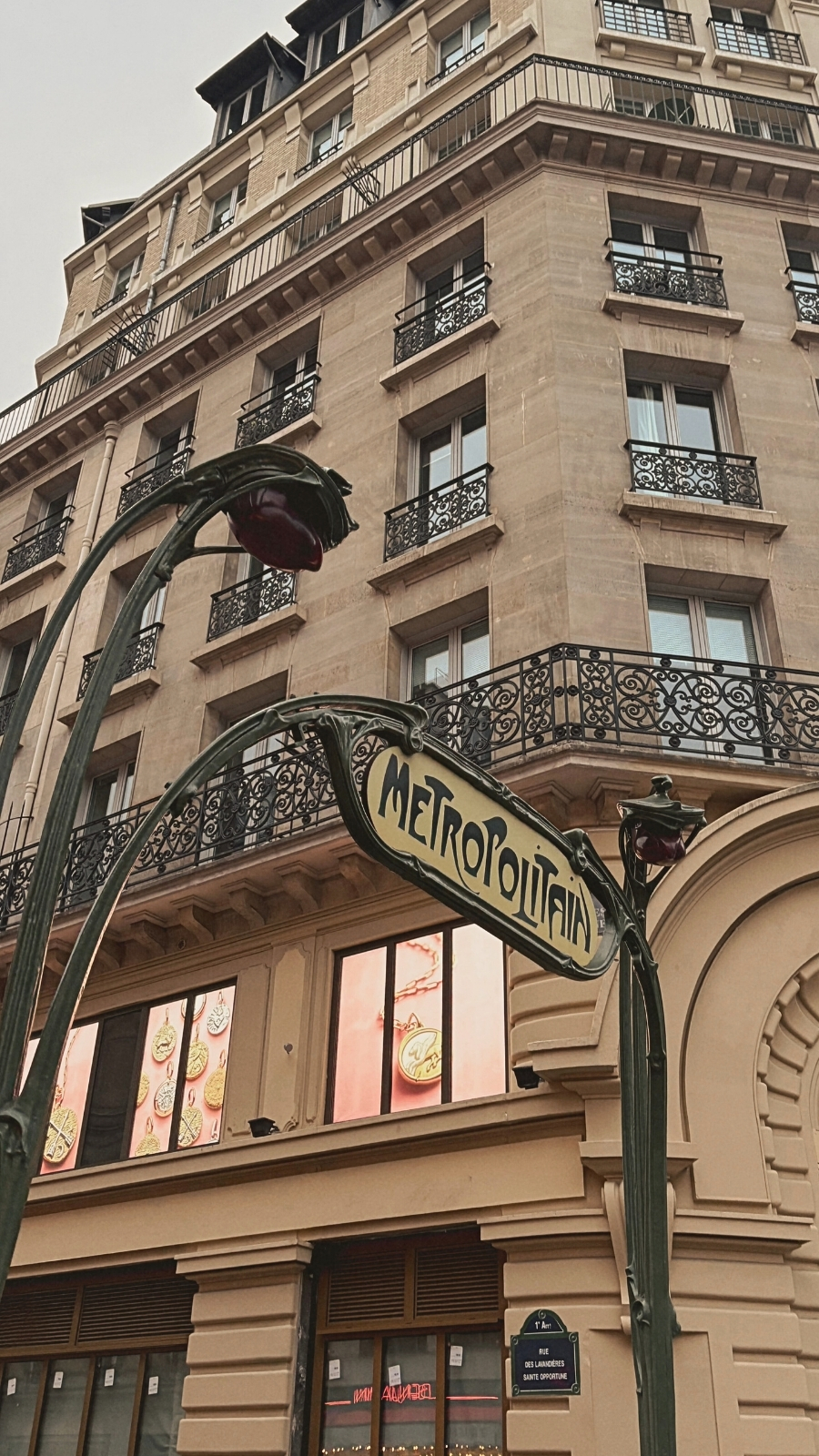
If you have ever exited at the Abbesses metro station in Montmartre, you will have already admired one of the oldest Hector Guimard metro entrances, made entirely of wrought iron.
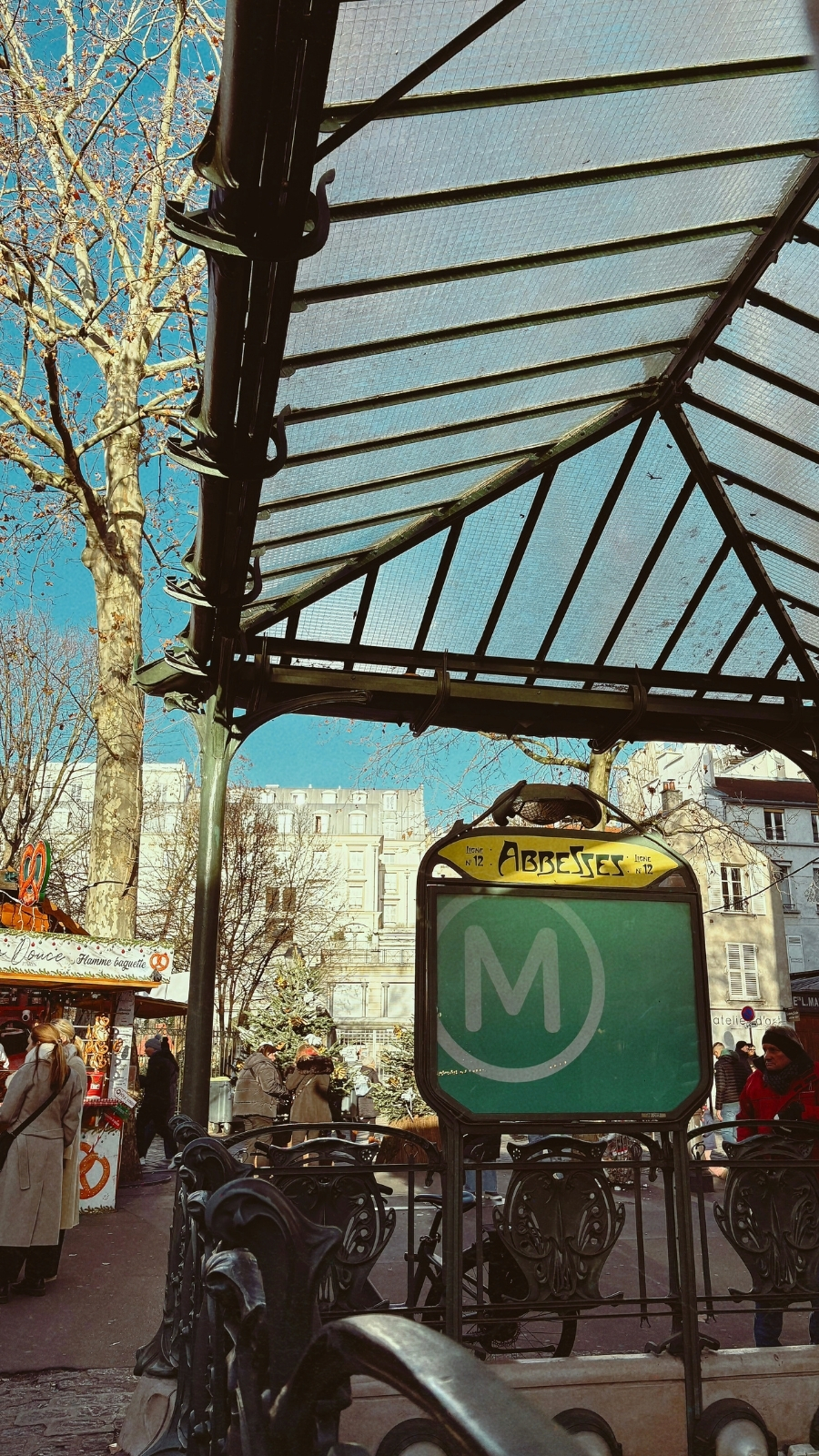
Other stations like Monceau, Châtelet, or Cité feature floral and plant forms, with one of the most grandiose entrances located at Porte Dauphine.
Art Nouveau in Paris: Barbès Rochechouart Metro Station
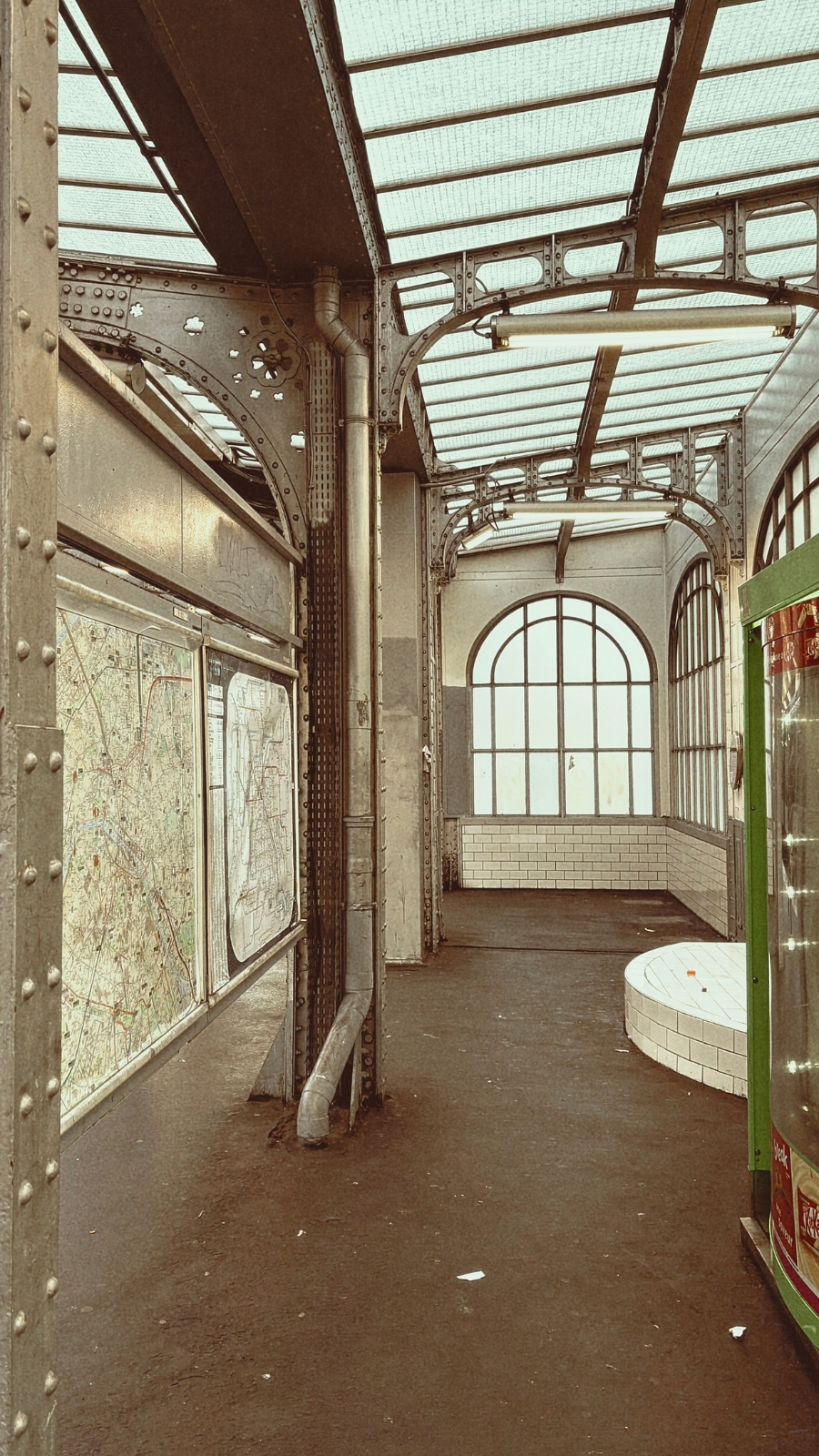
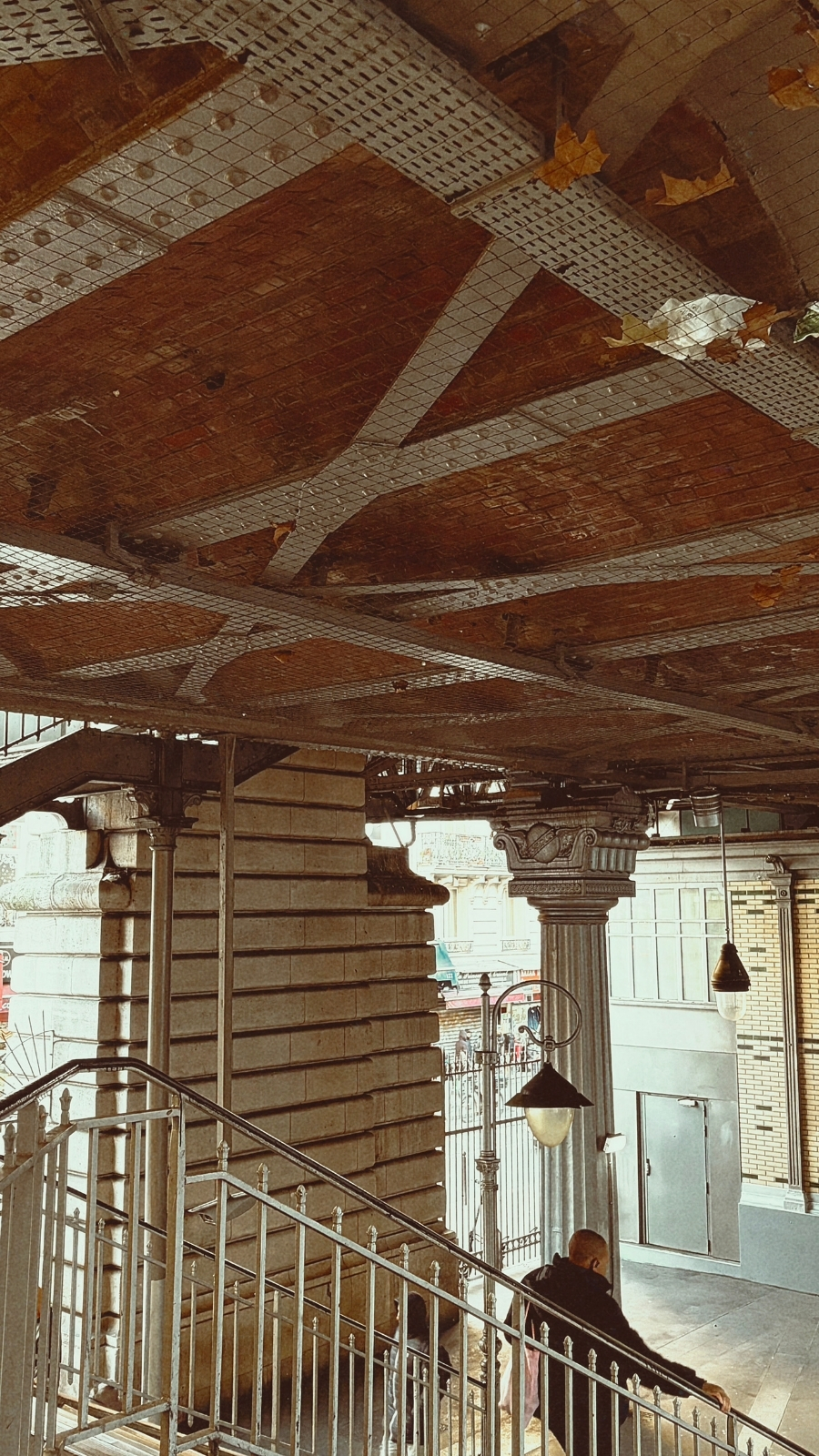
While the Barbès district is probably one of the least touristy in the city, it is home to one of the most beautiful elevated stations in Paris, served by Line 2.
With its aesthetic of glass and wrought iron, this industrial Art Nouveau station echoes the grandiose greenhouses of the era.
Art Nouveau in Paris: Faïenceries Boulenger, Rue de Châteaudun
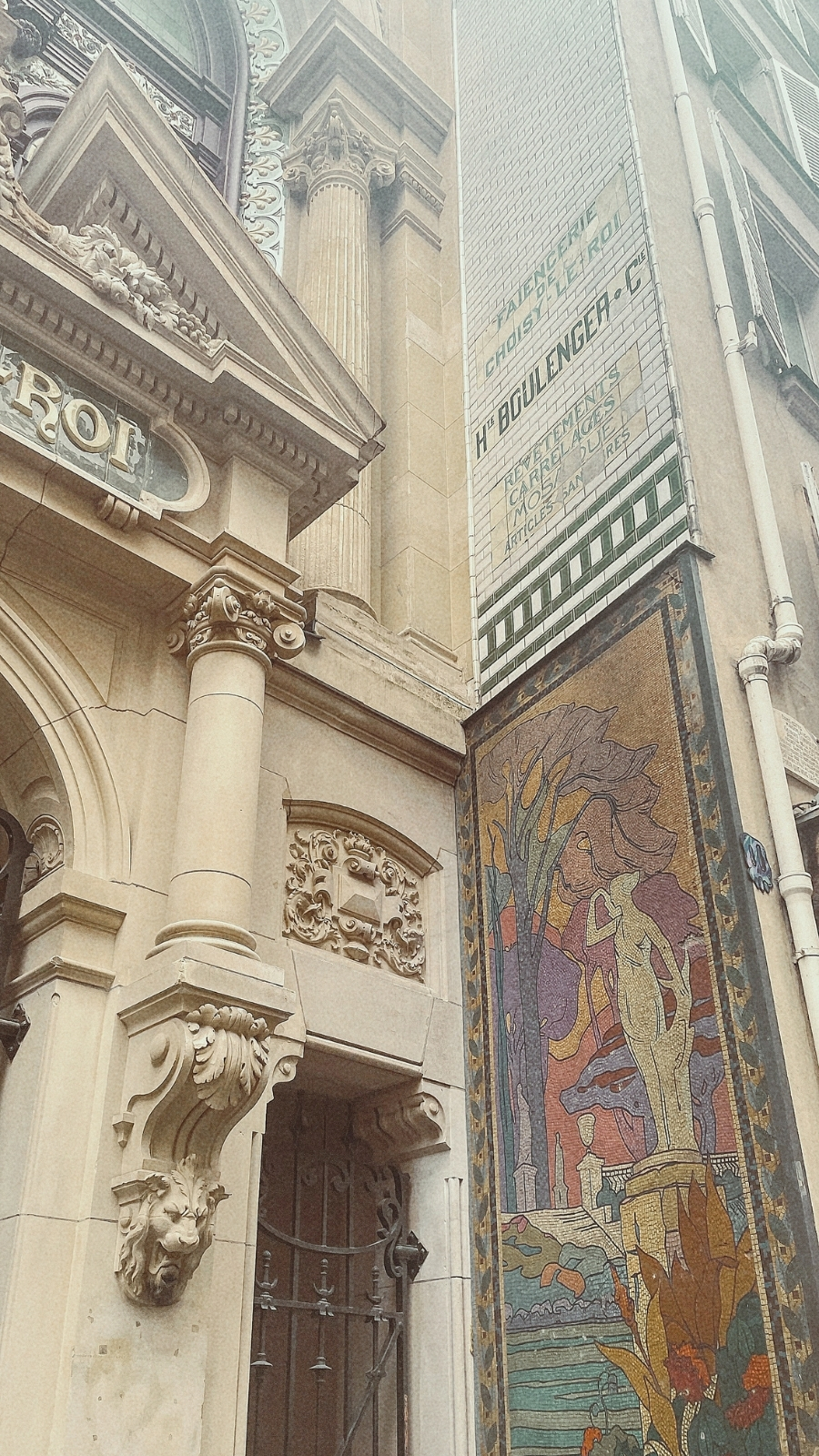
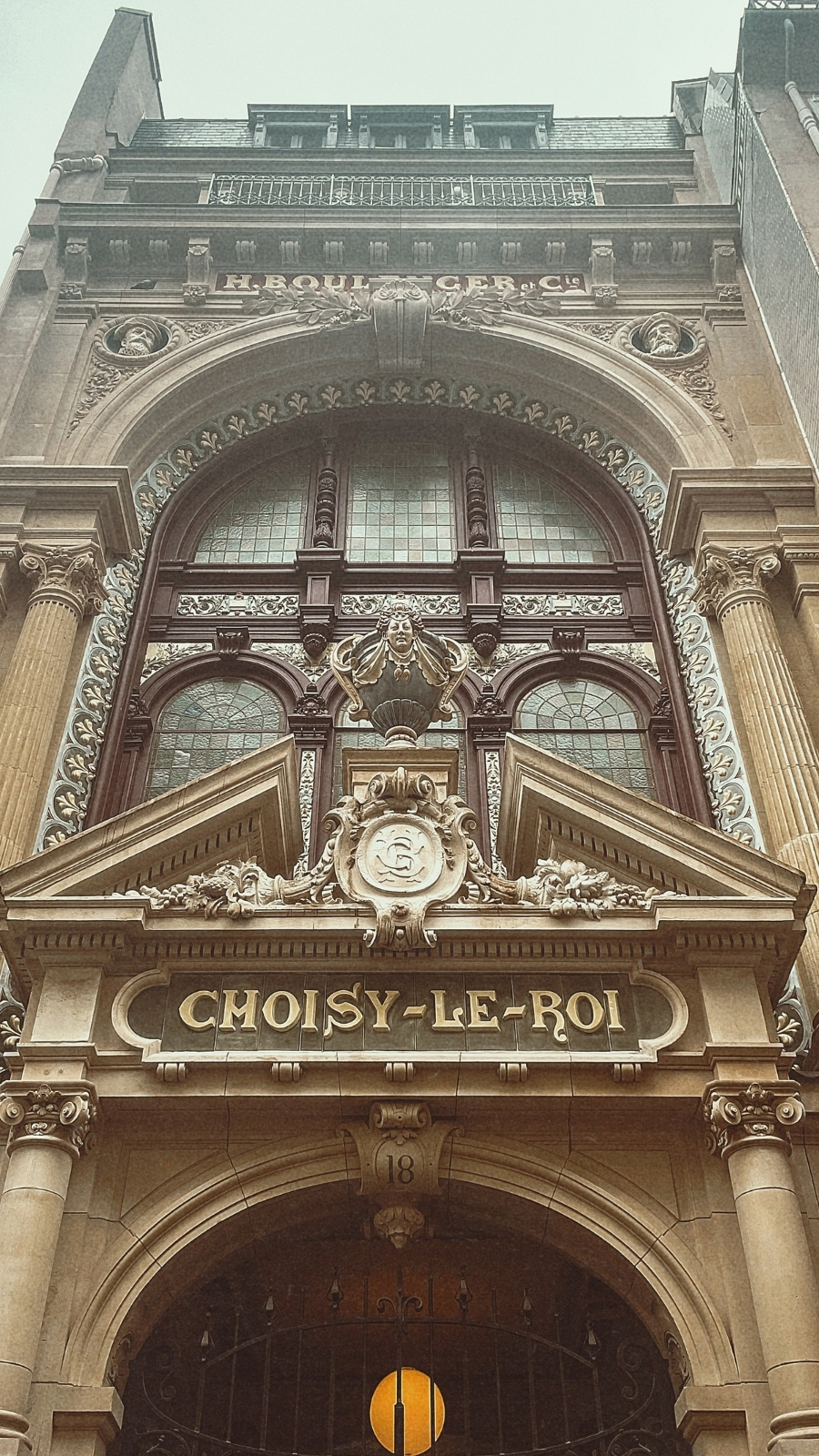
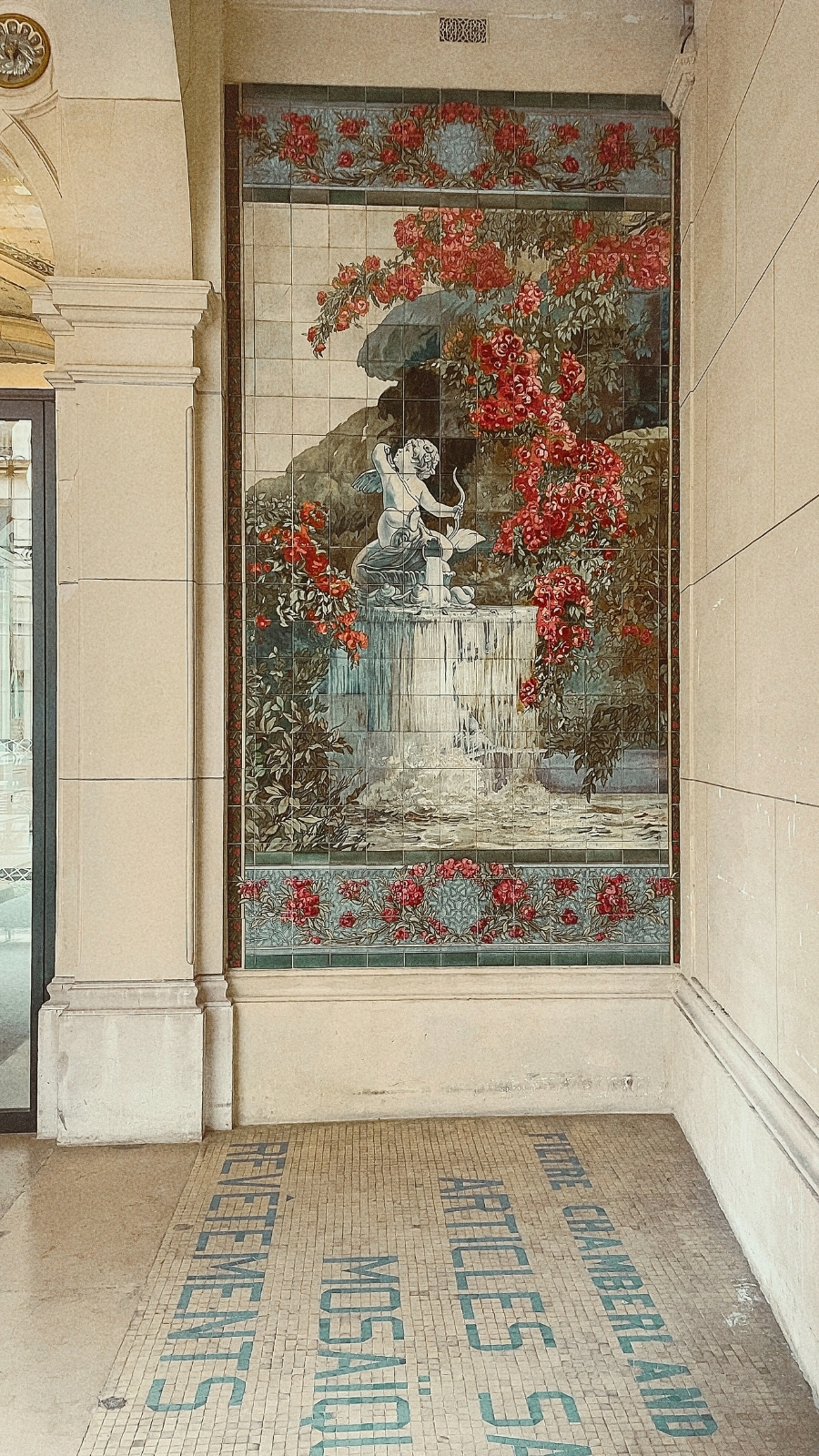
Located on Rue de Châteaudun, the Faïencerie Boulenger is certainly no longer in operation.
Still, the facade and interior – which served as a giant advertisement for the tile factory – are covered in multicolored mosaics and terracotta patterns that have survived since 1899.
Other Belle Epoque and Art Nouveau Places in Paris
If you wish to pursue your search for Art Nouveau in Paris, you will find other magnificent places to visit below:
- Castel Béranger, designed by Hector Guimard
- Maxim’s de Paris on Rue Royale
- the Musée Carnavalet, with its reconstruction of the Fouquet jewelry shop from 1901
- and the restaurant Le Train Bleu at Gare de Lyon
Art Nouveau in Paris: 17 Beautiful Places, Shops and Cafes
Exploring Art Nouveau sites in Paris allows us to remember a bygone time when the lines between utility and art were blurred.
It is not just art for art’s sake.
From the curves of a metro entrance to the stained-glass domes of department stores, the Art Nouveau movement strives to continue infusing a sense of dreaminess into the daily lives of Parisians.
If you wish to continue exploring the hidden corners of Paris, here are a few guides I have written for you: